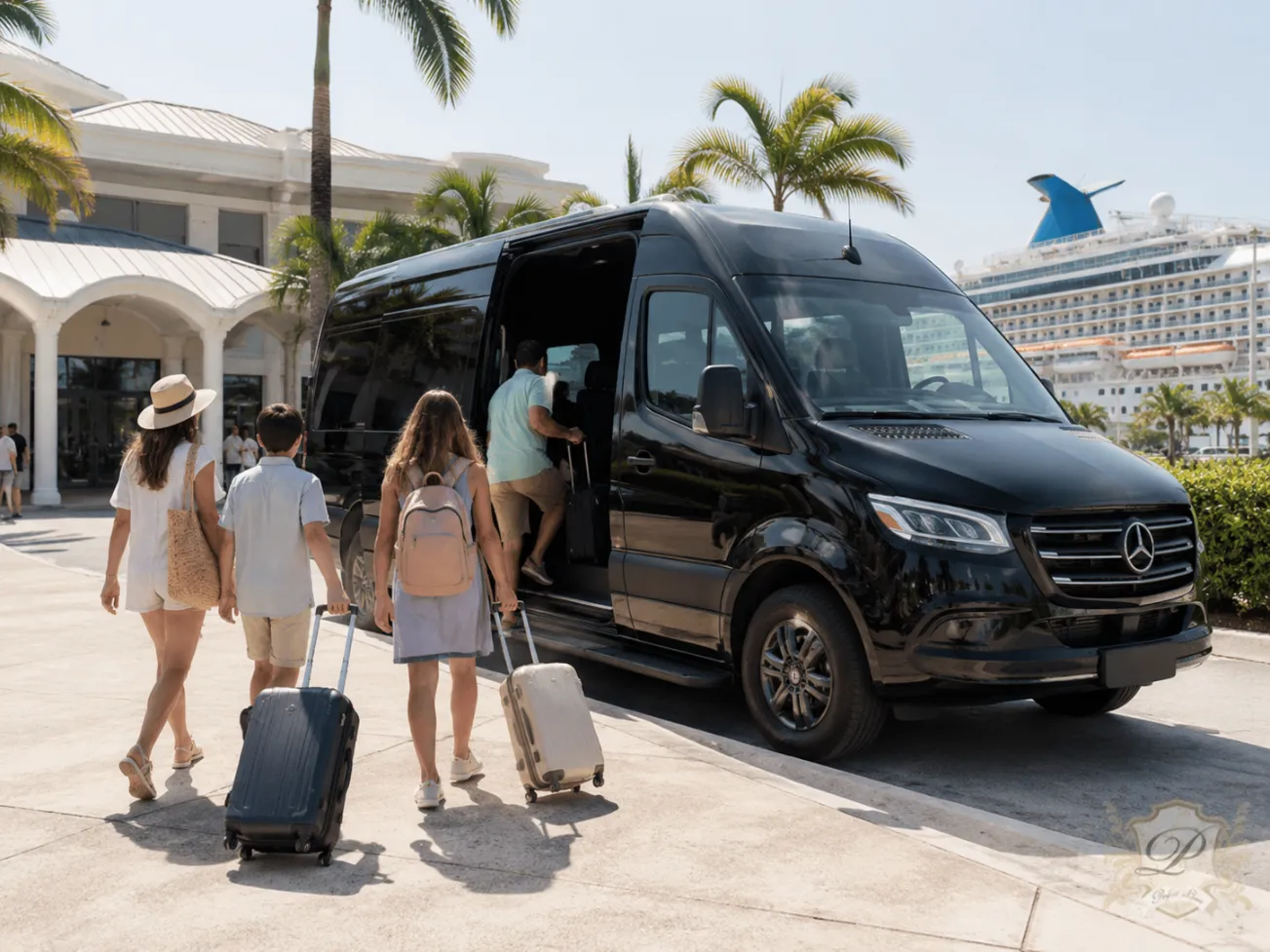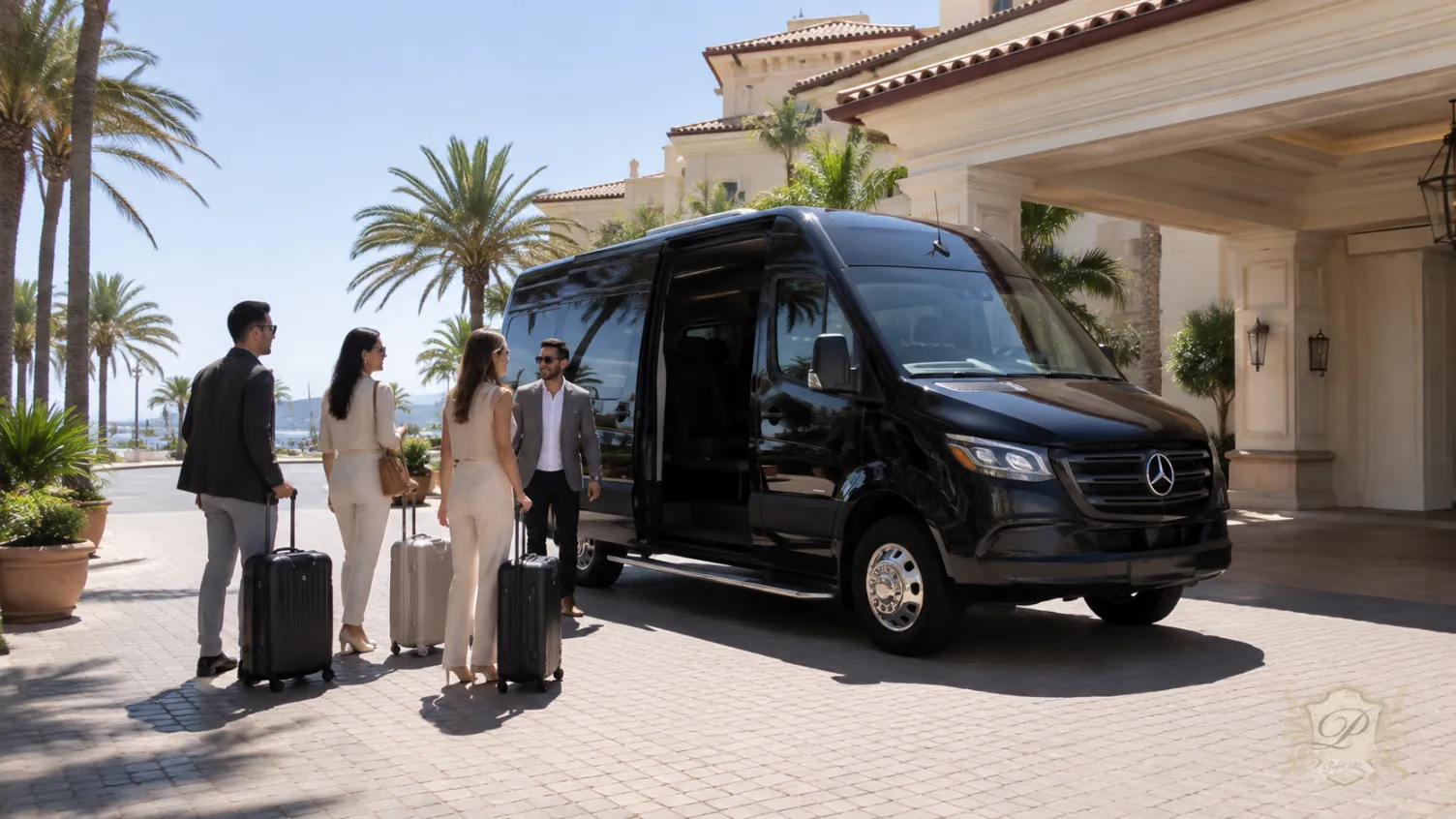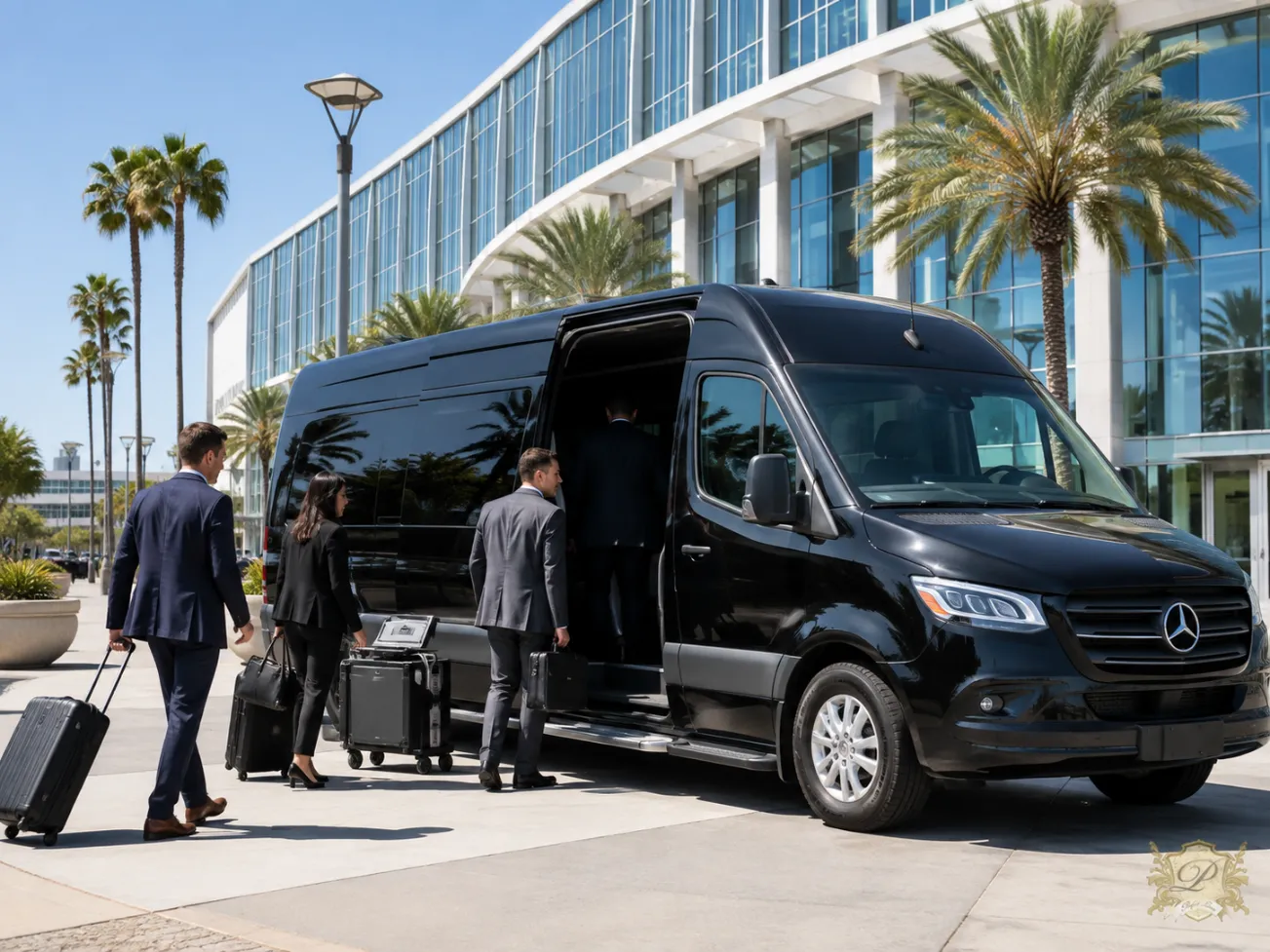
Tag: group transportation

corporate-transportation-conferences-trade-shows-southern-california-banner

Conference & Trade Show Transportation for Corporate Travelers in Southern California

Southern California Corporate Event Transportation Guide

Corporate Transportation for Conferences and Trade Shows in Southern California

Successful corporate conference transportation involves much more than delivering attendees to a convention center. Business travelers may need airport pickups, hotel transfers, early-morning venue transportation, executive meetings, client dinners, off-site receptions, group departures, and return airport service within the same conference schedule.

Southern California makes that planning especially important because major conferences and trade shows can involve destinations across Anaheim, Ontario, Los Angeles, Long Beach, Orange County, Riverside County, and the Inland Empire. Employees may arrive through different airports, executives may follow separate meeting schedules, and large groups may need to move between hotels and venues at specific times.

Instead of treating every movement as an unrelated ride, companies can build executive and corporate transportation in Southern California around the complete conference itinerary. Doing so can make airport arrivals, hotel departures, client meetings, event sessions, dinners, and group transportation easier to coordinate.

Quick Answer

For conferences and trade shows, plan transportation around four movements: airport arrivals, hotel-to-venue transfers, transportation during the event, and post-event departures. Use executive sedans or SUVs when individual executives, speakers, or clients have separate schedules, and consider Mercedes Sprinters or other appropriately sized vehicles when larger employee groups need to travel together. Provide the transportation company with the conference dates, hotel locations, venue entrances, passenger groups, luggage, event schedule, airport information, and any dinners or off-site meetings before service begins.

Key Takeaways

  • Build conference transportation around the entire event schedule, not only the convention-center address.
  • Separate executives, VIPs, clients, speakers, and employee groups when their schedules or transportation requirements differ.
  • Airport arrivals should be coordinated with flight information, luggage, hotel check-in, and the first required event time.
  • Hotel-to-convention-center transportation requires realistic departure windows, especially when many attendees are traveling at the same time.
  • Sedans and SUVs can support individual executive schedules, while Sprinters can simplify shared transportation for larger teams.
  • Venue passenger-loading, staging, parking, and access procedures should be confirmed for the specific event rather than assumed.
  • Trade show materials and attendee luggage can affect vehicle requirements even when the passenger count appears to fit a smaller vehicle.

Why Conference and Trade Show Transportation Is Different

Corporate conference transportation differs from an ordinary airport transfer because many passengers, schedules, and destinations can interact during the same event.

An executive may arrive one day before the employee group. A speaker may land at a different airport. Several employees may stay in one hotel while clients stay somewhere else. The main conference program may end in the afternoon, but the company may have a private dinner, product presentation, client reception, or internal leadership meeting later that evening.

The event may also create large surges in vehicle and pedestrian activity around the venue at opening and closing times. A theoretically short hotel transfer can take longer when hundreds or thousands of attendees are arriving or departing during the same window.

That is why companies should begin with a movement plan instead of simply reserving “a vehicle for the conference.”

1. Build the Conference Transportation Plan in Four Stages

A useful event transportation plan separates the trip into distinct phases. This prevents airport arrivals, hotel transfers, meetings, and departures from becoming one long unstructured reservation.

PhaseTransportation Questions
1. ArrivalWhich airports? Which flights? Who travels to which hotels? How much luggage?
2. Main EventWhich hotels feed into the venue? What are the required attendee arrival and departure windows?
3. Off-Site ActivitiesWho attends client dinners, receptions, meetings, site visits, or private events?
4. DepartureWhich travelers go to which airports, on which flights, and from which hotel or venue?

Once these four phases are documented, the planner can decide which passengers share transportation and which need separate executive arrangements.

2. Coordinate Airport Arrivals Before the Conference Begins

Conference transportation often begins before the event venue ever enters the itinerary. Employees, executives, clients, speakers, and exhibitors may arrive through Ontario International Airport (ONT), Los Angeles International Airport (LAX), John Wayne Airport (SNA), Long Beach Airport (LGB), or other Southern California airports.

Do not group travelers together simply because their scheduled landing times appear close. Passengers on different flights may have different baggage requirements, terminals, delays, and hotel destinations.

On the other hand, travelers arriving on the same flight or within a workable arrival window may be candidates for shared transportation when the destination, passenger count, luggage, and reservation timing allow it.

Build an Arrival Manifest

For each traveler or group, document the passenger name, mobile contact, airport, airline, flight number, scheduled arrival, hotel, luggage estimate, and whether the traveler has an event commitment immediately after landing.

If the executive team is still deciding which airport works best for the overall itinerary, review our comparison of corporate airport transportation at ONT, LAX, and SNA.

3. Executives and Speakers May Need Their Own Transportation Schedule

One common planning mistake is assuming that everyone attending the same conference should use the same transportation schedule.

Senior executives, keynote speakers, sales leaders, sponsors, board members, and important clients may have appointments outside the main conference agenda. An executive may leave the venue for a customer lunch while the rest of the team stays through the afternoon sessions. A speaker may need an earlier venue arrival. A company president may have an investor meeting after the trade-show floor closes.

These passengers can benefit from a dedicated sedan or SUV rather than being tied to the larger employee-group schedule.

An executive sedan can be especially useful when one traveler has a separate airport arrival, hotel, meeting schedule, or evening commitment. The vehicle does not need to be the largest option in the fleet. It needs to support that executive’s specific movements.

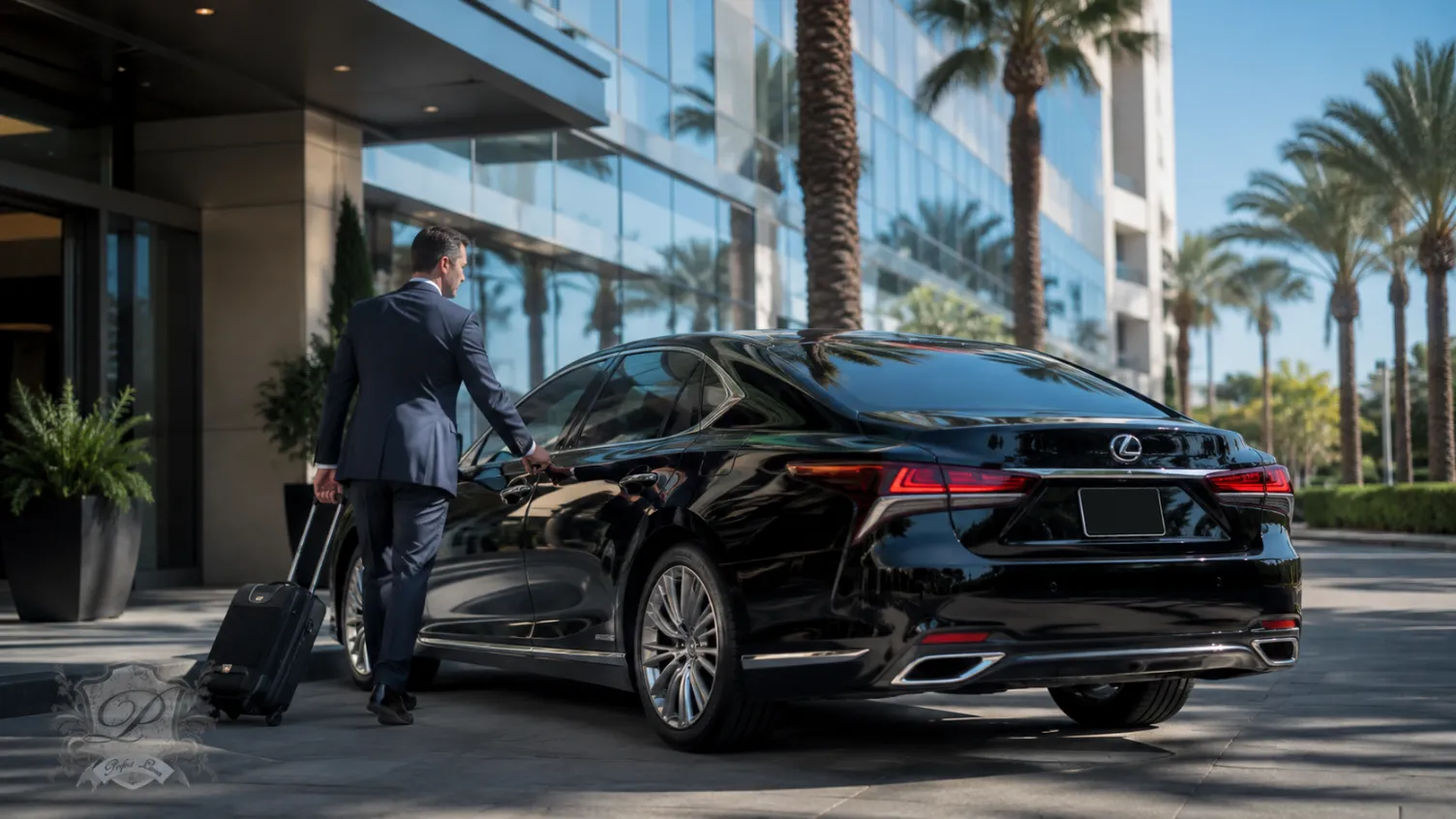
The Perfect Limo and Sedan’s current fleet includes executive sedans as part of its broader Southern California chauffeured fleet.
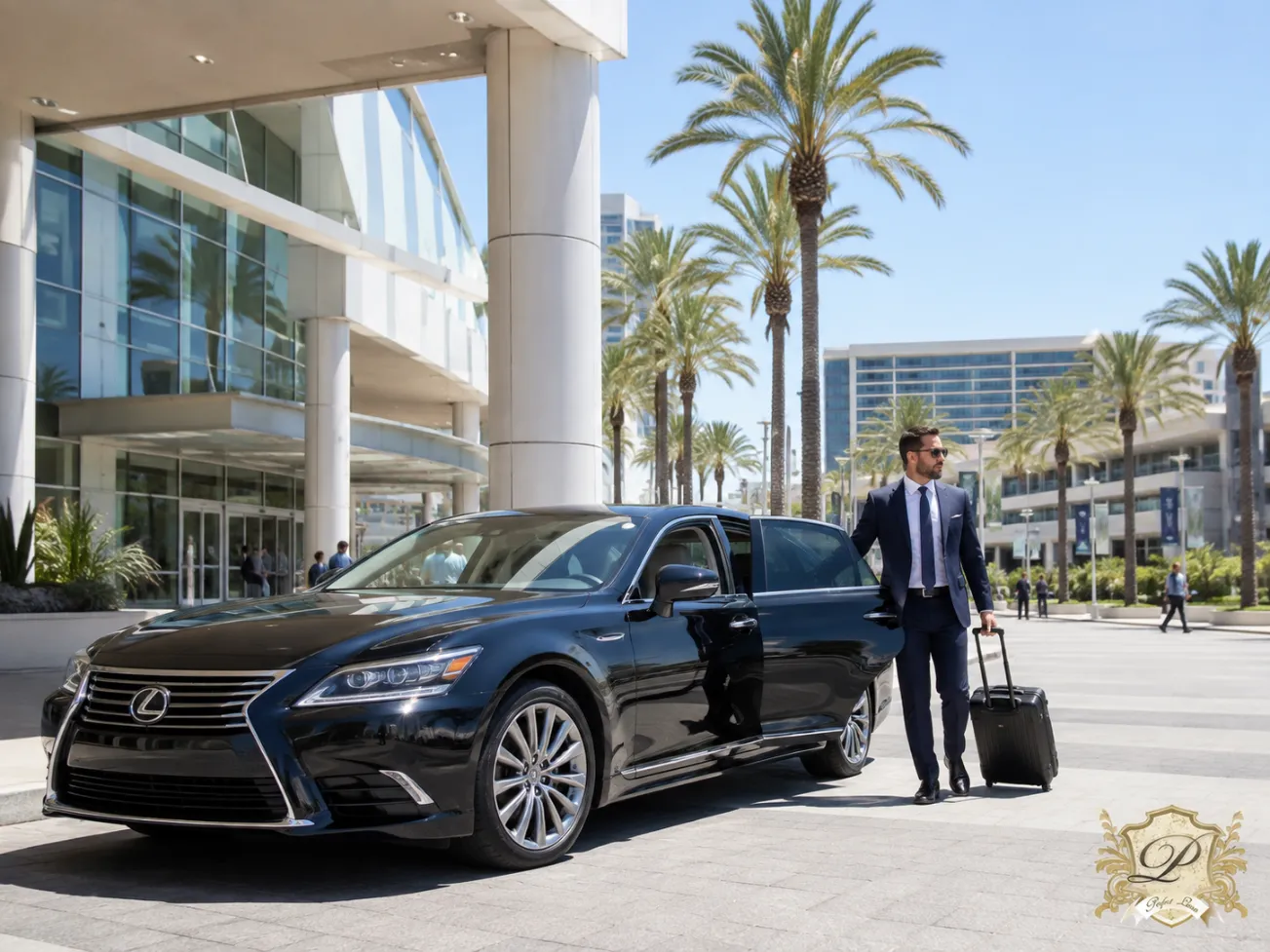
Black lexus sedan for executive conference transportation in southern california

4. Hotel-to-Convention-Center Transportation Needs Realistic Departure Windows

A hotel may look close to a convention center, but distance alone does not determine how early a group should leave.

The company needs to account for passengers gathering in the lobby, loading into the vehicle, event traffic, the designated passenger drop-off location, walking from the curb to registration or the meeting room, and any security or badge procedures required by the event.

If a conference session begins at 9:00 a.m., the transportation plan should be based on when attendees need to be inside the venue, not when the vehicle should reach the general property.

The same applies in the evening. Hundreds of attendees may leave during a similar period. A planner should establish where the company group will meet, which vehicle they are assigned to, and whether executives or clients have separate transportation.

Do Not Use the Session Start Time as the Transportation Arrival Time

If the attendee must register, obtain credentials, walk through a large convention facility, locate a meeting room, or prepare a booth before the public program begins, the required venue arrival may be substantially earlier than the session start time.

5. Separate Client and VIP Transportation When the Schedule Requires It

Conferences and trade shows frequently combine employee travel with client hospitality. The same event may include customers flying in for private meetings, senior partners attending a dinner, prospects visiting a booth, or executives meeting with industry contacts outside the main program.

Client transportation should therefore be planned according to the guest’s schedule rather than automatically attached to the employee shuttle.

A visiting client may need airport pickup, hotel transportation, a private meeting at the conference hotel, a short visit to the expo floor, dinner at another location, and transportation back to the hotel. An executive SUV can make sense when several clients travel together or when airport luggage creates a larger capacity requirement.

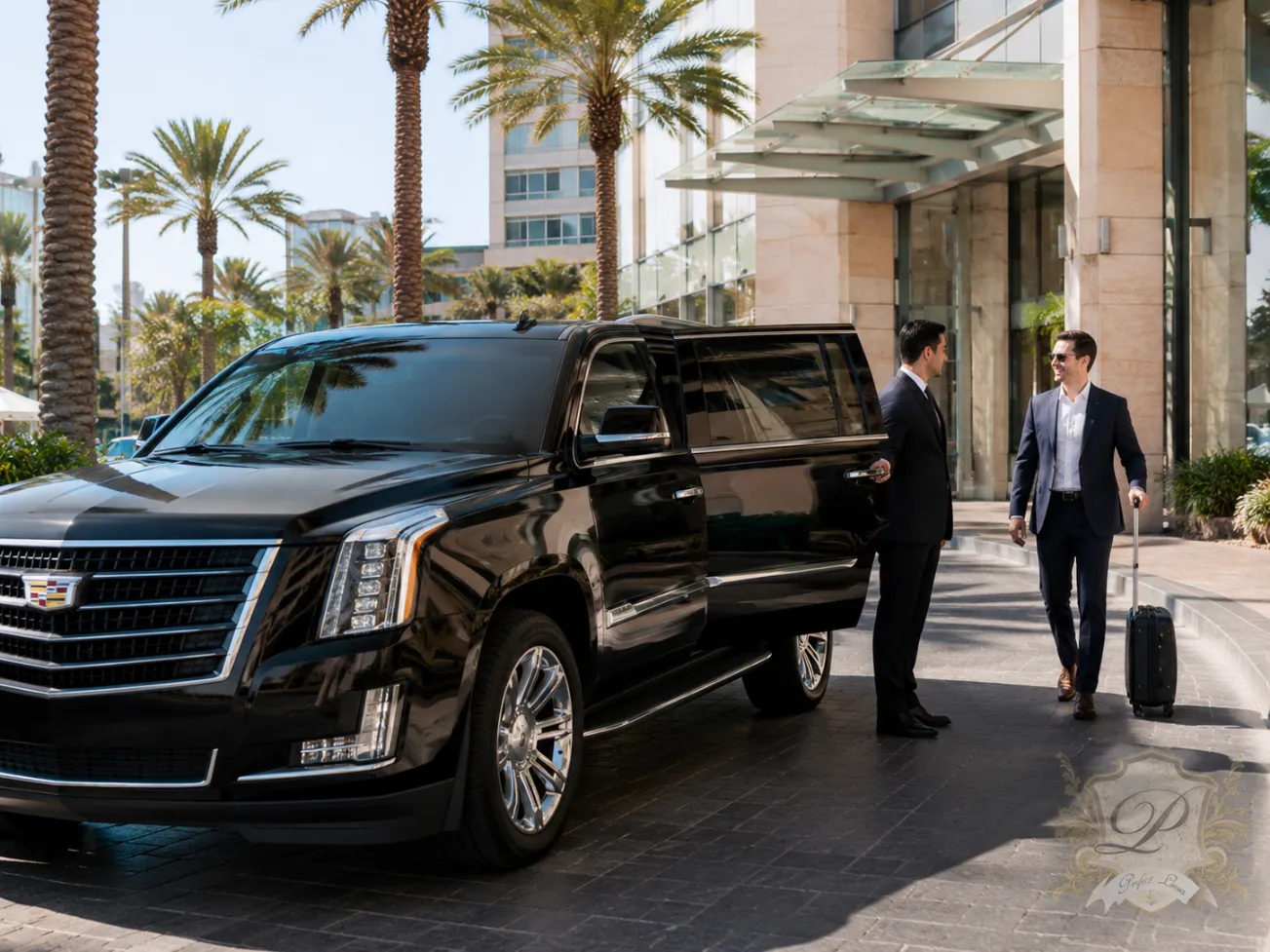
The Perfect Limo and Sedan’s Cadillac Escalade Luxury SUV is one available executive vehicle option for trips requiring more passenger or luggage room than a sedan.
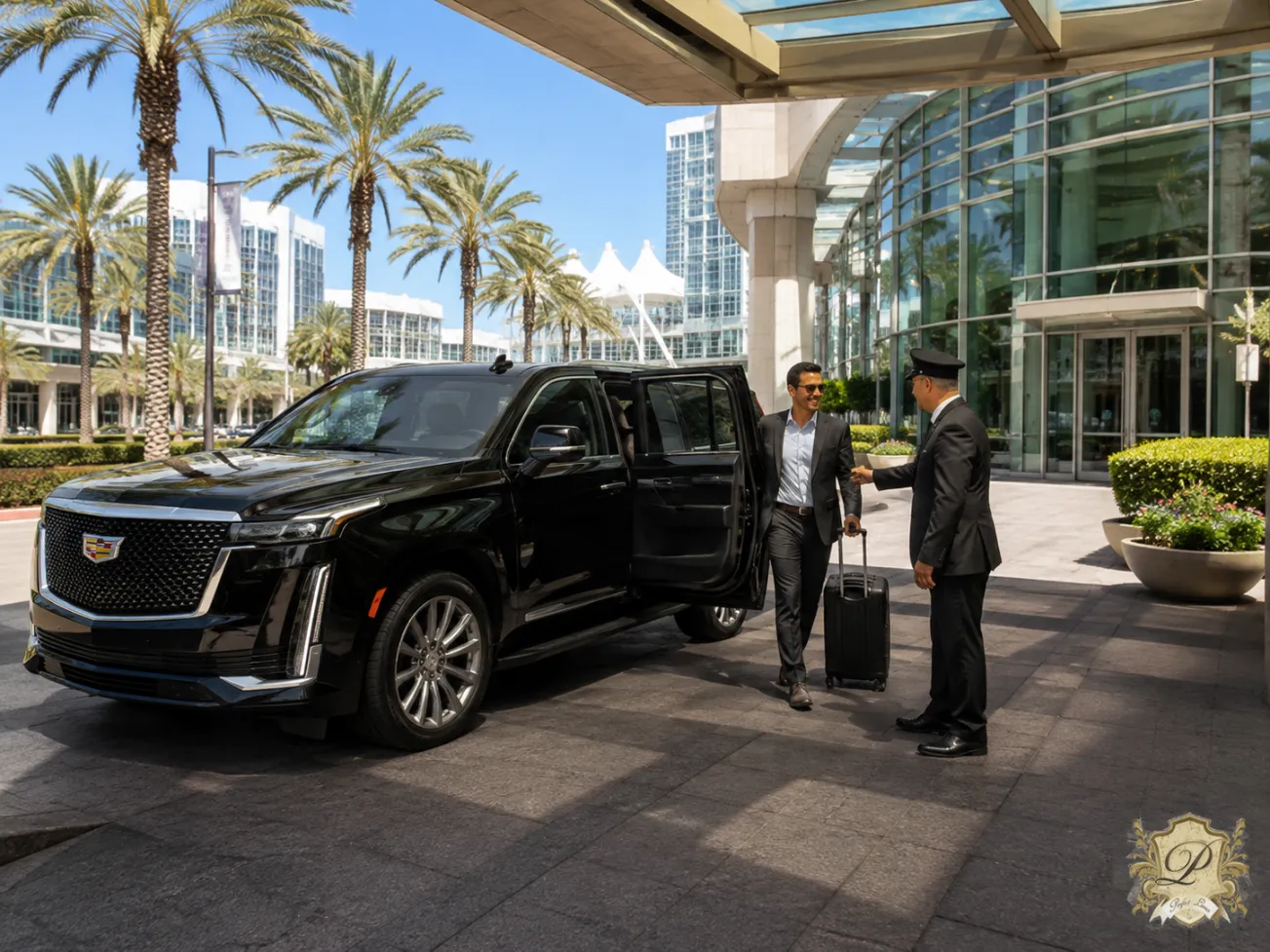
Black cadillac escalade for corporate trade show transportation in southern california

6. Use Group Transportation When the Team Shares the Same Schedule

The strongest use case for group conference transportation is a set of attendees who genuinely need to move together.

If ten employees are staying at the same hotel, attending the same morning program, leaving at the same time, and returning to the same destination, assigning several unrelated vehicles can create unnecessary coordination work.

A Mercedes Sprinter or another appropriately sized group vehicle can allow those attendees to depart and arrive together. The transportation coordinator then manages one primary movement rather than several independent vehicle assignments.

This arrangement can be particularly useful for hotel-to-venue transfers, conference dinners, company receptions, site visits, corporate retreats connected to the event, and airport transportation when travelers have compatible schedules.

Several vehicles may still be the better choice if attendees have different flights, hotels, client appointments, or departure times. Group transportation should reduce complexity, not force people with different schedules into one movement plan.

Companies deciding between vehicle categories can use our guide comparing an executive sedan vs SUV vs Sprinter for corporate transportation.
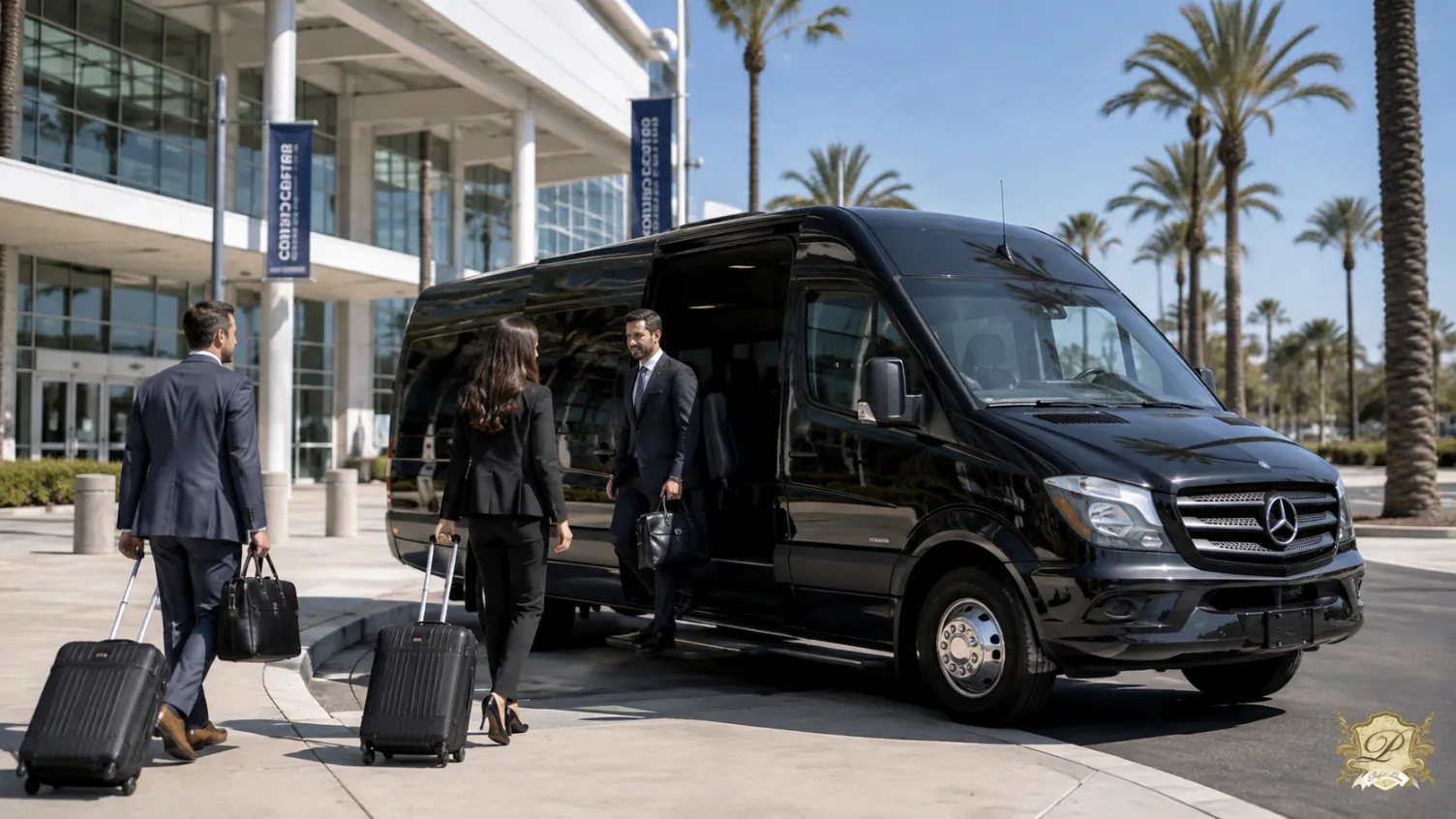
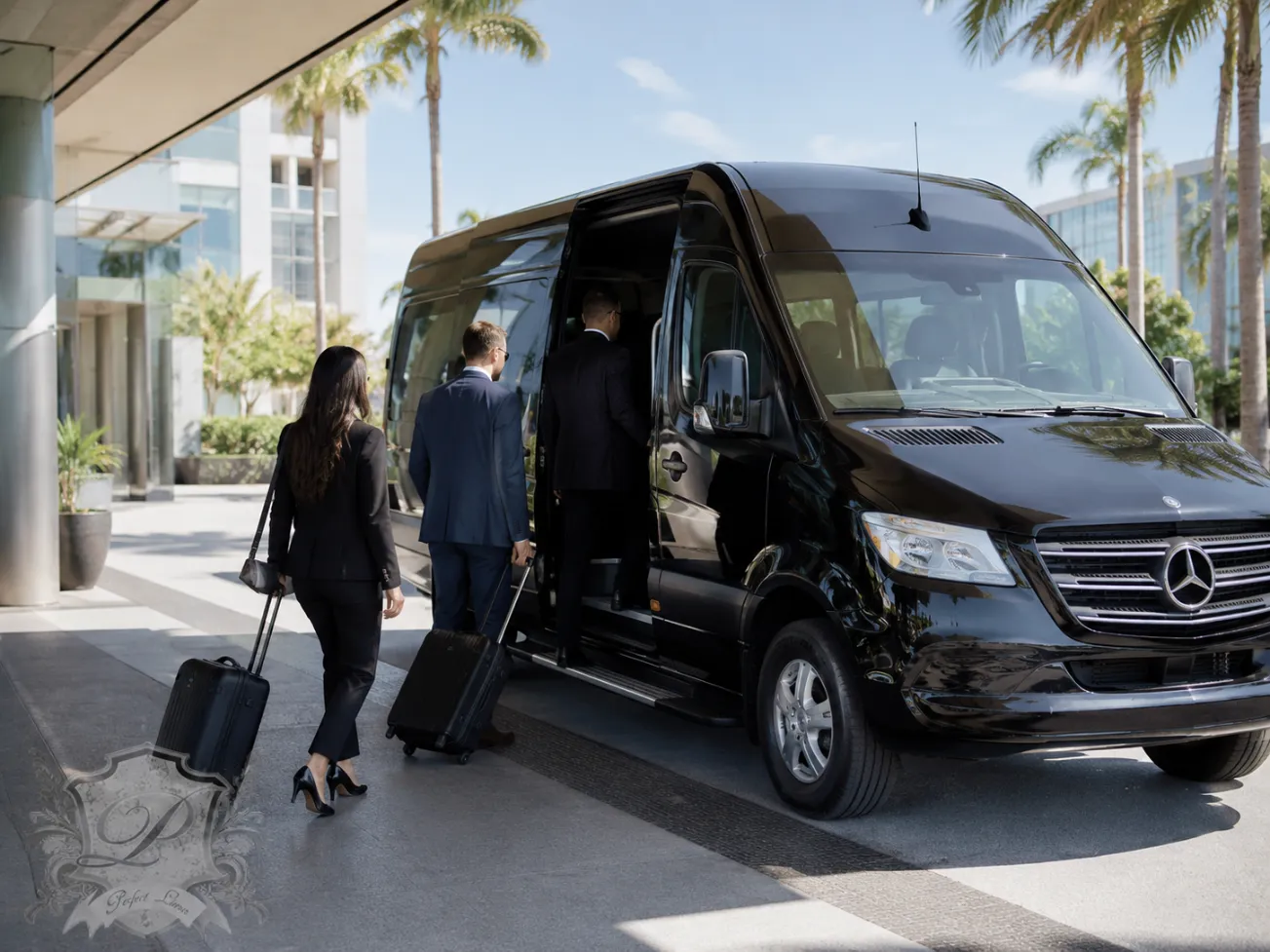
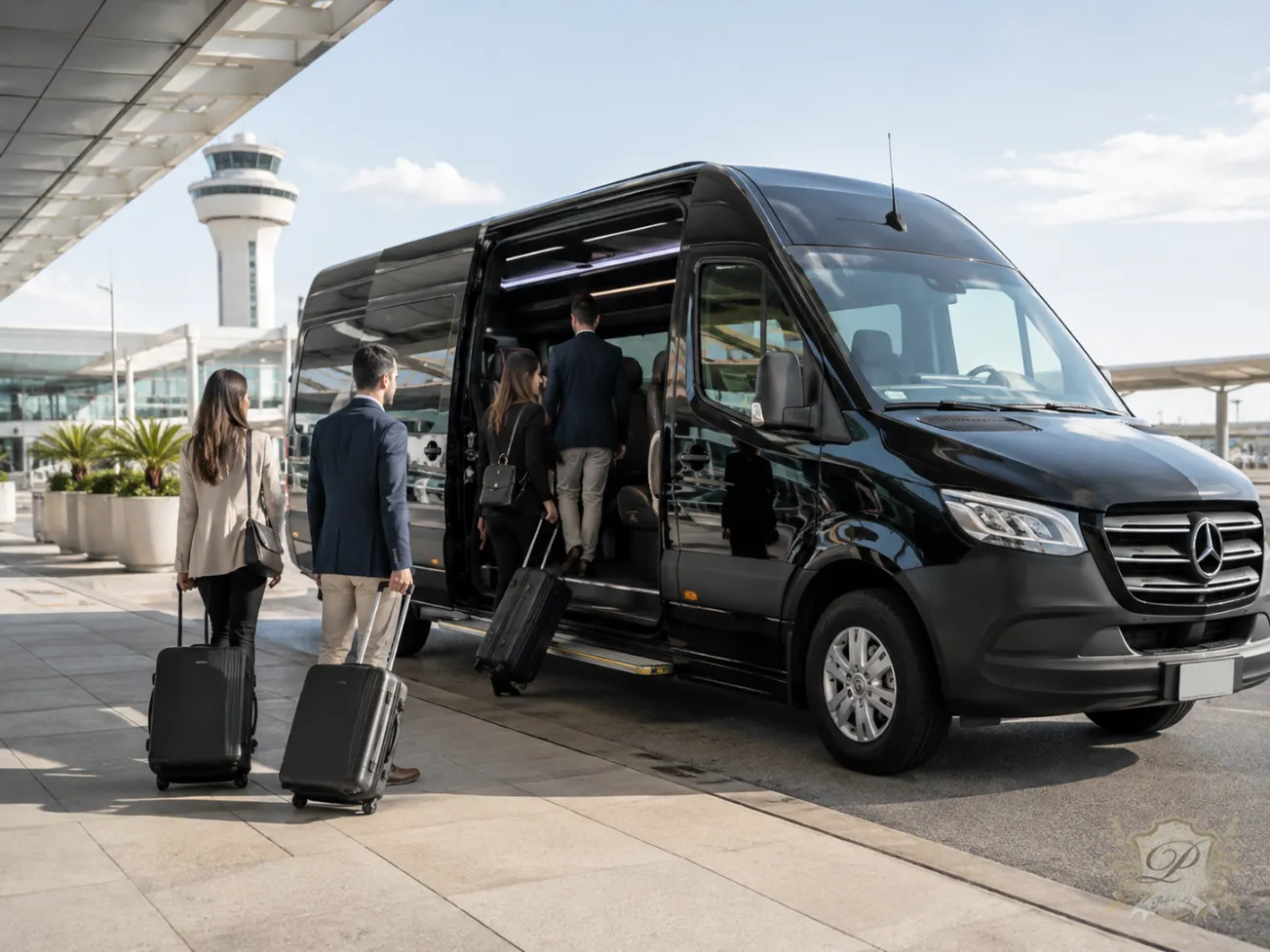
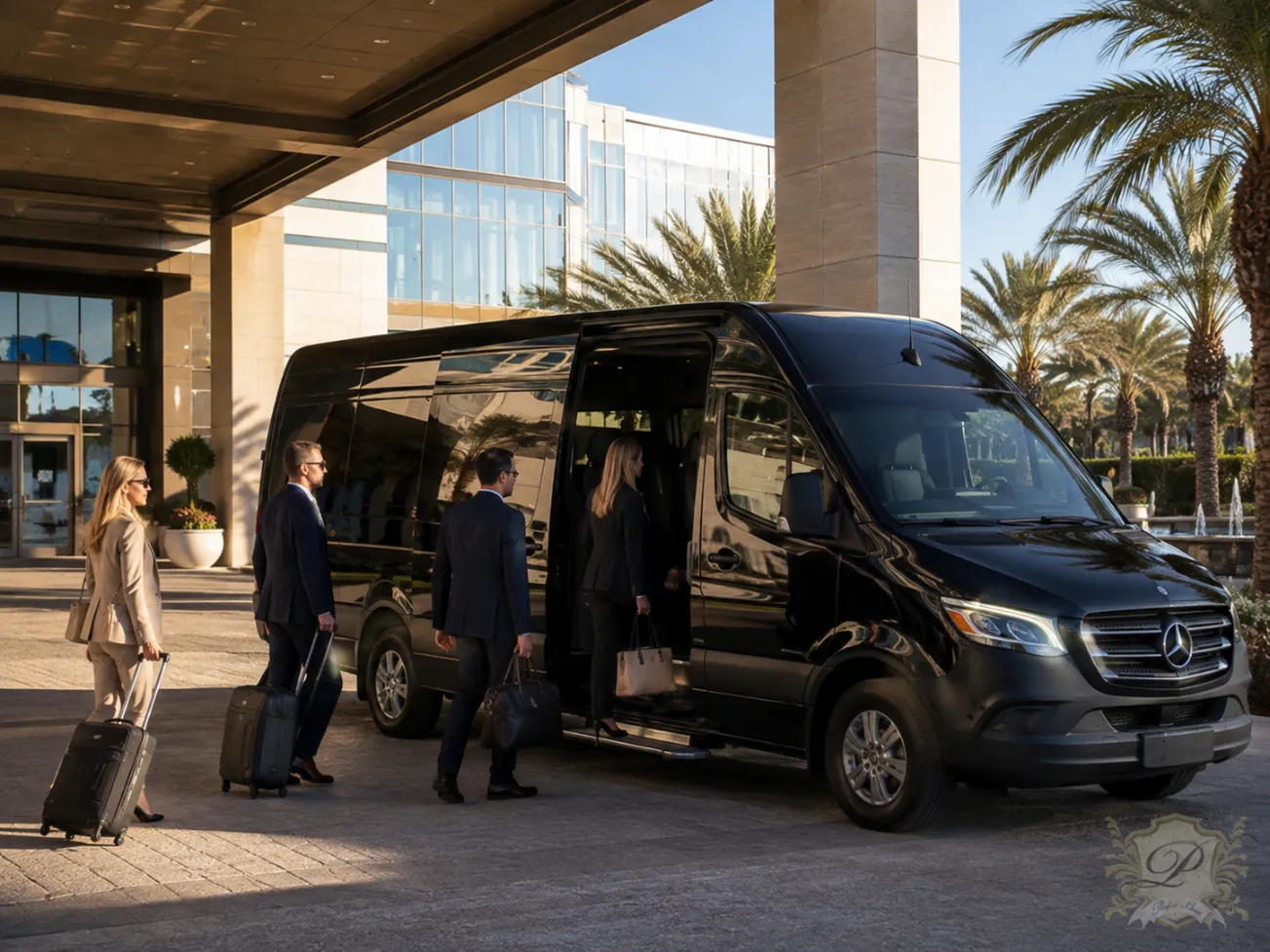
Black mercedes sprinter for corporate group conference transportation in southern california

7. Trade Show Materials Can Change the Vehicle Requirement

Passenger capacity is only one part of planning transportation for trade-show exhibitors.

Sales teams and exhibitors may travel with roll-up displays, product samples, literature, presentation cases, demonstration equipment, laptop bags, garment bags, or other materials in addition to personal luggage.

A vehicle that appears appropriate for the passenger count can become impractical when the cargo requirement is added. This is particularly important during airport transfers because every traveler may also have a suitcase and carry-on.

Tell the transportation provider exactly what passengers expect to bring. Do not simply say “six people” if those six people also have several days of luggage and multiple trade-show cases.

Important Distinction: Attendee Transportation Is Not Freight Logistics

Professional passenger transportation should not be assumed to replace an event’s freight, drayage, booth-shipping, or material-handling process. Large exhibit structures, pallets, freight cases, and commercial booth shipments should be handled according to the event organizer and venue’s exhibitor logistics instructions.

8. Plan Off-Site Meetings, Client Dinners, and Receptions Separately

The conference venue is rarely the only destination on a corporate event itinerary.

Teams may schedule customer dinners, product launches, networking receptions, investor meetings, site visits, internal strategy sessions, or private hospitality events elsewhere in the city.

These movements should be listed separately because the passenger group may be different from the main conference group. Twenty employees may attend the trade show, while only six sales leaders and two clients attend dinner. Three executives may leave the venue earlier for a private meeting while everyone else stays through closing.

Building these movements into the transportation plan avoids last-minute confusion about which vehicle is serving which group.

If the event day includes several offices, hotels, meeting venues, restaurants, or airports, our guide to multi-stop executive transportation provides a detailed framework for sequencing appointments and protecting fixed deadlines.

9. Southern California Conference Venues Require Location-Specific Planning

Conference transportation should be planned around the actual venue rather than a generic city destination. Major Southern California event markets include Anaheim, Los Angeles, Ontario, and Long Beach, each with different surrounding hotels, streets, airports, and traffic patterns.

Anaheim Convention Center

The City of Anaheim describes the Anaheim Convention Center as the largest convention center on the West Coast and a venue for major meetings, conventions, and shows. Companies attending events there may have participants staying throughout the Anaheim Resort area as well as executives or clients arriving from SNA, LAX, ONT, or nearby business locations.

Los Angeles Convention Center

Downtown Los Angeles conferences may involve hotel pickups, event traffic, executive meetings elsewhere in the city, and LAX transfers. Planners should identify the correct venue access and passenger-loading instructions supplied for the event rather than assuming a vehicle can wait at any entrance.

Ontario Convention Center

Ontario can be particularly relevant for companies with Inland Empire operations or guests using ONT. A conference itinerary may combine the convention center with nearby hotels, company offices, client dinners, airport transportation, and meetings elsewhere in San Bernardino or Riverside counties.

Long Beach Convention and Entertainment Center

Long Beach events can create another set of airport and hotel decisions, including possible transportation involving Long Beach Airport or LAX. Corporate groups should again confirm event-specific drop-off, pickup, staging, and access instructions before the service date.

Regardless of venue, planners should verify current event instructions because passenger-loading procedures can differ by show, entrance, street closure, security plan, or facility operation.

10. Build Traffic Buffer Into Every Important Event Movement

Conference attendees often travel at the same times as thousands of other visitors. Opening sessions, expo-floor closing times, keynote events, receptions, sporting events, concerts, and normal commuter traffic can all influence local conditions.

No transportation company can guarantee that Southern California traffic will move according to an ideal estimate. The transportation plan should therefore protect the appointments that matter most.

California travelers and event planners can use Caltrans QuickMap to review current state-highway conditions such as traffic speeds, incidents, lane closures, and related roadway information before major movements.

The buffer should reflect the consequence of lateness. An informal team dinner may tolerate a smaller margin than a keynote presentation, airport departure, private client meeting, or executive speaking engagement.

11. Use One Transportation Coordinator for the Corporate Group

Conferences generate frequent changes. A flight moves. A dinner guest is added. Two employees decide to stay longer at the expo. A client meeting changes hotels. A speaker needs to leave earlier than expected.

The transportation plan becomes harder to manage when several employees independently send conflicting changes to the provider.

Designate one transportation coordinator or a small authorized planning team. This may be an executive assistant, office manager, corporate travel coordinator, event planner, meeting planner, or another designated contact.

The coordinator should maintain the master passenger list and movement schedule and know which travelers belong to each vehicle assignment.

12. Compare Transportation Quotes Using the Same Conference Plan

Conference transportation quotes become difficult to compare when each provider receives different information.

One company may receive a request for “transportation for 12 people.” Another may receive the hotel, convention center, service times, airport transfers, luggage count, dinner schedule, and executive vehicle requirements. Those companies are not pricing the same assignment.

Prepare one movement brief and send substantially the same information to each provider. Then compare vehicle recommendations, service windows, number of vehicles, group strategy, included charges, schedule-change policies, and the assumptions behind the quote.

Our existing guide to comparing corporate event transportation quotes covers this pricing and proposal process in greater detail, while this article focuses on conference and trade-show operations.

13. Choose a Transportation Company That Understands Event Logistics

Conference transportation can expose weaknesses in a reservation process quickly because there may be several passengers, multiple vehicles, airport information, strict session times, and event-specific access requirements.

A provider should ask enough questions to understand the assignment. If a company can quote a complicated conference immediately without asking about hotels, flights, passenger groups, luggage, venue schedule, or off-site events, verify whether the quote actually reflects the transportation requirement.

Businesses should also verify the provider’s regulatory standing and understand the written reservation terms before confirming service.

Our guide on how to choose a corporate transportation company explains how to review operating authority, insurance status, fleet suitability, airport processes, quotes, communication, and other provider-selection factors.

Corporate Conference Transportation Planning Checklist

Planning ItemInformation to Collect
ConferenceVenue, event dates, attendee arrival targets, program start and finish times
HotelsEvery hotel used by employees, executives, clients, or speakers
AirportsAirport, airline, flight number, passenger and arrival/departure information
Passenger groupsEmployees, executives, clients, speakers and other groups that travel on different schedules
LuggageSuitcases, carry-ons and other personal travel items
Trade show materialsPresentation cases, samples or small attendee-carried materials that affect vehicle capacity
Venue accessCurrent passenger pickup/drop-off and staging instructions supplied by the event or venue
Off-site eventsRestaurants, client meetings, receptions, hotels and private event addresses
VehiclesSedans, SUVs, Sprinters or mixed fleet according to each passenger group
CoordinatorPrimary company contact authorized to manage schedule updates

Example: A Three-Day Southern California Trade Show Transportation Plan

A transportation plan becomes easier to understand when movements are separated by purpose. The example below is not a fixed service schedule. It illustrates how a company could organize the information before requesting transportation.

Event StageTransportation Requirement
Day 0: Executive arrivalExecutive airport transfer to hotel by sedan or SUV
Day 0: Employee arrivalsSeparate airport movements organized according to compatible flights and hotel destination
Day 1: Opening morningGroup hotel-to-convention-center transportation with protected arrival buffer
Day 1: Client meetingExecutive or client SUV departs separately from employee group
Day 1: Company dinnerVehicles assigned according to dinner attendee count and return schedule
Day 2: Conference programRepeat group movement adjusted to actual first-day experience and current event timing
Day 3: DepartureAirport transfers grouped by airport, flight timing, passenger count and luggage

This structure makes it much easier to determine which movements need a private sedan, which need an SUV, which can use a Sprinter, and where different schedules should remain separate.

Coordinate the Conference Before the First Traveler Arrives

The Perfect Limo and Sedan provides corporate and executive transportation for conferences, conventions, meetings, client events, airport transfers, business groups, and multi-stop itineraries throughout Southern California.

Available vehicle categories include executive sedans, luxury SUVs, Mercedes-Benz Sprinters, and other chauffeured options that can be matched to individual executives, visiting clients, and corporate groups.

Planning transportation for an upcoming conference or trade show? Review our corporate limo and sedan service or call 800-951-3017 with your event dates, venue, hotels, airports, passenger groups, and transportation schedule.

Frequently Asked Questions About Corporate Conference Transportation

How should a company plan transportation for a conference?

Separate the transportation plan into airport arrivals, hotel-to-venue transfers, movements during the conference, off-site meetings or dinners, and final airport departures. Then divide passengers according to shared schedules, hotels, airports, luggage, and vehicle requirements.

What is the best vehicle for conference transportation?

It depends on the passenger group. A sedan may suit an individual executive or speaker, an SUV can support several clients or additional luggage, and a Mercedes Sprinter can help a larger employee group travel together. Complex events may require a mixed fleet.

Should executives use the same transportation as the employee group?

Not necessarily. Executives, speakers, clients, and VIP guests may have separate meetings, airport schedules, dinners, or required arrival times. Dedicated sedan or SUV transportation can be more practical when their itinerary differs from the main group.

Is a Sprinter good for trade show transportation?

A Sprinter can be useful when a corporate group shares the same hotel, conference venue, airport, dinner, or meeting schedule. Confirm the exact passenger and luggage requirements because trade show attendees may also be carrying presentation materials or equipment.

How early should a corporate group leave the hotel for a convention?

There is no universal departure time. Consider passenger loading, current traffic, event congestion, venue drop-off procedures, walking distance inside the facility, registration or security requirements, and when attendees actually need to be inside the event rather than only at the property.

Can conference transportation include airport transfers?

Yes. Airport arrivals and departures can be incorporated into the wider conference plan. Provide each traveler’s airport, airline, flight number, hotel, passenger count, luggage, and any event commitments connected to the flight.

Can a transportation company move attendees to client dinners and off-site events?

Yes, when those movements are part of the reservation. Provide the restaurant, meeting, reception or event address, passenger count, required arrival time, expected departure, and whether those passengers are different from the main conference group.

What information is needed for a conference transportation quote?

Provide the event dates, venue, hotels, airports and flight information, passenger groups, luggage, attendee-carried materials, daily arrival and departure windows, off-site events, executive transportation requirements, preferred vehicles, and the primary event transportation contact.

Final Takeaway

Effective corporate conference transportation begins by identifying who needs to move, when they need to move, and whether those passengers actually share the same itinerary.

Airport arrivals should be coordinated with hotels and event schedules. Executives, clients, and speakers may need separate sedan or SUV transportation. Employee groups may benefit from a Sprinter when they share the same conference schedule. Trade show luggage and materials should be considered before the vehicle is selected.

Venue access, event traffic, registration time, client dinners, off-site meetings, and return airport transfers should also be part of the transportation plan rather than handled as last-minute additions.

For conferences and trade shows in Southern California, the goal is not simply to have vehicles available. It is to create a coordinated movement plan that supports the event schedule from the first airport arrival through the final departure.
executive-sedan-vs-suv-vs-sprinter-corporate-transportation-banner

Sedan, SUV, or Sprinter? Choosing the Right Corporate Transportation

Southern California Corporate Vehicle Guide

Executive Sedan vs SUV vs Sprinter for Corporate Transportation

Choosing an executive sedan vs SUV vs Sprinter for corporate transportation should begin with the business itinerary, not with which vehicle looks most impressive. Passenger count, luggage, airport travel, group coordination, meeting schedules, client presentation, and the amount of time spent on the road can all influence which vehicle makes the most sense.

A luxury sedan can be an efficient choice for a solo executive moving between an airport, hotel, and meetings. A Cadillac Escalade can provide additional passenger and luggage room for executives or clients. A Mercedes-Benz Sprinter can be more practical when a management team, conference group, or client delegation needs to travel together rather than split among several vehicles.

The Perfect Limo and Sedan provides executive transportation throughout Southern California using several vehicle categories for different business requirements. This guide explains where each option fits and how to choose according to the actual trip.

Quick Answer

Choose an executive sedan for a solo executive or small business party with limited luggage, an SUV when passengers need more cabin or cargo room, and a Mercedes Sprinter when a larger corporate group benefits from traveling together. There is no universally best corporate vehicle. The correct choice depends on passenger count, luggage, itinerary, airport requirements, meeting schedule, trip duration, and whether keeping the group together is more important than using several smaller vehicles.

Key Takeaways

  • Executive sedan: often best for solo executives, individual client pickups, airport transfers, and discreet point-to-point business travel.
  • Executive SUV: useful when a small group needs more passenger room, more luggage capacity, or a larger executive vehicle.
  • Mercedes Sprinter: particularly useful for corporate teams, conferences, client delegations, events, and airport groups that need to remain together.
  • Seating capacity alone should never determine the vehicle. Luggage, presentation equipment, trade show materials, and other cargo also need to fit.
  • Larger is not automatically better. Unnecessary vehicle capacity can increase transportation cost without improving the trip.
  • Complex corporate itineraries may benefit from a mixed fleet, such as sedans or SUVs for executives and Sprinters for the broader team.

Executive Sedan vs SUV vs Sprinter: Quick Comparison

The easiest way to compare these vehicles is to look at the business problem each one solves. A sedan prioritizes efficient private transportation. An SUV adds room without moving into a full group-transportation format. A Sprinter is designed for situations where moving several travelers together becomes more important.

FactorExecutive SedanExecutive SUVMercedes Sprinter
Best useSolo executive or small business partyExecutives, clients, small groups, additional luggageCorporate teams and larger groups
Airport travelStrong fit for one traveler with moderate luggageUseful for several passengers or more luggageUseful for coordinated group arrivals and departures
PresentationDiscreet executive appearanceLarger executive presenceProfessional group transportation
Group coordinationSeveral cars may be needed as group size increasesCan reduce the number of vehicles for smaller groupsDesigned to keep a larger group together
Typical corporate scenarioExecutive airport transfer or meeting dayClient pickup, leadership team, airport luggageConference, company event, delegation, group airport transfer

These categories should be treated as planning directions rather than rigid rules. The final vehicle decision should always be confirmed using the actual passenger count, luggage requirements, route, schedule, and available fleet.

1. Choose an Executive Sedan for Discreet Individual Business Travel

An executive sedan is often the starting point for private corporate transportation because it fits the needs of many individual business travelers without adding unnecessary vehicle size.

A solo executive traveling between Ontario International Airport and a business meeting may not need the capacity of an SUV or Sprinter. The same is true for a consultant traveling between a hotel and client office, a speaker going to a conference venue, or a visiting executive moving through a series of individual appointments.

Sedans also tend to fit naturally into professional environments. They can arrive at corporate offices, private aviation terminals, hotels, restaurants, conference centers, and meeting venues without making the vehicle itself the focus of the arrival.

Good Executive Sedan Use Cases

  • Solo executive airport transfers
  • Individual client or VIP pickups
  • Hotel-to-office transportation
  • Business dinners and professional events
  • Executive roadshows involving one principal traveler
  • Point-to-point trips with limited luggage or equipment

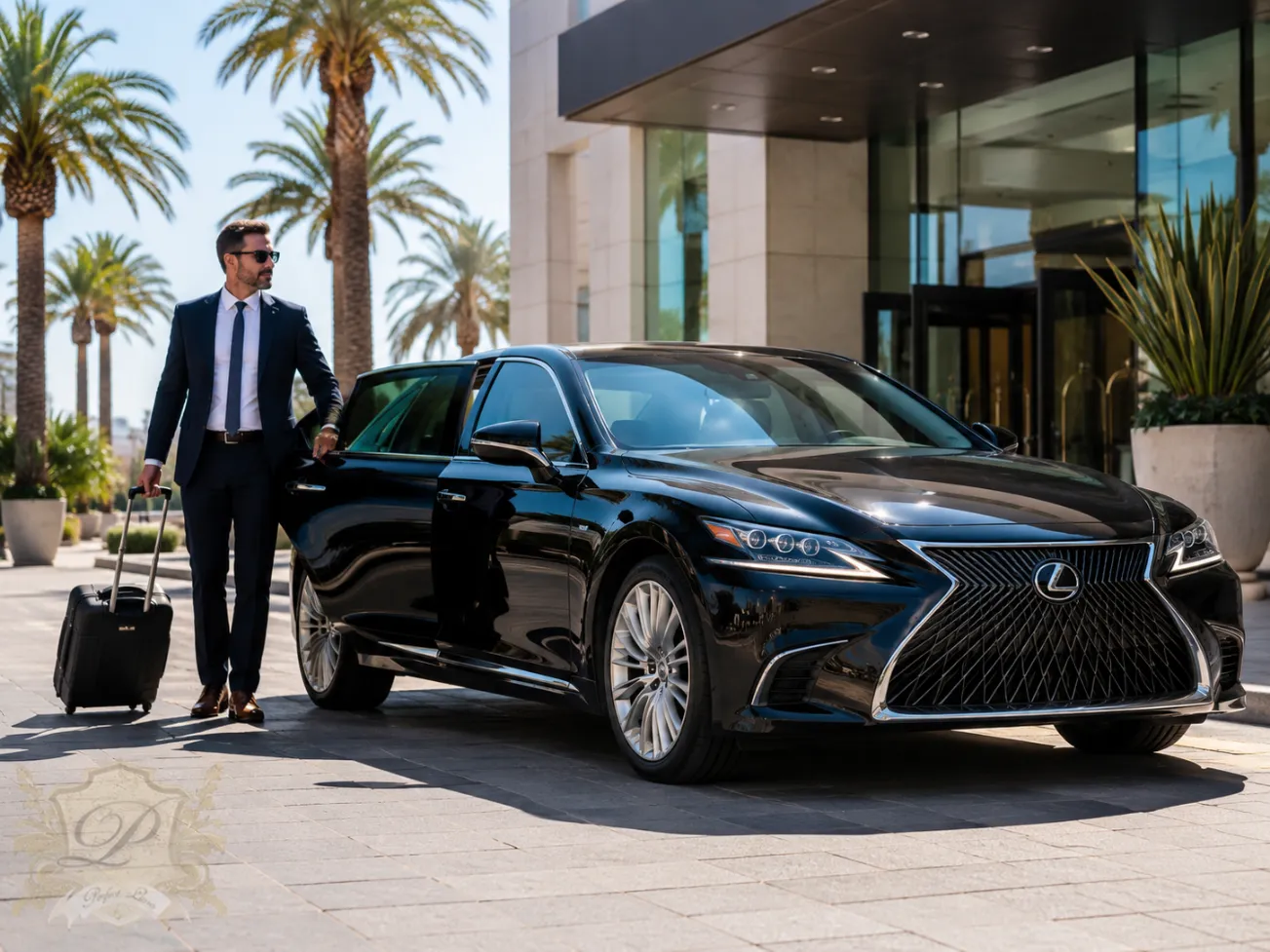
The Perfect Limo and Sedan’s Luxury Lexus Sedan is one of the sedan choices shown in the company’s current fleet.

Black lexus executive sedan for corporate transportation and business travel in southern california

2. Choose an Executive SUV When You Need More Passenger or Luggage Room

An executive SUV occupies the middle ground between a private sedan and a larger group vehicle. It can preserve the polished appearance expected for executive transportation while providing additional room for passengers, bags, and business equipment.

This can be particularly useful for airport travel. Two or more executives arriving with full-size luggage, carry-ons, laptop bags, or presentation cases may discover that passenger seating is only half of the capacity question. The luggage still has to fit safely and practically.

An SUV can also be appropriate when a company is hosting several clients. Instead of assigning separate sedans, the group may be able to travel in one vehicle when passenger and luggage requirements allow.

The Perfect Limo and Sedan lists its Cadillac Escalade Luxury SUV for chauffeured point-to-point service, dedicated chauffeur service, and airport transfers. The vehicle page currently identifies it as a 4–6 passenger option.

An Executive SUV May Be Better When:

  • Several executives are traveling together
  • Passengers are arriving with substantial luggage
  • A company is transporting a small client or VIP party
  • The itinerary includes airport, hotel, and meeting transportation
  • Additional cabin or cargo space is useful
  • The company wants one executive vehicle instead of several smaller cars
Black cadillac escalade executive suv for corporate transportation in southern california

3. Choose a Mercedes Sprinter When the Corporate Group Needs to Stay Together

The strongest argument for a Mercedes Sprinter is usually not luxury. It is coordination. Once a corporate group grows beyond what fits practically in one sedan or SUV, the company has to decide whether to divide travelers among several cars or use a larger vehicle.

Splitting a team among several vehicles can work when travelers have different destinations or schedules. It becomes less attractive when everyone needs to attend the same conference, arrive at the same client meeting, reach the same dinner reservation, or depart for the airport together.

In those situations, a Sprinter can reduce the number of separate vehicle assignments and help the group move as one unit. This can make communication, departure timing, hotel pickups, venue arrivals, and return transportation easier for the organizer to manage.

The Perfect Limo and Sedan offers several Sprinter configurations in its current fleet. Its Mercedes-Benz Sprinter Executive Limousine is currently listed for 10–12 passengers and supports point-to-point, dedicated chauffeur, and airport transportation.

Common Corporate Sprinter Uses

  • Management and leadership teams
  • Conference and convention groups
  • Airport transportation for several colleagues
  • Client delegations
  • Corporate retreats and off-site meetings
  • Hotel-to-venue transportation
  • Company dinners and hospitality events
  • Multi-stop group business itineraries
Black mercedes sprinter for corporate transportation and group business travel in southern california

4. Which Vehicle Is Best for Corporate Airport Transportation?

Airport transportation is where the executive sedan vs SUV vs Sprinter comparison becomes particularly practical because passenger count and luggage must be evaluated together.

A solo executive arriving at Ontario International Airport with a suitcase and carry-on may be well suited to a sedan. Two or more travelers with several large bags may benefit from an SUV. A larger team arriving for a conference or company event may be easier to coordinate in a Sprinter if the passenger and luggage requirements fit the selected configuration.

Southern California business travelers may use Ontario International Airport (ONT), Los Angeles International Airport (LAX), John Wayne Airport (SNA), Long Beach Airport (LGB), and private aviation facilities depending on the trip. Airport choice can also affect how much ground travel remains after the flight.

The vehicle should therefore be selected using the entire airport itinerary: flight, passenger count, luggage, destination, additional stops, and what the travelers are doing next. Review The Perfect Limo and Sedan’s airport limo and car service for additional airport transportation planning.

5. Passenger Capacity and Luggage Capacity Are Not the Same Thing

One of the most common mistakes in corporate transportation planning is choosing a vehicle based entirely on the number of available passenger seats.

A vehicle may accommodate the stated number of passengers but still be impractical once the travelers bring full-size suitcases, carry-ons, laptop bags, presentation equipment, trade show materials, garment bags, or other business items.

This is especially important for airport trips and conferences. A team flying into Southern California for several days will usually carry substantially more luggage than the same team traveling from a nearby office to a local dinner.

Booking Tip: Give Both Passenger and Luggage Counts

When requesting corporate transportation, provide the number of passengers, full-size suitcases, carry-on bags, and any oversized business equipment. This gives the reservation team more useful information than passenger count alone and reduces the risk of selecting a vehicle that technically has enough seats but insufficient practical cargo room.

6. Executive Meetings and Roadshows Often Favor Sedans or SUVs

A business itinerary involving one executive and several appointments is usually a different transportation problem from moving an employee group to a conference.

For a roadshow, client visit, investor schedule, or leadership meeting day, a sedan or SUV can be easier to use because the passenger party is relatively small. The same vehicle can remain associated with the executive’s schedule without introducing group capacity that is not needed.

Consider an executive traveling from a hotel in Anaheim to a meeting in Irvine, another appointment in Los Angeles, and then LAX for an evening departure. The vehicle decision should consider the number of passengers, luggage, total time on the road, and whether the executive is traveling alone or with colleagues.

For a deeper comparison of business transportation formats, see our guide to executive car service vs limo service for business travel. That article focuses on service format, while this guide focuses specifically on matching sedan, SUV, and Sprinter vehicles to the itinerary.

7. Conferences, Teams, and Corporate Events Often Favor Sprinters

Corporate events introduce a different operational priority: moving several people through the same schedule. Airport arrivals, hotel pickups, venue transfers, client dinners, networking events, and return transportation may all need to happen within specific windows.

If the travelers are divided among several sedans or SUVs, the organizer must manage several vehicles and potentially several different arrival times. That may be completely acceptable when the group has different schedules. When everyone needs to be in the same place at the same time, a larger group vehicle can make the transportation plan simpler.

A Sprinter can also allow colleagues to remain together between locations instead of repeatedly separating and regrouping. This can be useful for leadership teams, visiting clients, conference delegations, company retreats, and employees traveling together between an airport, hotel, office, and venue.

The California Public Utilities Commission’s Charter-Party Carrier information explains the regulatory framework for prearranged passenger transportation used exclusively by an individual or group. Businesses arranging professional group transportation should use properly authorized carriers and confirm the reservation details in advance.

8. Sometimes the Best Corporate Solution Is a Mixed Fleet

Not every company event should force every passenger into the same vehicle category. A mixed-fleet plan can be more practical when executives, employees, clients, and speakers have different schedules or responsibilities.

For example, a chief executive and visiting client may arrive separately and use individual sedans or SUVs. A ten-person employee group may arrive later and use a Sprinter. Everyone can then meet at the same conference venue before using different vehicles again for departures.

Another scenario might involve SUVs for senior leadership and a Sprinter for the broader management team. The goal is not uniformity. The goal is assigning the correct transportation resource to each passenger group.

This is one reason companies should provide the entire event or travel schedule rather than asking only for a vehicle price. A transportation provider can evaluate whether one vehicle, several vehicles, or a combination of vehicle types better supports the operation.

9. How Vehicle Choice Affects Corporate Transportation Cost

Vehicle type is one of several factors that can affect corporate transportation pricing. Larger or more specialized vehicles generally represent different service categories from executive sedans, but the individual vehicle price should not be evaluated in isolation.

If one sedan handles the entire trip, adding an SUV or Sprinter without a capacity need may increase cost unnecessarily. However, if a corporate team would otherwise require several separate sedans, one appropriately sized group vehicle may be operationally and financially worth comparing.

Businesses should therefore compare the cost of the complete transportation plan. Include vehicle count, service duration, number of stops, airport requirements, waiting time, luggage, and whether several passengers need to move together.

Our guide to corporate transportation cost in Southern California explains these pricing factors in more detail, including point-to-point service, extended reservations, airports, group travel, and multi-stop itineraries.

10. Vehicle Choice Also Depends on How Important the Trip Is

Business transportation decisions are not made in a vacuum. A company may use different transportation strategies for a senior executive, an important client, a large employee group, and a casual internal trip.

For a high-priority client arrival, the company may prefer to arrange a specific sedan or SUV before the guest lands. For a management retreat involving ten colleagues, the ability to keep everyone in one group vehicle may matter more. For a single low-complexity trip with a flexible schedule, a dedicated corporate vehicle may not be necessary at all.

If the broader question is whether the company should reserve professional transportation in the first place, our corporate transportation vs rideshare comparison covers that decision separately. Once professional transportation is selected, vehicle choice becomes the next step.

Executive Sedan vs SUV vs Sprinter: Business Travel Decision Table

Business ScenarioVehicle to ConsiderReason
Solo executive airport transferSedanEfficient private transportation without unnecessary capacity
Two or more executives with significant luggageSUVAdditional passenger and cargo room may be useful
One important client or VIPSedanProfessional, discreet individual transportation
Small client group with luggageSUVKeeps the party together while adding capacity
Management team traveling to one conferenceSprinterSimplifies group coordination and shared arrivals
Executive with multiple private meetingsSedan or SUVChoice depends on passengers, luggage, and desired space
Large corporate event with leadership and employee groupsMixed fleetSedans or SUVs can serve executives while Sprinters serve teams

11. What to Tell the Transportation Company Before Choosing a Vehicle

A reservation team can make a more useful vehicle recommendation when it receives the full transportation requirement instead of only a passenger number.

  • Passenger count: include everyone expected to travel in the vehicle.
  • Luggage: identify full-size suitcases, carry-ons, equipment, and unusual cargo.
  • Pickup location: provide the complete airport, hotel, office, residence, or venue information.
  • Every destination: include intermediate stops and the final destination.
  • Required arrival times: note fixed meetings, presentations, flights, or event start times.
  • Flight information: provide airline and flight details for airport trips.
  • Trip purpose: identify whether the passengers are executives, employees, clients, speakers, or event attendees.
  • Vehicle preference: mention a sedan, SUV, or Sprinter preference, but allow the final recommendation to account for practical capacity.

For company-wide transportation needs, review The Perfect Limo and Sedan’s corporate limo and sedan service and submit the complete itinerary when requesting availability.

Match the Corporate Vehicle to the Actual Trip

The Perfect Limo and Sedan provides executive sedans, luxury SUVs, Mercedes-Benz Sprinters, and other chauffeured vehicle options for airport transportation, executive meetings, corporate teams, client transportation, conferences, company events, and multi-stop business travel throughout Southern California.

Instead of choosing only by appearance, provide the passenger count, luggage, pickup and destination details, airport information, meeting schedule, and required stops so the reservation can be matched to an appropriate vehicle.

Planning corporate transportation? Explore the available vehicle fleet or call 800-951-3017 to discuss your itinerary, passenger requirements, and vehicle options.

Frequently Asked Questions About Executive Sedans, SUVs, and Sprinters

Is an executive sedan or SUV better for business travel?

An executive sedan is often sufficient for a solo executive or small party with limited luggage. An SUV may be a better fit when several passengers are traveling together, more luggage is involved, or additional cabin and cargo space would improve the trip.

When should a company book a Mercedes Sprinter instead of SUVs?

A Sprinter can be useful when a larger corporate group shares the same pickup, destination, and schedule and benefits from traveling together. Several SUVs may still make more sense when passengers have different destinations or departure times.

How many passengers can the Cadillac Escalade carry?

The Perfect Limo and Sedan currently lists its Cadillac Escalade Luxury SUV as a 4–6 passenger vehicle. Practical suitability can still depend on luggage and other items being carried, so passenger and luggage requirements should both be provided when booking.

How many passengers can a Mercedes Sprinter carry?

Capacity varies by Sprinter configuration. The Perfect Limo and Sedan currently lists its Mercedes-Benz Sprinter Executive Limousine for 10–12 passengers. Other Sprinter configurations may differ, so the exact vehicle and capacity should be confirmed for the reservation.

What is the best vehicle for a corporate airport transfer?

The best vehicle depends on passenger count and luggage. A sedan can work well for an individual executive, an SUV may suit several travelers or additional luggage, and a Sprinter can support a larger group when passenger and cargo requirements fit the selected vehicle.

Is a Sprinter cheaper than booking several sedans?

Not necessarily. Pricing depends on the specific vehicle, route, service duration, stops, date, and other reservation details. Businesses should compare the complete cost of one appropriate group vehicle with the combined cost and coordination requirements of several smaller vehicles.

Can a company use sedans, SUVs, and Sprinters for the same event?

Yes. A mixed fleet can be useful when executives, clients, employees, speakers, or other passenger groups have different schedules and transportation requirements. Sedans or SUVs may serve individual executives while Sprinters transport larger teams.

Final Takeaway

The decision between an executive sedan vs SUV vs Sprinter should come down to what the corporate trip actually requires. A sedan works well for discreet individual executive transportation. An SUV adds useful room for passengers and luggage. A Sprinter becomes particularly valuable when a larger group needs coordinated transportation.

Companies should resist choosing the largest available vehicle automatically. They should also avoid selecting a vehicle that technically fits the passengers but does not realistically accommodate their luggage, equipment, or group schedule.

For Southern California corporate transportation, the strongest vehicle decision is the one that fits the passengers, luggage, airport or meeting itinerary, required arrival times, and overall business objective. When those details change, the correct vehicle may change with them.

sprinter-van-vs-sprinter-limo-which-is-better-for-your-group-banner

Sprinter Van vs. Sprinter Limo: Which Is Better for Group Transportation?

Mercedes Sprinter Group Transportation Guide

Sprinter Van vs Sprinter Limo: Which Is Better for Your Group?

Comparing a Sprinter van vs Sprinter limo can be confusing because both vehicles may begin with the same Mercedes-Benz Sprinter platform while serving very different group transportation needs. One trip may prioritize practical group movement between an airport and hotel. Another may involve executives, a wedding party, a celebration, nightlife, or a special event where the interior configuration and presentation matter just as much as passenger capacity.

The Perfect Limo and Sedan currently lists multiple Mercedes-Benz Sprinter configurations rather than treating every Sprinter as the same vehicle. Its active fleet includes a Mercedes-Benz Sprinter Shuttle Van, Mercedes-Benz Sprinter Executive Shuttle, Mercedes-Benz Sprinter Luxury Limousine, and Mercedes-Benz Sprinter Executive Limousine.

That distinction matters because the current shuttle configurations are listed for up to 14 passengers, while the Luxury Limousine and Executive Limousine configurations are listed for 10 to 12 passengers. The service descriptions also differ, with shuttle models positioned toward group movement and the limousine configurations offering a more limousine-oriented service experience.

The right choice therefore depends on the actual trip: number of passengers, luggage, airport or cruise requirements, corporate presentation, hotel transfers, event type, pickup locations, schedule, and the specific Sprinter configuration available for the reservation.

Quick Answer

A Sprinter van or shuttle-style Sprinter is usually worth considering when the priority is practical group transportation, such as airports, hotels, corporate shuttles, cruise transfers, weddings, or event movement. A Sprinter limo can be the stronger choice when the group wants a more limousine-oriented vehicle experience for executive travel, celebrations, nightlife, special occasions, or premium point-to-point transportation. Do not choose from the name alone. Compare the exact vehicle’s seating capacity, interior configuration, luggage requirements, trip purpose, pickup schedule, and services before booking.

Key Takeaways

  • The Perfect Limo and Sedan currently has several different Mercedes Sprinter configurations, so the words “Sprinter van” and “Sprinter limo” should not be treated as interchangeable.
  • The current Sprinter Shuttle Van and Executive Shuttle are listed for 14 passengers.
  • The current Sprinter Luxury Limousine and Executive Limousine are listed for 10–12 passengers.
  • Shuttle-style Sprinters can be useful for airports, hotels, corporate transportation, cruise transfers and coordinated group movement.
  • Limousine-style Sprinters can be useful when the trip places more emphasis on presentation, celebration or a premium group experience.
  • Passenger capacity alone does not determine vehicle fit. Luggage, strollers, mobility equipment and other cargo also matter.
  • Always confirm the exact vehicle configuration rather than assuming every Mercedes Sprinter has identical seating, amenities or cargo space.

What Is the Difference Between a Sprinter Van and a Sprinter Limo?

The biggest mistake when comparing a Sprinter van and Sprinter limo is assuming that the exterior vehicle name tells you everything about the interior.

Mercedes-Benz manufactures the Sprinter platform in several passenger and commercial configurations. Transportation companies can then operate Sprinters configured for different purposes, including passenger shuttles, executive transportation and limousine-style travel.

Mercedes-Benz itself currently offers passenger-oriented Sprinter models with different wheelbases, roof heights and seating capacities. This illustrates why “Mercedes Sprinter” alone is not enough information to determine how a particular chauffeured vehicle is configured.

Travelers who want to understand the underlying vehicle platform can review the official Mercedes-Benz Sprinter Passenger Van information.

For a chauffeured reservation, however, the more important question is which specific Sprinter the transportation company will provide and how that vehicle is configured for the trip.

Simple Rule

Think of “Sprinter van” and “Sprinter limo” as different transportation configurations within the broader Mercedes Sprinter category. Ask about the exact vehicle, seating, luggage fit, service type and interior before booking.

The Perfect Limo and Sedan’s Current Mercedes Sprinter Options

The current fleet is a good example of why groups should compare specific Sprinter configurations instead of asking only for “a Sprinter.”

Current VehicleListed CapacityExamples of Services Listed
Mercedes-Benz Sprinter Shuttle Van 14 passengers Corporate transportation, shuttling, airport transfers, cruise transfers, point-to-point service
Mercedes-Benz Sprinter Executive Shuttle 14 passengers Executive transportation, wedding/corporate/concert shuttling, airport and cruise transfers
Mercedes-Benz Sprinter Luxury Limousine 10–12 passengers Point-to-point, dedicated chauffeur, airport transfer, nightlife and limousine-oriented service
Mercedes-Benz Sprinter Executive Limousine 10–12 passengers Executive transportation, point-to-point service, dedicated chauffeur, airport transfer and nightlife

The vehicle names and capacities demonstrate an important point: a larger numeric passenger capacity does not automatically make one configuration better. The best option is the one that matches the trip.

Travelers can review the complete The Perfect Limo and Sedan fleet before selecting a vehicle.

1. When a Sprinter Van or Shuttle-Style Sprinter Is Better

A Sprinter van or shuttle-oriented configuration is often worth considering when the primary purpose of the trip is moving a group efficiently between clearly defined destinations.

Examples include an office to a hotel, airport to conference venue, airport to cruise terminal, wedding hotel to ceremony location, or a company group traveling together to an event.

The Perfect Limo and Sedan’s current Mercedes-Benz Sprinter Shuttle Van is listed for 14 passengers and specifically includes corporate transportation, airport transfers, cruise transfers and shuttling for weddings, corporate programs and concert events.

A Shuttle-Style Sprinter Can Be a Strong Fit For:

  • Corporate teams
  • Conference attendees
  • Airport groups
  • Cruise passengers
  • Wedding guest transportation
  • Hotel-to-event shuttles
  • Family groups
  • Concert and event transportation
  • Groups prioritizing coordinated movement over a limousine-style experience

2. When a Sprinter Limo Is Better

A Sprinter limo can make more sense when the vehicle is not simply transporting the group but is also part of the presentation or experience of the occasion.

The Perfect Limo and Sedan currently lists both a Mercedes-Benz Sprinter Luxury Limousine and an Executive Limousine. Each is currently listed for 10 to 12 passengers.

Their service pages include point-to-point transportation, dedicated chauffeur service, airport transportation and nightlife. The limousine pages also reference beverage-related service options that are not presented the same way on the standard Shuttle Van listing.

A Sprinter Limo Can Be Worth Comparing For:

  • Executive group transportation
  • VIP guest movement
  • Birthdays and celebrations
  • Wedding parties
  • Nightlife transportation
  • Anniversary trips
  • Upscale dinners
  • Resort transportation
  • Groups that want the vehicle experience to be part of the occasion

The exact interior should always be confirmed before reserving. Do not assume that two vehicles described as Sprinter limousines have identical seating, features or layouts.

3. Sprinter Van vs Sprinter Limo for Corporate Transportation

Corporate travel is one of the strongest examples of why the answer depends on the specific purpose of the transportation.

Choose the Shuttle-Oriented Option When the Priority Is Group Movement

A corporate planner moving employees from an airport to a conference hotel may primarily need sufficient passenger capacity, luggage accommodation, one coordinated pickup, and one destination.

The Executive Shuttle or Shuttle Van can therefore be appropriate for conferences, company retreats, hotel transfers, employee events, trade shows and groups traveling between several business locations.

Compare a Sprinter Limo When Presentation Matters More

A limousine-style Sprinter may be worth comparing when a company is transporting executives, important clients, VIP guests, leadership teams or another group where the vehicle is expected to provide a more premium arrival experience.

A corporate transportation decision should therefore begin with the question, “Are we primarily moving people together, or is the vehicle itself part of the client or executive experience?”

Companies can also review The Perfect Limo and Sedan’s corporate limo and sedan service for executive and group transportation planning.

Mercedes sprinter van arriving at a hotel with a corporate transportation group

4. Which Sprinter Is Better for Airport Transportation?

Airport groups should begin with passenger and luggage requirements.

Fourteen airline passengers can generate fourteen checked suitcases plus carry-ons. That is a significantly different transportation problem from fourteen employees traveling locally with backpacks.

This is why the listed passenger capacity should never be interpreted as guaranteed airport capacity for the maximum number of passengers plus unlimited luggage.

Sprinter Van for Airport Groups

A shuttle-style Sprinter can be useful when a company, family or group is arriving together and traveling directly to one hotel, conference, cruise terminal, office or other destination.

Sprinter Limo for VIP Airport Groups

A limousine-oriented Sprinter may be worth comparing when the passengers are executives, important clients, wedding-party members or another group for whom the arrival experience and vehicle presentation are particularly important.

For airport travel, provide the airline, flight number, passenger count and full luggage estimate so the reservation team can determine which configuration actually fits.

See our Southern California airport transportation service for additional airport planning information.

5. Sprinter Van vs Sprinter Limo for Cruise Transportation

Cruise transportation often favors practical capacity because passengers may be traveling with more baggage than an ordinary day trip.

A shuttle-oriented Sprinter may therefore be the first configuration worth comparing when an extended family or group is traveling from an airport, hotel or home to a cruise terminal.

That does not mean the 14-passenger shuttle should automatically be booked for 14 cruise passengers. The luggage requirement still needs to be evaluated.

Ten people with large suitcases and carry-ons may create a different cargo requirement from fourteen passengers traveling to a local dinner with only small personal belongings.

A limousine-style Sprinter can also be used for cruise-related transportation when the smaller group prefers that experience and the selected vehicle has suitable luggage capacity.

Our guide to airport to cruise port transportation by sedan, SUV or Sprinter explains the passenger-and-luggage decision in more detail.

Family group boarding a mercedes sprinter van for cruise terminal transportation

6. Weddings, Celebrations and Resort Transportation

Events often create the closest comparison between a Sprinter van and Sprinter limo because both can move a group, but the desired experience can be very different.

Wedding Guest Shuttle

A wedding planner moving guests from a hotel to a ceremony may prioritize organized shuttle movement. A shuttle-style Sprinter can be a practical option when passengers need to move between defined locations at scheduled times.

Wedding Party or Celebration Transportation

The wedding party, birthday group or anniversary party may prefer a limousine-style Sprinter when the transportation itself is intended to feel like part of the occasion.

Resort Arrival

A company retreat or family vacation arriving at a resort may favor a shuttle configuration when the priority is transporting passengers and luggage. A smaller executive or VIP group may instead prefer a limousine-oriented configuration for the arrival experience.

Mercedes sprinter van arriving at an upscale southern california resort with a private group

7. Passenger Capacity vs Luggage Capacity

Passenger numbers are useful, but they are not enough to select a Sprinter.

A vehicle listed for 14 passengers does not necessarily have the same luggage capacity when every seat is occupied. Interior layouts, luggage areas and vehicle configurations can differ.

This is particularly important for airport and cruise transportation.

Tell the Transportation Company About:

  • Total passengers
  • Large checked suitcases
  • Carry-on bags
  • Golf bags
  • Strollers
  • Mobility equipment
  • Medical equipment
  • Garment bags
  • Other oversized items

A group of eight with substantial cruise luggage may need a different configuration from a group of twelve traveling locally without luggage.

Better Question to Ask

Instead of asking, “Can the Sprinter seat our group?” ask, “Can this exact Sprinter configuration accommodate our passengers and everything we are bringing?”

8. Do Not Assume Every Sprinter Limo Has the Same Amenities

Amenities are another area where broad Sprinter labels can cause confusion.

The current Luxury Limousine and Executive Limousine pages from The Perfect Limo and Sedan list beverage-related options such as name-brand sodas and water, a complimentary bar available upon request, and specialty beverages that may involve additional charges.

Those details should not automatically be applied to every Sprinter in the fleet. The Shuttle Van and Executive Shuttle pages have their own service descriptions.

If a particular feature matters to your group, confirm it for the exact vehicle before booking.

Ask About the Specific Vehicle

  • Exact passenger capacity
  • Interior arrangement
  • Practical luggage capacity
  • Beverage service when relevant
  • Airport or cruise suitability
  • Event or shuttle suitability
  • Any feature that is essential to your particular trip

9. Which Sprinter Is Better for Multi-Stop Transportation?

Multi-stop itineraries can work with either type of Sprinter, but the trip structure should influence the vehicle.

A corporate team traveling from a hotel to a conference, restaurant and airport may prioritize efficient group movement. An executive or VIP group following a similar schedule may place more importance on the limousine-style experience.

Wedding transportation may involve a shuttle-style Sprinter moving guests repeatedly between a hotel and venue, while the wedding party uses a different limousine-style Sprinter for its own itinerary.

When requesting multi-stop transportation, provide every known pickup, destination, fixed appointment and return requirement. Vehicle selection should happen after the transportation company understands the complete itinerary.

10. Is a Sprinter Van Cheaper Than a Sprinter Limo?

Do not assume that one Sprinter category is always cheaper than another.

Transportation pricing can depend on the specific vehicle, service duration, route, pickup locations, date, event, airport or cruise requirements, waiting time, additional stops, scheduling and other reservation details.

A short point-to-point trip in one configuration cannot be fairly compared with several hours of multi-stop service in another simply by looking at the vehicle name.

Compare Quotes Using the Same Itinerary

Give the transportation company the same passenger count, date, pickup location, destinations, service times, luggage, special requirements and return plan when asking which Sprinter provides the better value.

This article intentionally avoids publishing unsupported fixed rates because the correct price should reflect the actual reservation.

Sprinter Van vs Sprinter Limo Decision Table

Group SituationOption to Compare FirstWhy
Corporate group from airport to conference hotelSprinter shuttle/vanPrimary goal is coordinated group transportation
Executive leadership or VIP groupExecutive or limousine SprinterPresentation and experience may carry more weight
Large cruise family with luggageShuttle-style Sprinter, subject to luggage fitPractical passenger and cargo requirements are the priority
Wedding guests between hotel and venueSprinter shuttleScheduled guest movement is the main purpose
Wedding party or birthday celebrationSprinter limoThe transportation experience is part of the occasion
Family trip with many bagsAsk provider to compare exact configurationsCargo requirement may matter more than the vehicle label
Upscale resort or client arrivalExecutive or limousine SprinterPresentation may be part of the travel objective
Large group simply moving between venuesSprinter shuttle/vanHigher listed passenger capacity may better match practical group movement

11. Questions to Ask Before Reserving Any Mercedes Sprinter

The most useful booking conversation focuses on the exact vehicle and trip rather than the broad word “Sprinter.”

  • Which exact Sprinter configuration are we reserving?
  • What is the listed passenger capacity?
  • Will our luggage fit with that passenger count?
  • What type of seating/interior does this particular vehicle have?
  • Is the vehicle appropriate for airport or cruise luggage?
  • Does the vehicle suit corporate shuttle service or the premium experience we want?
  • Which requested amenities are actually available in this exact vehicle?
  • Does the itinerary include multiple stops or waiting time?
  • Is everyone traveling together for the entire trip?
  • Would multiple vehicles provide more flexibility than one Sprinter?

12. When a Sedan or SUV May Actually Be Better

Not every group needs a Sprinter at all.

A couple, solo executive or very small group may be better matched to a luxury sedan. A family or small team with more luggage may benefit from an executive SUV.

Selecting a larger vehicle than necessary can add capacity the trip does not need. Conversely, forcing a group into an SUV when a Sprinter better matches the passenger and cargo requirement can create an unnecessarily cramped transportation plan.

For a broader vehicle comparison, review our guide to executive sedan vs SUV vs Sprinter transportation.

Sprinter Van vs Sprinter Limo Booking Checklist

Booking DetailWhat to Provide or Confirm
Trip typeCorporate, airport, cruise, wedding, nightlife, resort, family or other event
PassengersExact number traveling in the vehicle
LuggageLarge suitcases, carry-ons and special equipment
Exact SprinterShuttle Van, Executive Shuttle, Luxury Limousine or Executive Limousine
InteriorConfirm current configuration and features
PickupExact home, hotel, airport, office or venue
StopsEvery planned destination and fixed commitment
Airport informationAirline and flight number when applicable
Cruise informationShip, port and embarkation information when applicable
Return tripPickup time, location and final destination
Quote scopeConfirm what the quoted transportation service includes

Not Sure Which Mercedes Sprinter Fits Your Group?

The Perfect Limo and Sedan currently offers multiple Mercedes-Benz Sprinter configurations for corporate travel, airport transfers, cruise transportation, weddings, events, nightlife and private group transportation throughout Southern California.

Instead of booking only by passenger count, provide the trip type, pickup locations, destinations, number of passengers, luggage, event requirements and preferred transportation experience.

Need help comparing a Sprinter van vs Sprinter limo? Review our current Mercedes Sprinter fleet or call 800-951-3017 to discuss your group, itinerary and vehicle requirements.

Frequently Asked Questions About Sprinter Vans and Sprinter Limos

What is the difference between a Sprinter van and Sprinter limo?

Both can use the Mercedes-Benz Sprinter platform, but the passenger configuration, interior, capacity and intended service can differ. Shuttle-style Sprinters generally emphasize practical group movement, while limousine-style Sprinters may place greater emphasis on the premium transportation experience. Always confirm the exact vehicle.

How many passengers fit in The Perfect Limo’s Sprinter vans?

The current Mercedes-Benz Sprinter Shuttle Van and Executive Shuttle are listed for 14 passengers. Passenger capacity does not automatically guarantee sufficient luggage capacity when every seat is occupied.

How many passengers fit in The Perfect Limo’s Sprinter limos?

The current Mercedes-Benz Sprinter Luxury Limousine and Executive Limousine are each listed for 10 to 12 passengers. Confirm the exact vehicle and configuration before reserving.

Is a Sprinter van better for airport transportation?

A shuttle-style Sprinter can be a strong choice for airport groups when passenger and luggage capacity fit. A Sprinter limo can also work for airport transportation, particularly for executive or VIP groups. The best option depends on the actual passengers, bags and desired experience.

Is a Sprinter limo better for weddings and celebrations?

It can be when the transportation experience is part of the event. A shuttle-style Sprinter may be more practical for moving wedding guests between a hotel and venue, while a limousine-style Sprinter may better fit a wedding party, birthday or celebration group.

Which Sprinter is best for corporate travel?

A Sprinter Shuttle Van or Executive Shuttle can suit corporate teams, airport groups, conferences and hotel transfers. An Executive or Luxury Limousine Sprinter may be worth comparing for leadership teams, clients or VIP groups when presentation is a greater priority.

Does a 14-passenger Sprinter have room for 14 suitcases?

Do not assume so. Listed passenger capacity and practical luggage capacity are different considerations. Provide the number and size of suitcases, carry-ons and other equipment so the transportation company can evaluate whether the exact vehicle configuration fits.

Is a Sprinter van cheaper than a Sprinter limo?

Not necessarily. Pricing can depend on the exact vehicle, date, route, service duration, pickups, additional stops, airport or event requirements and other reservation details. Compare quotes for the same itinerary rather than assuming one category always costs less.

Related Group Transportation Guides

Still deciding whether your group needs a smaller vehicle? Compare an executive sedan vs SUV vs Sprinter for corporate transportation.

Traveling from an airport to a ship? See our airport to cruise port vehicle comparison.

Corporate planners can also review our guide to luxury shuttle and group transportation for corporate retreats.

To compare current vehicle listings directly, browse the full Mercedes, sedan, SUV and group transportation fleet.

Final Takeaway

The answer to Sprinter van vs Sprinter limo depends less on which name sounds more impressive and more on what the group actually needs the vehicle to do.

A shuttle-style Sprinter can be a strong choice when practical group movement is the priority, including corporate shuttles, airport groups, hotel transportation, cruise transfers, weddings and events. The Perfect Limo and Sedan’s current Shuttle Van and Executive Shuttle configurations are listed for 14 passengers.

A limousine-style Sprinter can be the stronger fit when the vehicle experience itself is more important, such as executive groups, VIP transportation, wedding parties, celebrations, nightlife and premium arrivals. The current Luxury and Executive Limousine Sprinters are listed for 10 to 12 passengers.

Neither passenger number should be used without considering luggage. Airport and cruise groups in particular should provide a realistic bag count before the vehicle is selected.

The best booking approach is to describe the group, luggage, itinerary and desired experience first, then choose the exact Mercedes Sprinter configuration that fits those requirements.

Arriving by Limo Still Turns Head

Why First Impressions Still Matter in 2026

Trends come and go fast in 2026, and technology is going even faster. But first impressions have yet to change. How one arrives at an event, meeting, or celebration sets a message before even a single word is spoken.

That is why arriving by limo in 2026 turns heads. It is a sign of intention. It reflects confidence. Above everything, it shows respect for the moment.

Casual transportation dominates everyday life. Meanwhile, luxury travel is designed to stand out more than ever. An arrival in a limousine feels deliberate, polished, and memorable.


Luxury Transportation Still Makes a Statement

Luxury transportation today is not about excess. Instead, it is about presentation. A limousine creates a sense of arrival that ride-share services simply cannot match.

Doors glide open smoothly. A professional chauffeur assists. The moment feels calm and composed.

As a result, arriving by limo in 2026 communicates professionalism, preparation, and poise.


The Psychology Behind a Limo Arrival

Opinions form quickly. Studies show that first impressions are made within seconds. Transportation plays a subtle but important role in shaping those impressions.

A limousine arrival signals:

  • Reliability and punctuality
  • Leadership and confidence
  • Attention to detail
  • Responsibility and composure

Because of this, guests often carry themselves differently when stepping out of a luxury vehicle. Confidence rises. Focus sharpens. Energy shifts.

This explains why arriving by limo in 2026 remains relevant and powerful.


Where Limo Arrivals Have the Most Impact

Corporate Events and Executive Meetings

Leaders depend on perception. Arriving in a limousine reinforces credibility and respect for time.

O 1

Weddings and Formal Celebrations

For weddings and milestone events, a limousine elevates the experience. It turns transportation into part of the ceremony.


Airport Transportation and VIP Travel Services

Airport arrivals often set the tone for an entire trip. Chauffeured service provides a stress-free and refined experience.

Concerts, Nightlife, and Special Occasions

Entertainment events require privacy and safety. A limousine allows guests to enjoy the evening without logistical concerns.

O 3334b310 825b 4e85 a456 2fe3c46e4d8d

Why Limousines Stand Out in Today’s Market

Ironically, the rise of casual transportation has made luxury travel more noticeable. When most arrivals look the same, elegance draws attention.

Limousines now represent:

  • Intentional travel decisions
  • Personalized service
  • Simplified planning
  • Time efficiency

That is why arriving by limo in 2026 feels modern rather than outdated.


Social Media and Visual Presence

A limousine arrival creates strong visuals. It photographs well. It records beautifully. As a result, it becomes naturally shareable.

For professionals and brands, visuals matter. Even a brief arrival clip can reinforce image and credibility.

Even without posting, the experience feels cinematic. That feeling stays long after the ride ends.


Confidence Is the True Luxury

Luxury travel is not just about the vehicle. It is about how passengers feel.

Calm. Prepared. In control.

With a professional chauffeur handling the road, guests arrive relaxed rather than rushed. This mental advantage explains why arriving by limo in 2026 continues to hold value.


A Southern California Travel Perspective

In Southern California, timing and presentation matter. Traffic is unpredictable. Parking is limited. Chauffeured transportation removes uncertainty.

It also allows guests to enjoy the journey rather than endure it.

Outbound Resource:
https://www.visitcalifornia.com


A Closer Look at Corona, California

City Snapshot

Corona was founded in 1886 and developed around citrus groves that once shaped its economy.

Architectural Detail

The city features a rare circular roadway, Grand Boulevard, designed to surround the original downtown district.

Hidden Hollywood Connection

Several classic films quietly used Corona’s historic rail and downtown areas as filming locations due to their timeless appearance.


Arrive With Confidence in The Perfect Limo and Sedan

For travelers who value image, timing, and comfort, The Perfect Limo and Sedan in Corona, California delivers a refined experience from beginning to end.

A Modern and Diverse Fleet

Its FLEET includes luxury sedans, stretch limousines, SUVs, and Sprinters serving corporate events, special occasions, and VIP travelers throughout Southern California.

Each chauffeur is professional, punctual, and detail-oriented. From airport transfers to high-profile events, every ride reflects reliability and polish.

When first impressions matter most, trust experience that shows.
BOOK NOW to arrive with confidence, comfort, and unmistakable style.


Additional Resources

https://www.visitanaheim.org
https://www.discoverlosangeles.com

The Perfect Limo and Sedan

Business Conferences Uplifted by Limo Services

Make the Right Impression with Limo Services

For high-profile business conferences, first impressions count. Comfortable, reliable transportation is no longer a luxury—it’s a necessity. That’s where business conferences limo services truly shine.

Business travelers enjoy unparalleled professionalism, style, and comfort. From the initial pickup to the last drop-off, the ride becomes as smooth as the event itself.


Best Business Conferences Where Limo Services Excel

Every year, conferences such as CES in Las Vegas and Dreamforce in San Francisco bring thousands of professionals together. Whether it’s technology, healthcare, or finance, on-time and professional transportation is crucial.

Selecting a luxury sedan or SUV guarantees punctuality, comfort, and stylish arrival. For such events where networking and making the right impression counts, a professional black car service says it all.


Why Experts Prefer Limo Services

Let’s face it: rideshare and taxi don’t cut the same mustard. Here’s why limo services are the intelligent choice:

  • On-Time Every Time: Leave last-minute worries behind.
  • Superior Comfort: Roomy interiors make you relax or work on the go.
  • Elegant Image: Pull up looking professional and prepared.
  • Group Solutions: The Perfect Limo and Sedan‘s varied Fleet accommodates individuals, teams, and big groups.

Professional drivers are attuned to the rhythm of business events. They realize that time is of the essence, particularly when transferring between hotels, airports, and convention centers.


Impress from the Moment You Arrive

First impressions tend to begin in the parking lot—or preferably, the curb. A black sleek car or luxury SUV demonstrates your attention to detail and professionalism.

With business conferences limo services, each trip is an opportunity to get ready, unwind, or plan. No time wasted. No distractions. Just stress-free, uninterrupted travel.

Need to remain connected? Most cars feature amenities such as Wi-Fi, bottled water, and privacy partitions. All the tools you need to remain on your toes are at your fingertips.


Stress-Free Travel for Airline Staff and Production Teams

Conferences aren’t solely for executives. Airline staff, hospitality teams, and production teams also count on precision scheduling. Limo services offer group-friendly transportation that’s always spot on.

For groups of more than a dozen, sprinter vans and luxury Fleet buses provide comfortable rides with plenty of room for luggage, equipment, and gear.

Airport pickups are easy as well. From LAX to John Wayne Airport, experienced chauffeurs provide a stress-free, on-time arrival every time.


A Sunny Slice of Local History

Corona, California, once officially recognized as the “Lemon Capital of the World,” continues to honor its citrus roots with beautiful groves and historic markers scattered throughout the city. It’s a sunny reminder that some destinations are founded on deep tradition—and always in progress.

Meyer

Book Now for April’s Conference Season

Conference season is heating up quick! To ensure dependable, first-class service, it’s best to Book Now.

The Perfect Limo and Sedan in Corona, California provides a top-of-the-line Fleet of luxurious cars poised to take your experience to the next level. From stylish black car service to executive group shuttles, each ride is designed for excellence.

Elevate your corporate travel this April—and every month after. With The Perfect Limo and Sedan at the wheel, you concentrate on your objectives, while we navigate the road ahead.

👉 See Our Fleet | Book Now