Tag: Business Travel

executive-sedan-vs-suv-vs-sprinter-corporate-transportation-banner

Sedan, SUV, or Sprinter? Choosing the Right Corporate Transportation

Southern California Corporate Vehicle Guide

Executive Sedan vs SUV vs Sprinter for Corporate Transportation

Choosing an executive sedan vs SUV vs Sprinter for corporate transportation should begin with the business itinerary, not with which vehicle looks most impressive. Passenger count, luggage, airport travel, group coordination, meeting schedules, client presentation, and the amount of time spent on the road can all influence which vehicle makes the most sense.

A luxury sedan can be an efficient choice for a solo executive moving between an airport, hotel, and meetings. A Cadillac Escalade can provide additional passenger and luggage room for executives or clients. A Mercedes-Benz Sprinter can be more practical when a management team, conference group, or client delegation needs to travel together rather than split among several vehicles.

The Perfect Limo and Sedan provides executive transportation throughout Southern California using several vehicle categories for different business requirements. This guide explains where each option fits and how to choose according to the actual trip.

Quick Answer

Choose an executive sedan for a solo executive or small business party with limited luggage, an SUV when passengers need more cabin or cargo room, and a Mercedes Sprinter when a larger corporate group benefits from traveling together. There is no universally best corporate vehicle. The correct choice depends on passenger count, luggage, itinerary, airport requirements, meeting schedule, trip duration, and whether keeping the group together is more important than using several smaller vehicles.

Key Takeaways

  • Executive sedan: often best for solo executives, individual client pickups, airport transfers, and discreet point-to-point business travel.
  • Executive SUV: useful when a small group needs more passenger room, more luggage capacity, or a larger executive vehicle.
  • Mercedes Sprinter: particularly useful for corporate teams, conferences, client delegations, events, and airport groups that need to remain together.
  • Seating capacity alone should never determine the vehicle. Luggage, presentation equipment, trade show materials, and other cargo also need to fit.
  • Larger is not automatically better. Unnecessary vehicle capacity can increase transportation cost without improving the trip.
  • Complex corporate itineraries may benefit from a mixed fleet, such as sedans or SUVs for executives and Sprinters for the broader team.

Executive Sedan vs SUV vs Sprinter: Quick Comparison

The easiest way to compare these vehicles is to look at the business problem each one solves. A sedan prioritizes efficient private transportation. An SUV adds room without moving into a full group-transportation format. A Sprinter is designed for situations where moving several travelers together becomes more important.

FactorExecutive SedanExecutive SUVMercedes Sprinter
Best useSolo executive or small business partyExecutives, clients, small groups, additional luggageCorporate teams and larger groups
Airport travelStrong fit for one traveler with moderate luggageUseful for several passengers or more luggageUseful for coordinated group arrivals and departures
PresentationDiscreet executive appearanceLarger executive presenceProfessional group transportation
Group coordinationSeveral cars may be needed as group size increasesCan reduce the number of vehicles for smaller groupsDesigned to keep a larger group together
Typical corporate scenarioExecutive airport transfer or meeting dayClient pickup, leadership team, airport luggageConference, company event, delegation, group airport transfer

These categories should be treated as planning directions rather than rigid rules. The final vehicle decision should always be confirmed using the actual passenger count, luggage requirements, route, schedule, and available fleet.

1. Choose an Executive Sedan for Discreet Individual Business Travel

An executive sedan is often the starting point for private corporate transportation because it fits the needs of many individual business travelers without adding unnecessary vehicle size.

A solo executive traveling between Ontario International Airport and a business meeting may not need the capacity of an SUV or Sprinter. The same is true for a consultant traveling between a hotel and client office, a speaker going to a conference venue, or a visiting executive moving through a series of individual appointments.

Sedans also tend to fit naturally into professional environments. They can arrive at corporate offices, private aviation terminals, hotels, restaurants, conference centers, and meeting venues without making the vehicle itself the focus of the arrival.

Good Executive Sedan Use Cases

  • Solo executive airport transfers
  • Individual client or VIP pickups
  • Hotel-to-office transportation
  • Business dinners and professional events
  • Executive roadshows involving one principal traveler
  • Point-to-point trips with limited luggage or equipment

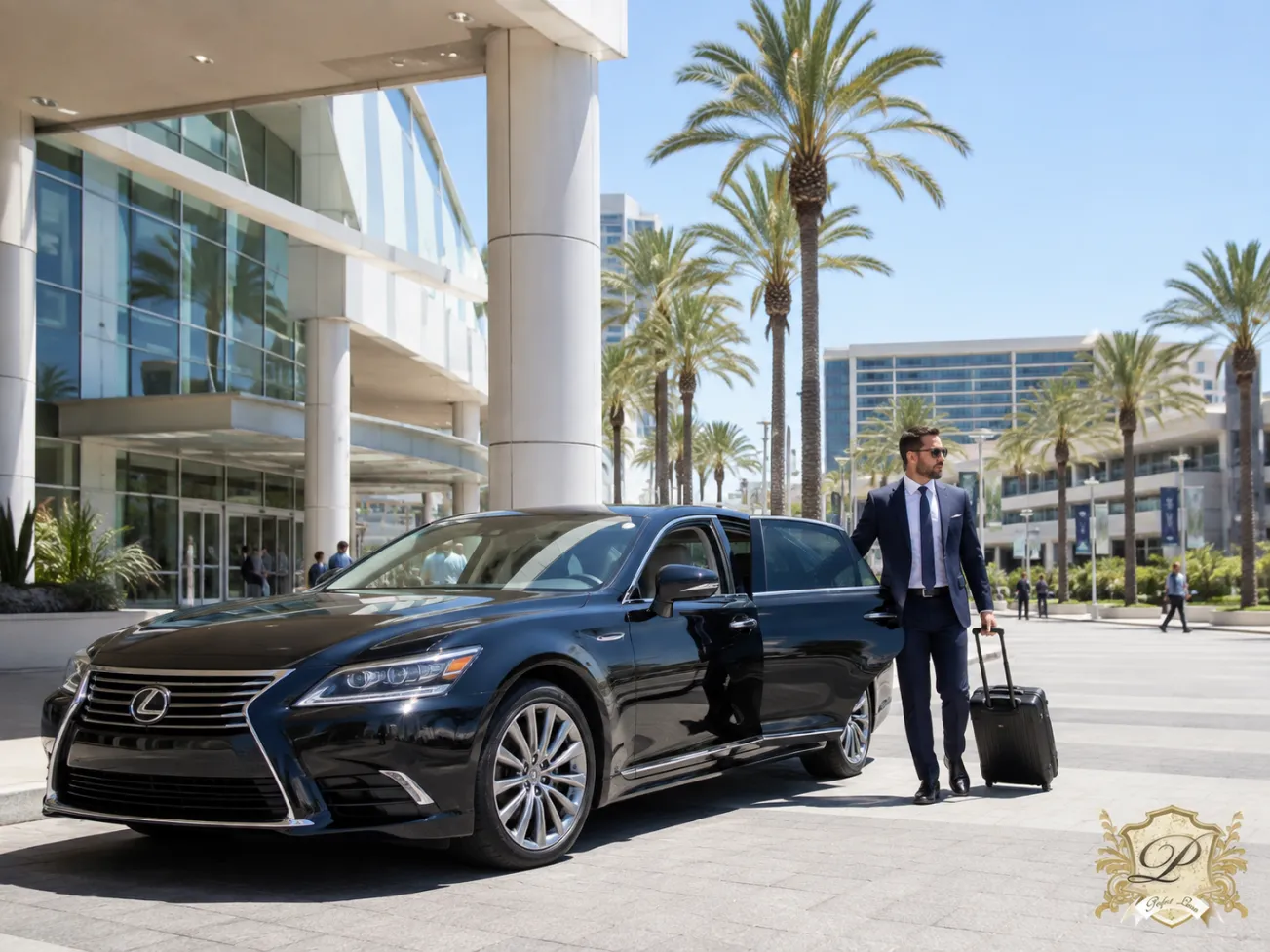
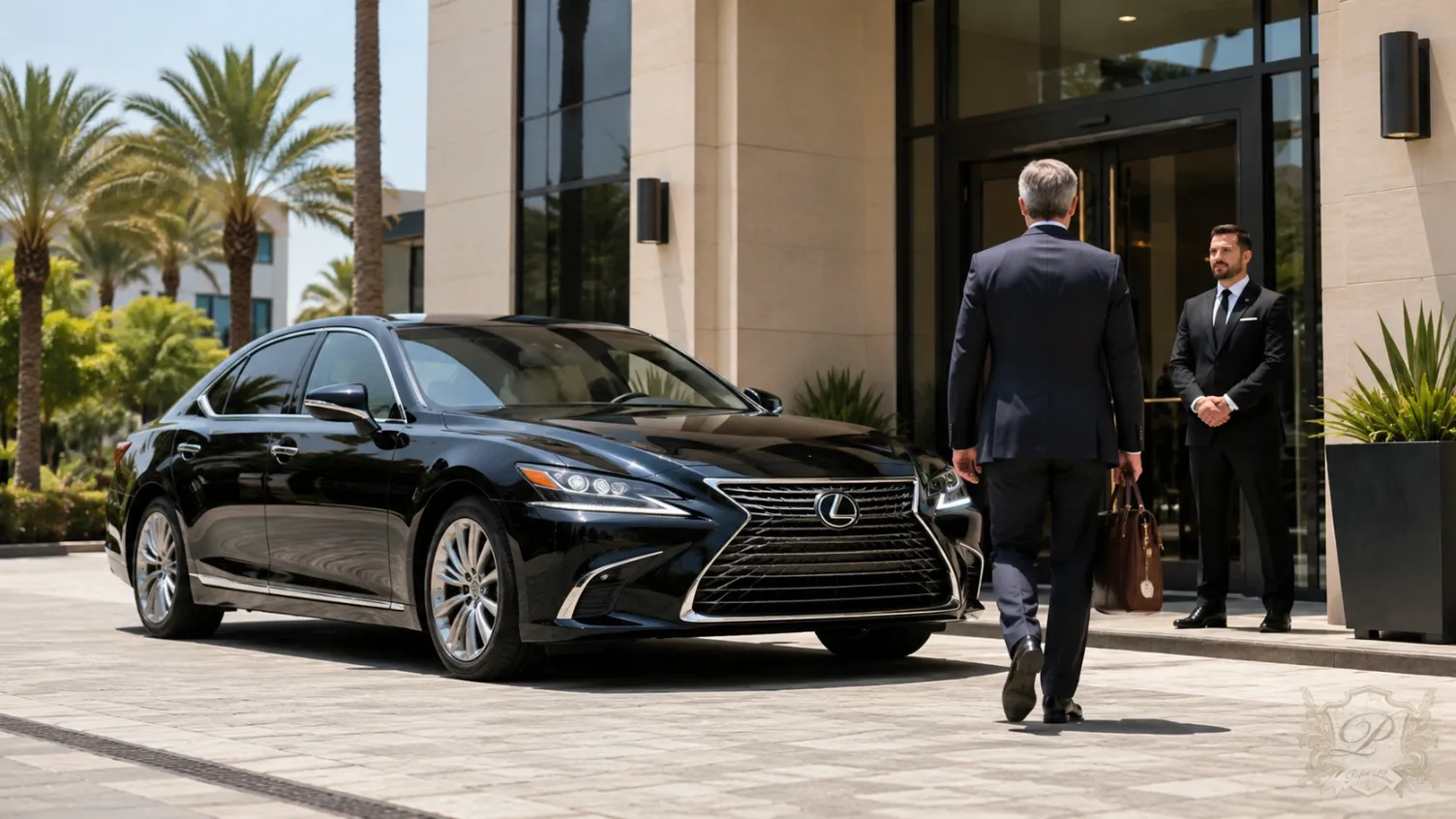
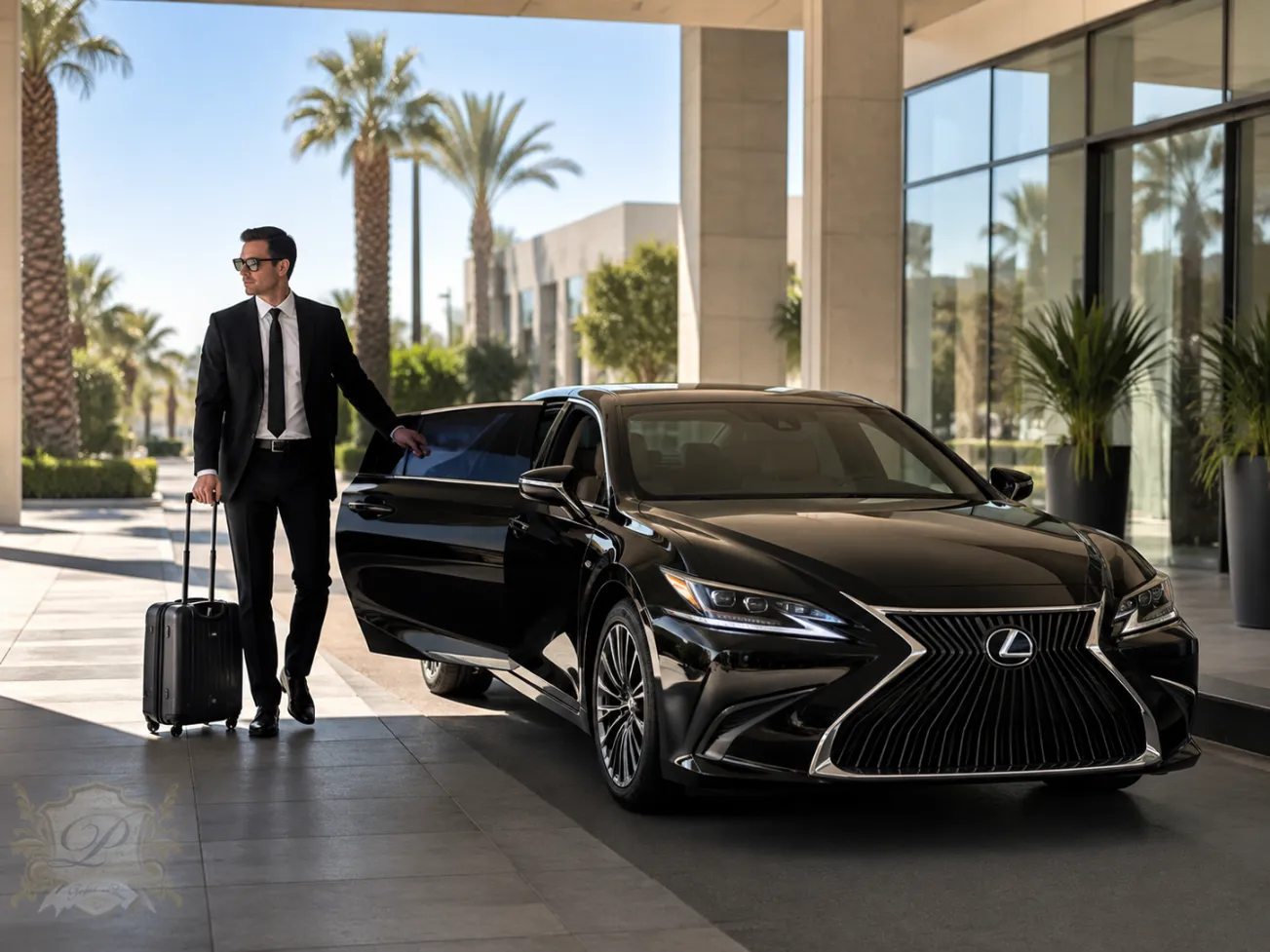
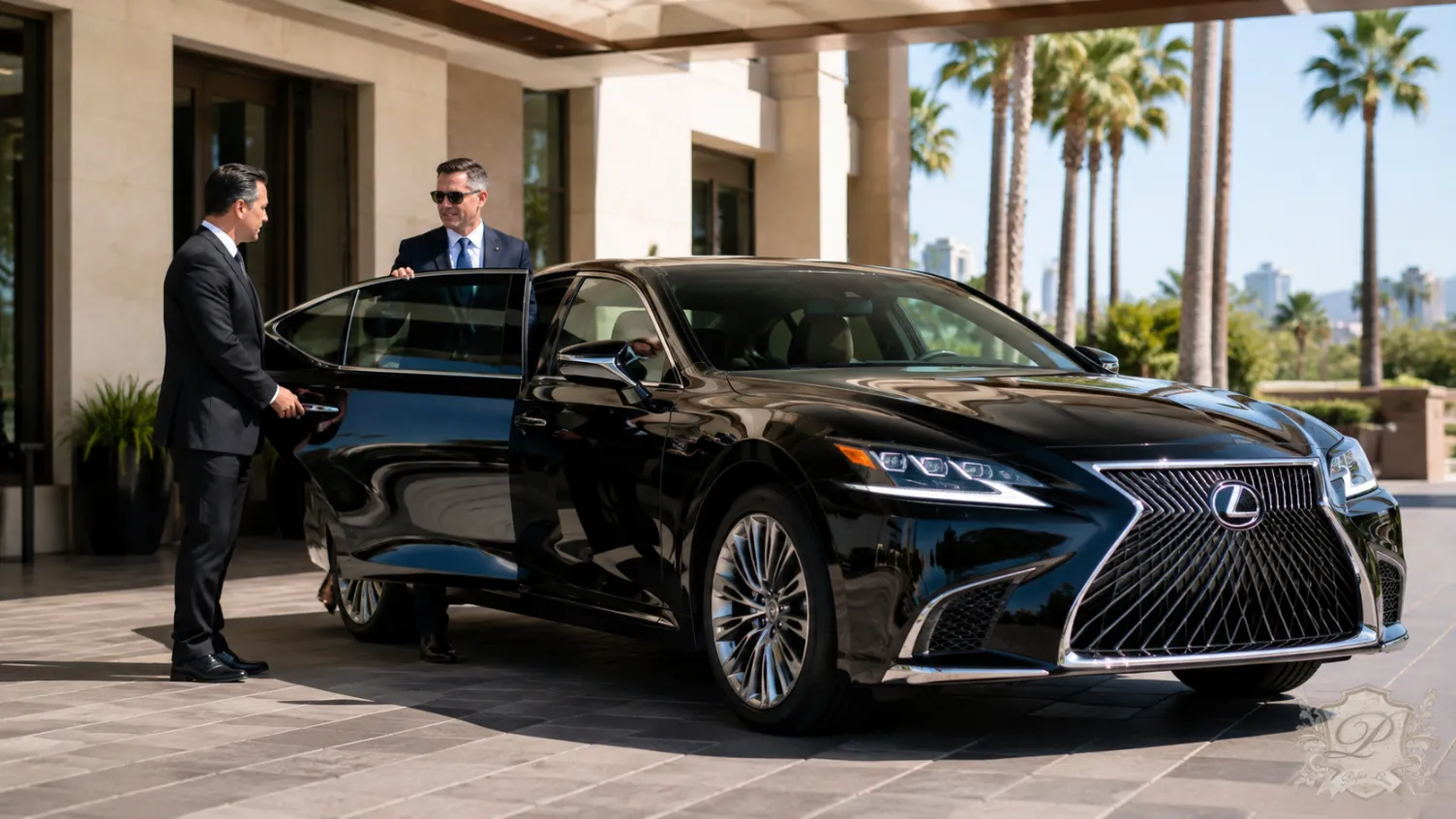
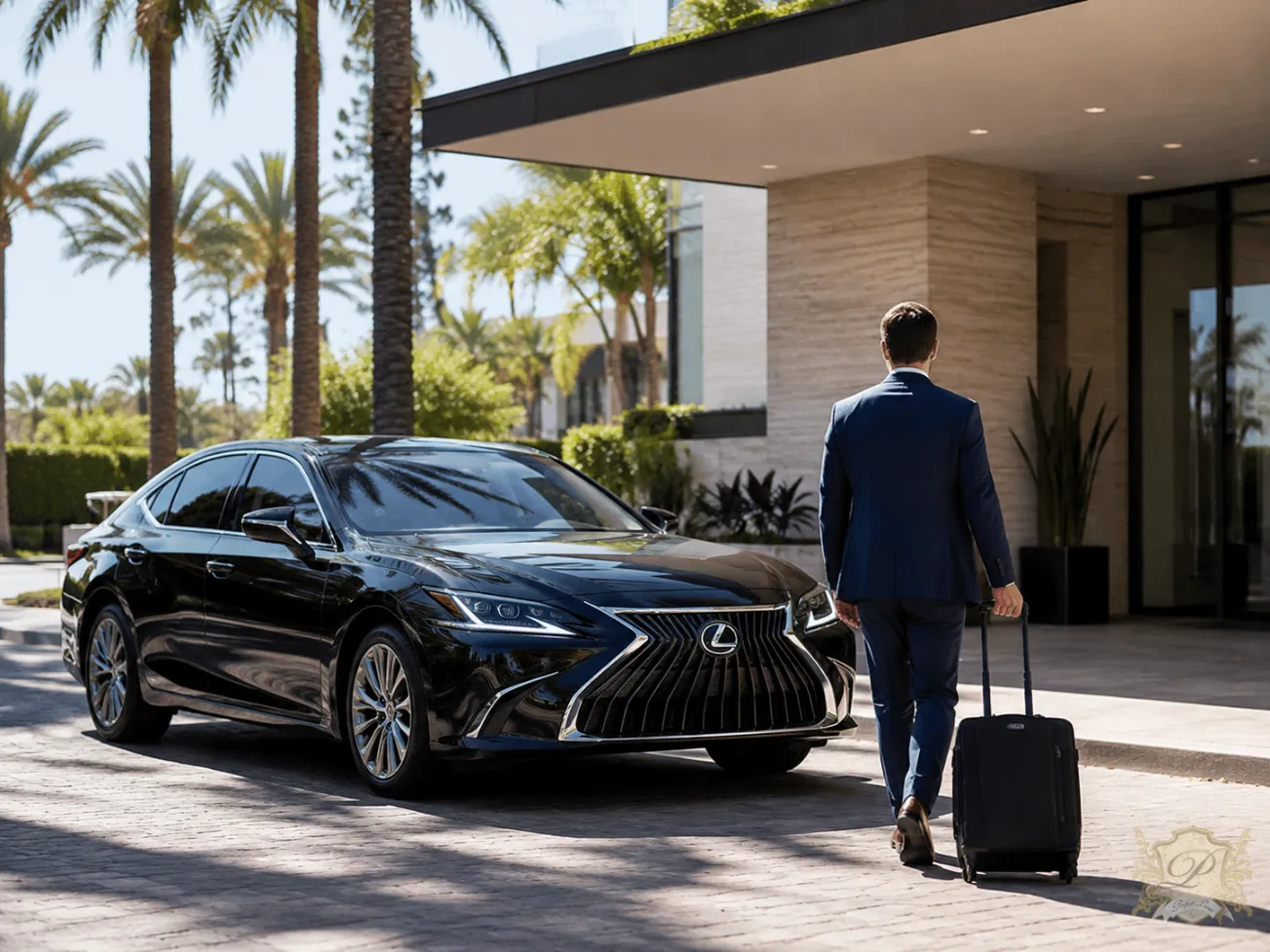
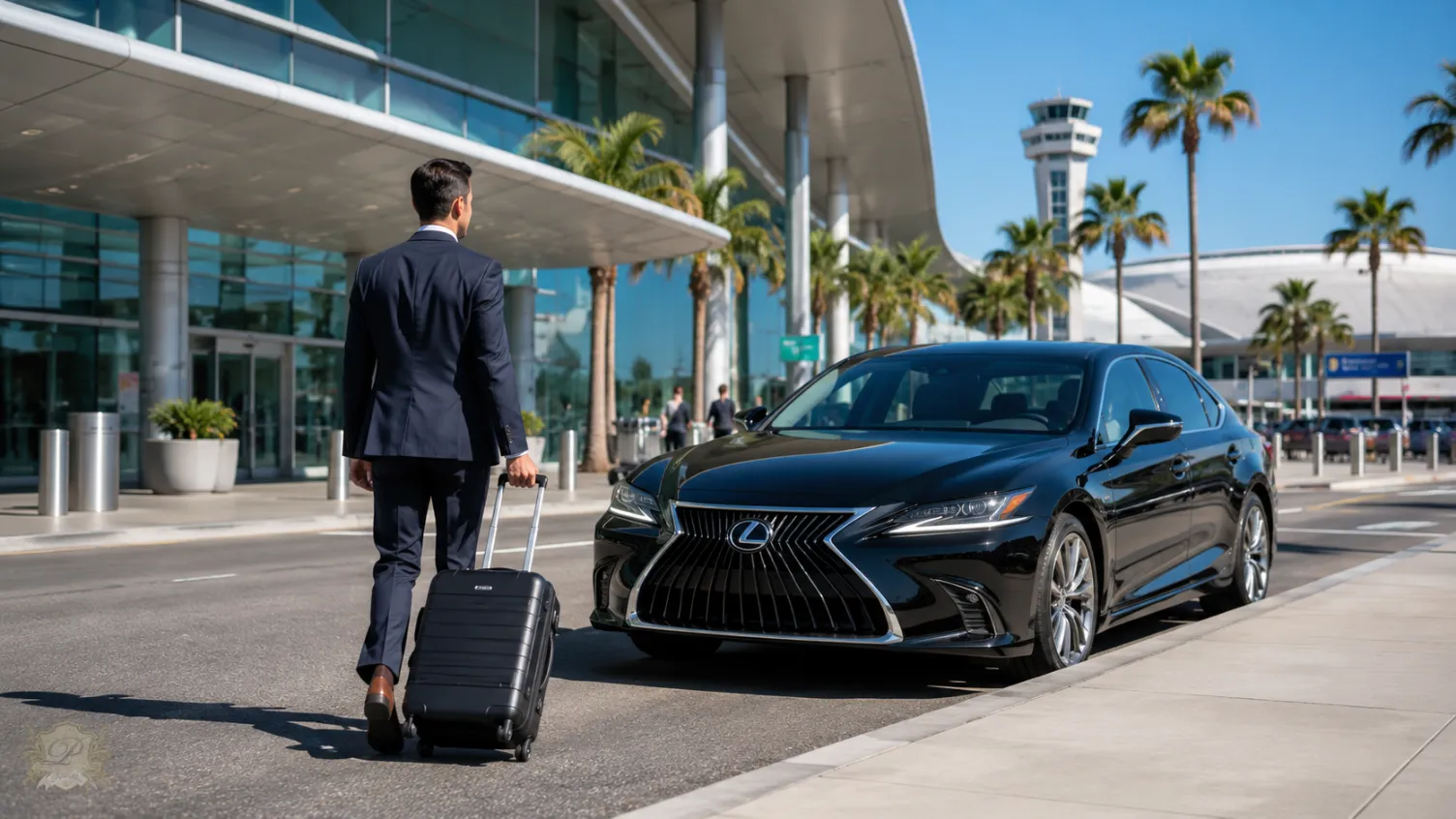
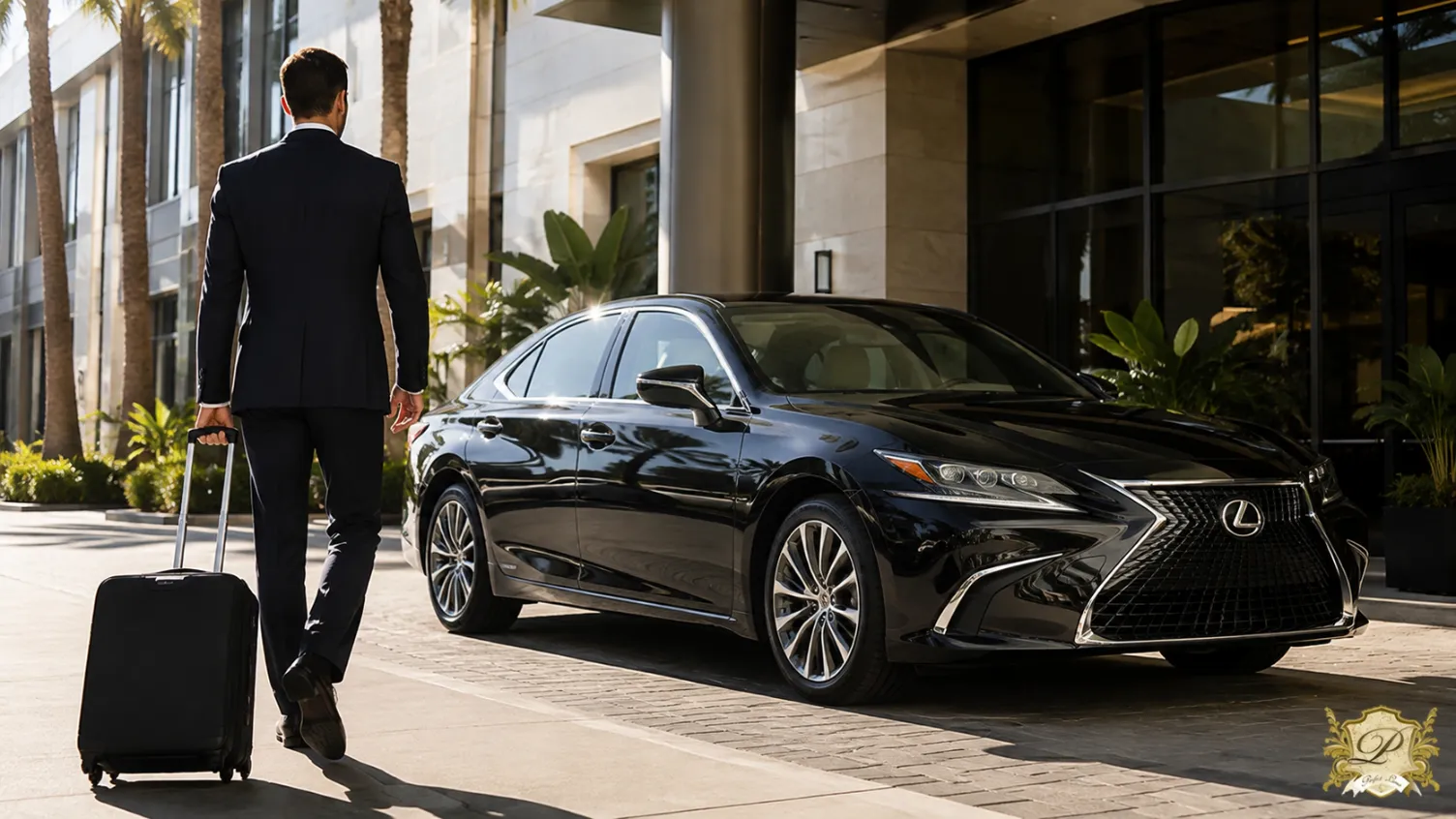
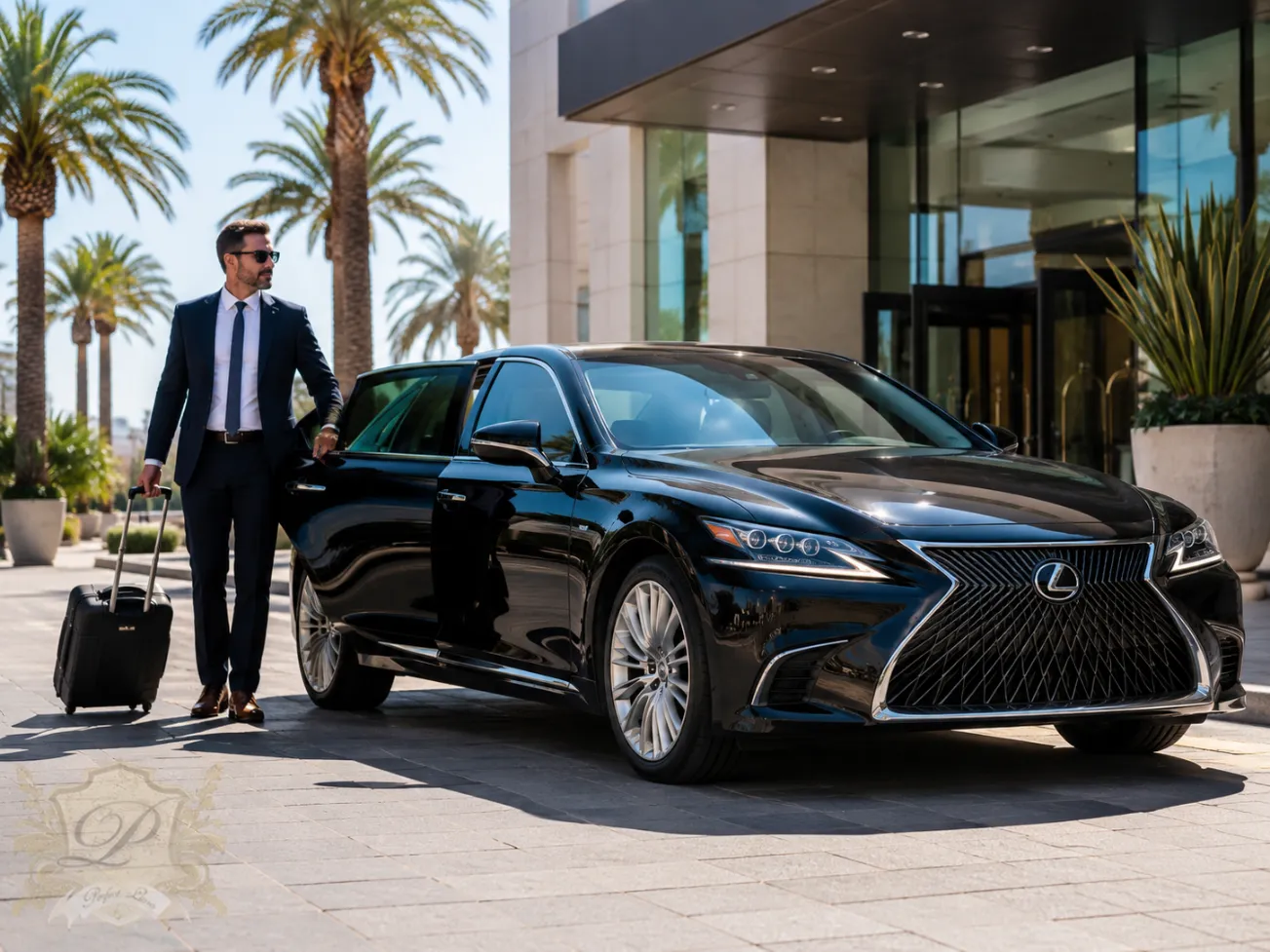
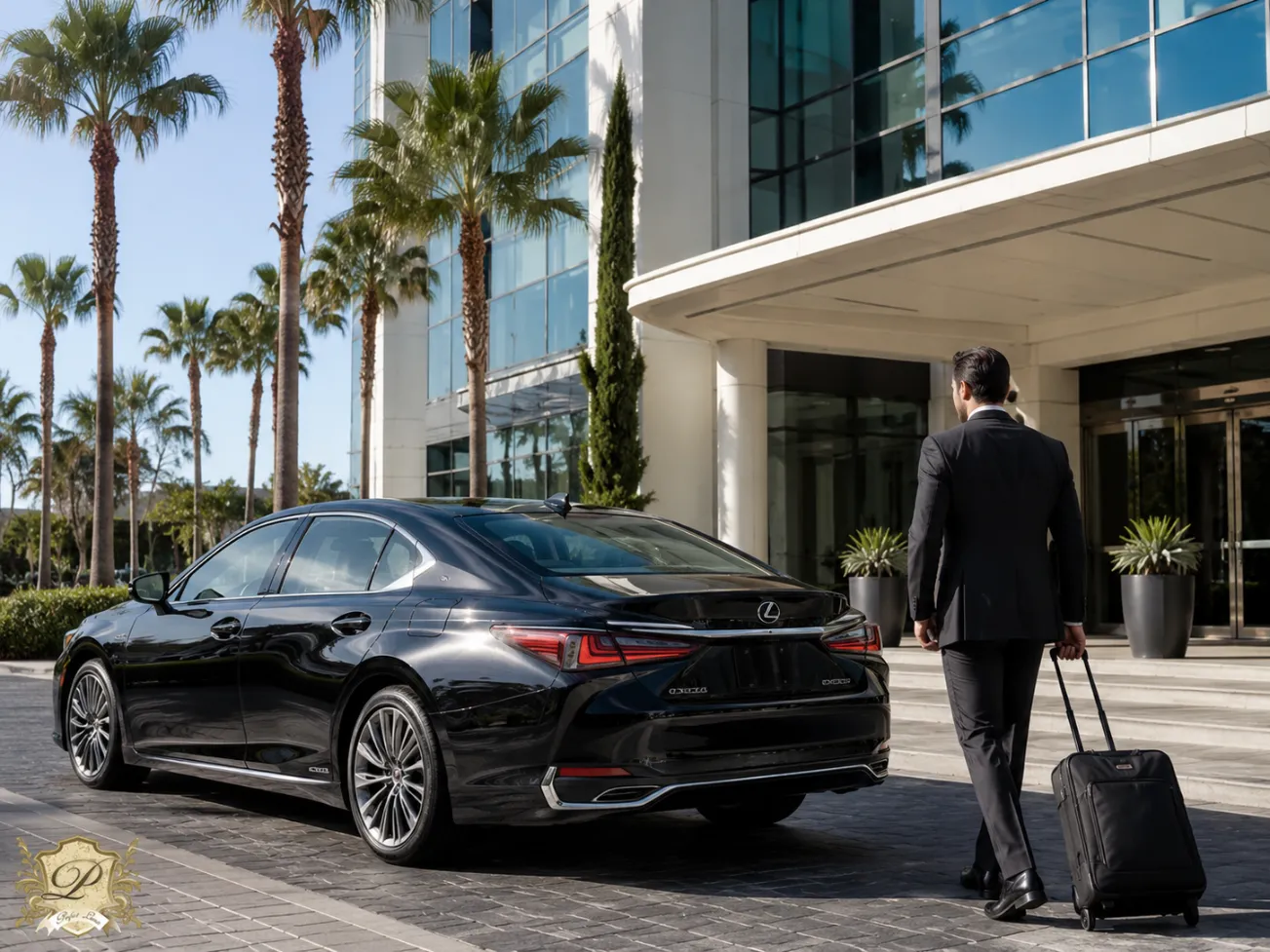
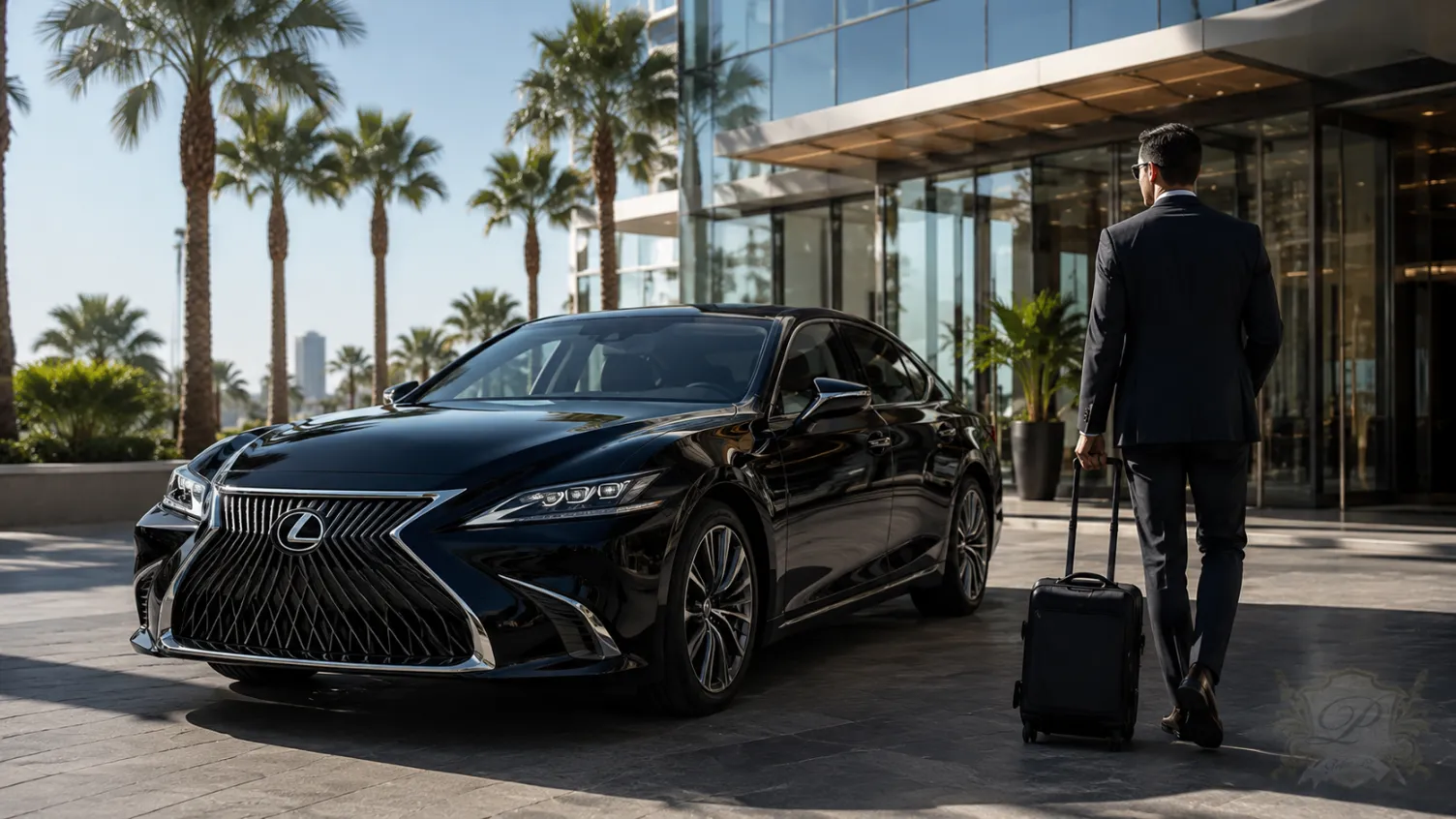
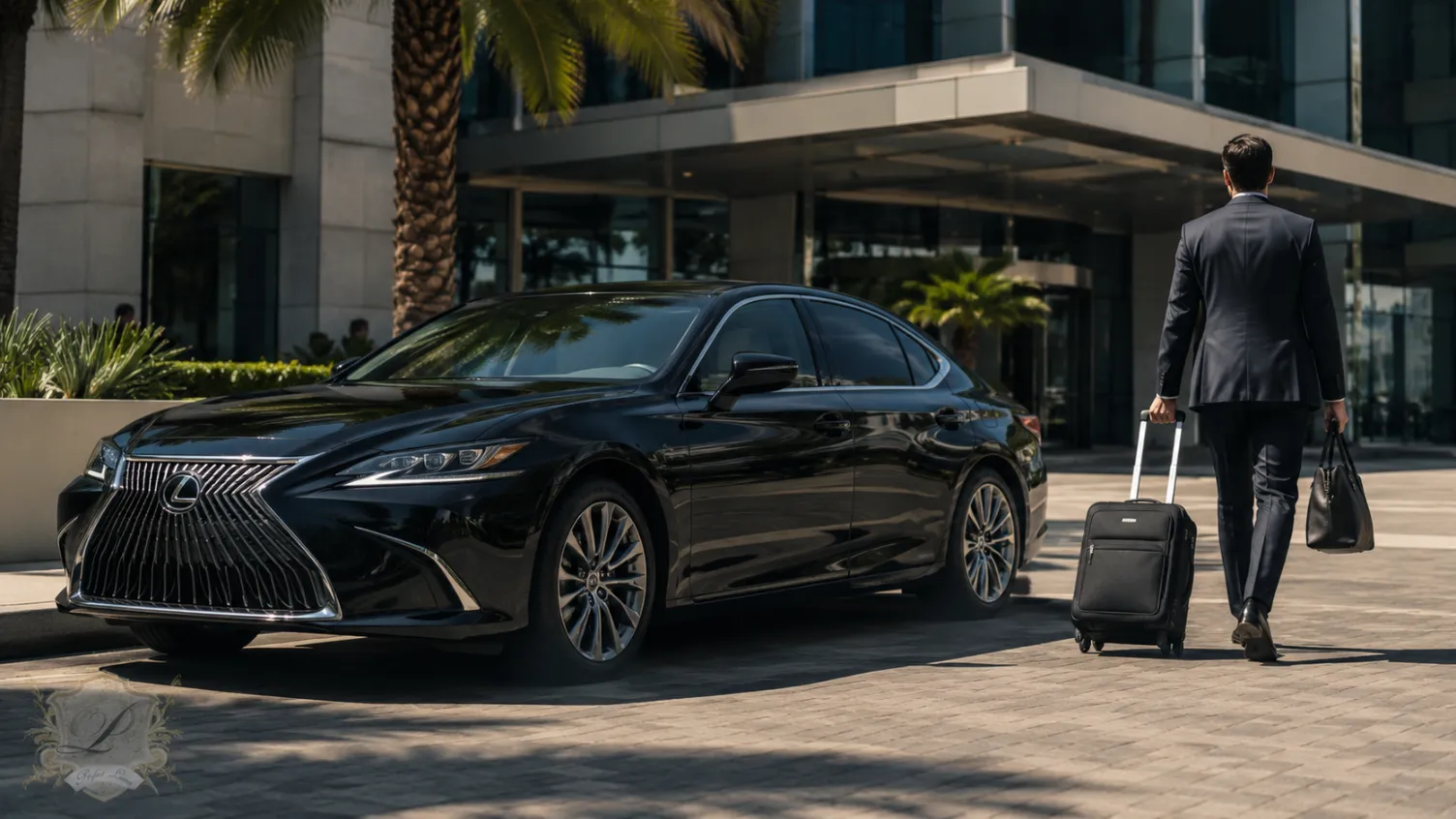
The Perfect Limo and Sedan’s Luxury Lexus Sedan is one of the sedan choices shown in the company’s current fleet.

Black lexus executive sedan for corporate transportation and business travel in southern california

2. Choose an Executive SUV When You Need More Passenger or Luggage Room

An executive SUV occupies the middle ground between a private sedan and a larger group vehicle. It can preserve the polished appearance expected for executive transportation while providing additional room for passengers, bags, and business equipment.

This can be particularly useful for airport travel. Two or more executives arriving with full-size luggage, carry-ons, laptop bags, or presentation cases may discover that passenger seating is only half of the capacity question. The luggage still has to fit safely and practically.

An SUV can also be appropriate when a company is hosting several clients. Instead of assigning separate sedans, the group may be able to travel in one vehicle when passenger and luggage requirements allow.

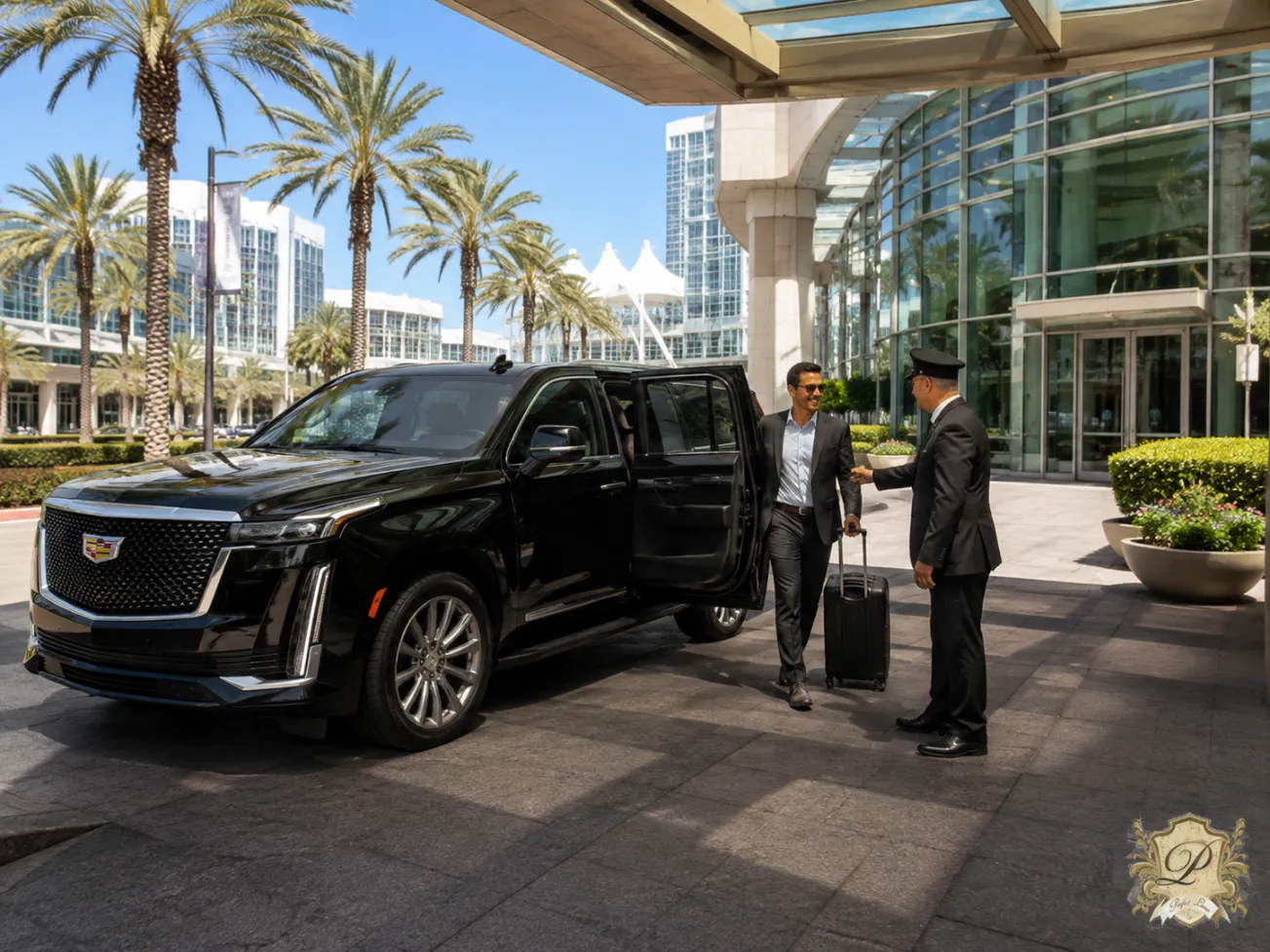
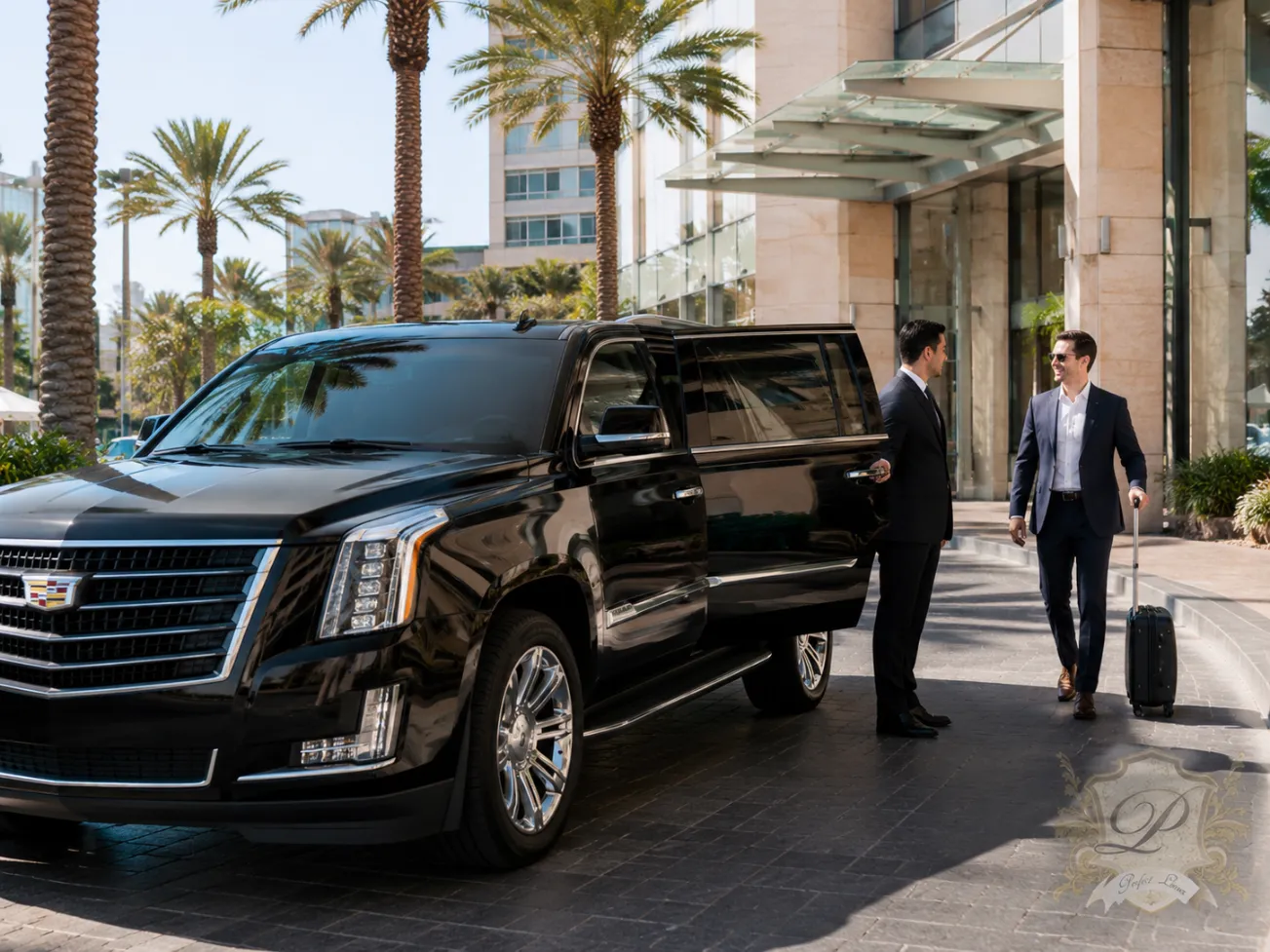
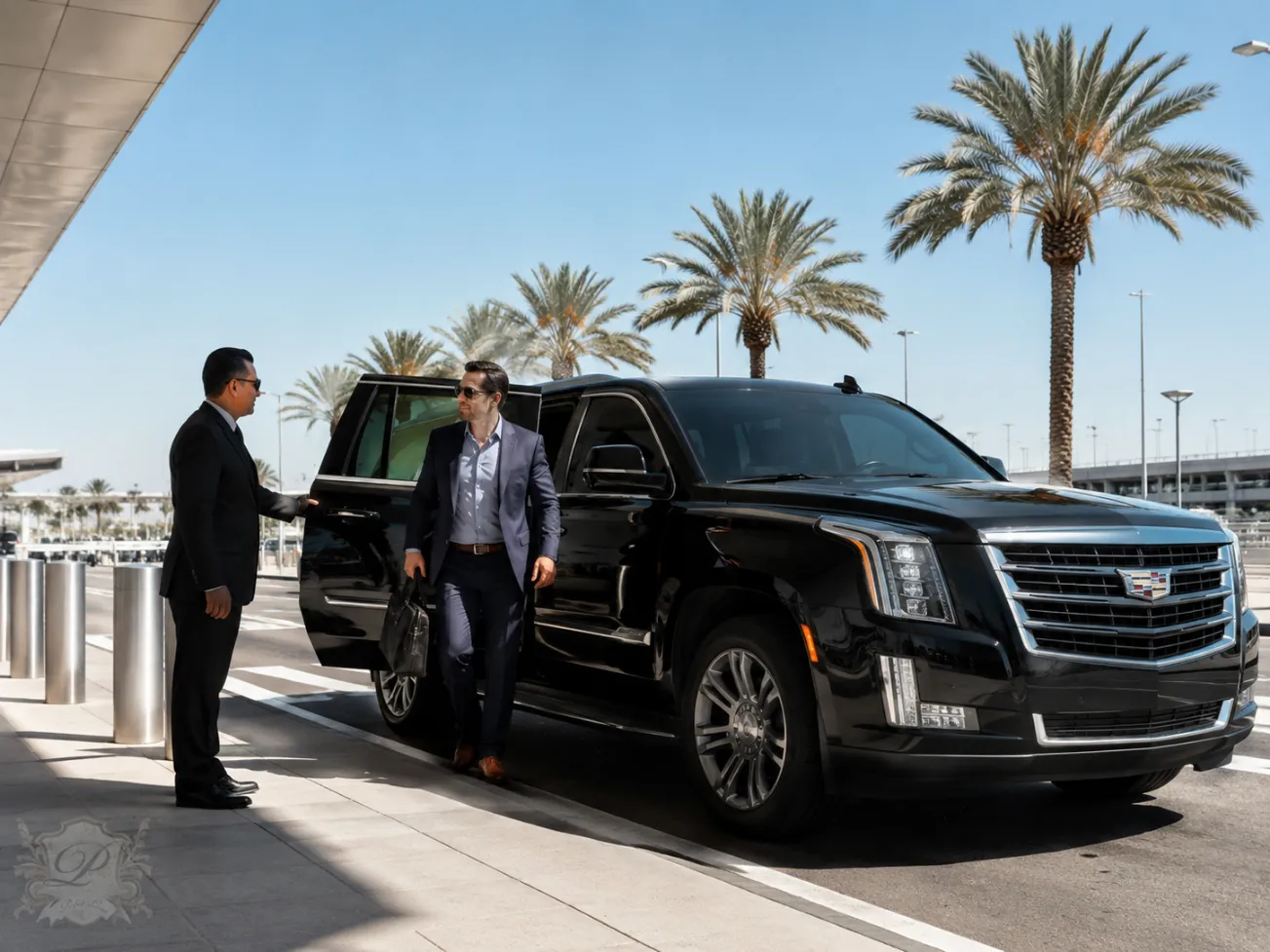
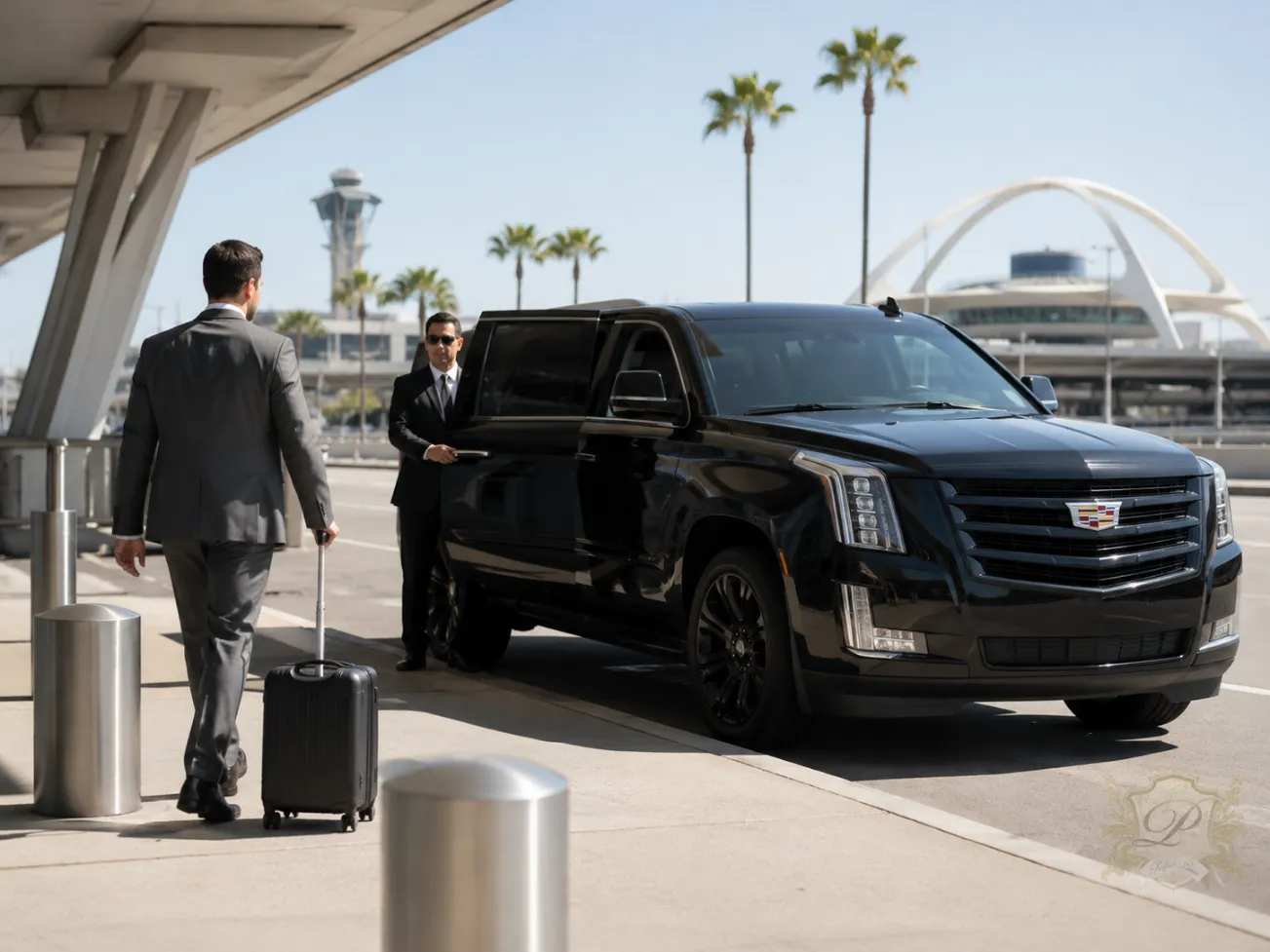
The Perfect Limo and Sedan lists its Cadillac Escalade Luxury SUV for chauffeured point-to-point service, dedicated chauffeur service, and airport transfers. The vehicle page currently identifies it as a 4–6 passenger option.

An Executive SUV May Be Better When:

  • Several executives are traveling together
  • Passengers are arriving with substantial luggage
  • A company is transporting a small client or VIP party
  • The itinerary includes airport, hotel, and meeting transportation
  • Additional cabin or cargo space is useful
  • The company wants one executive vehicle instead of several smaller cars
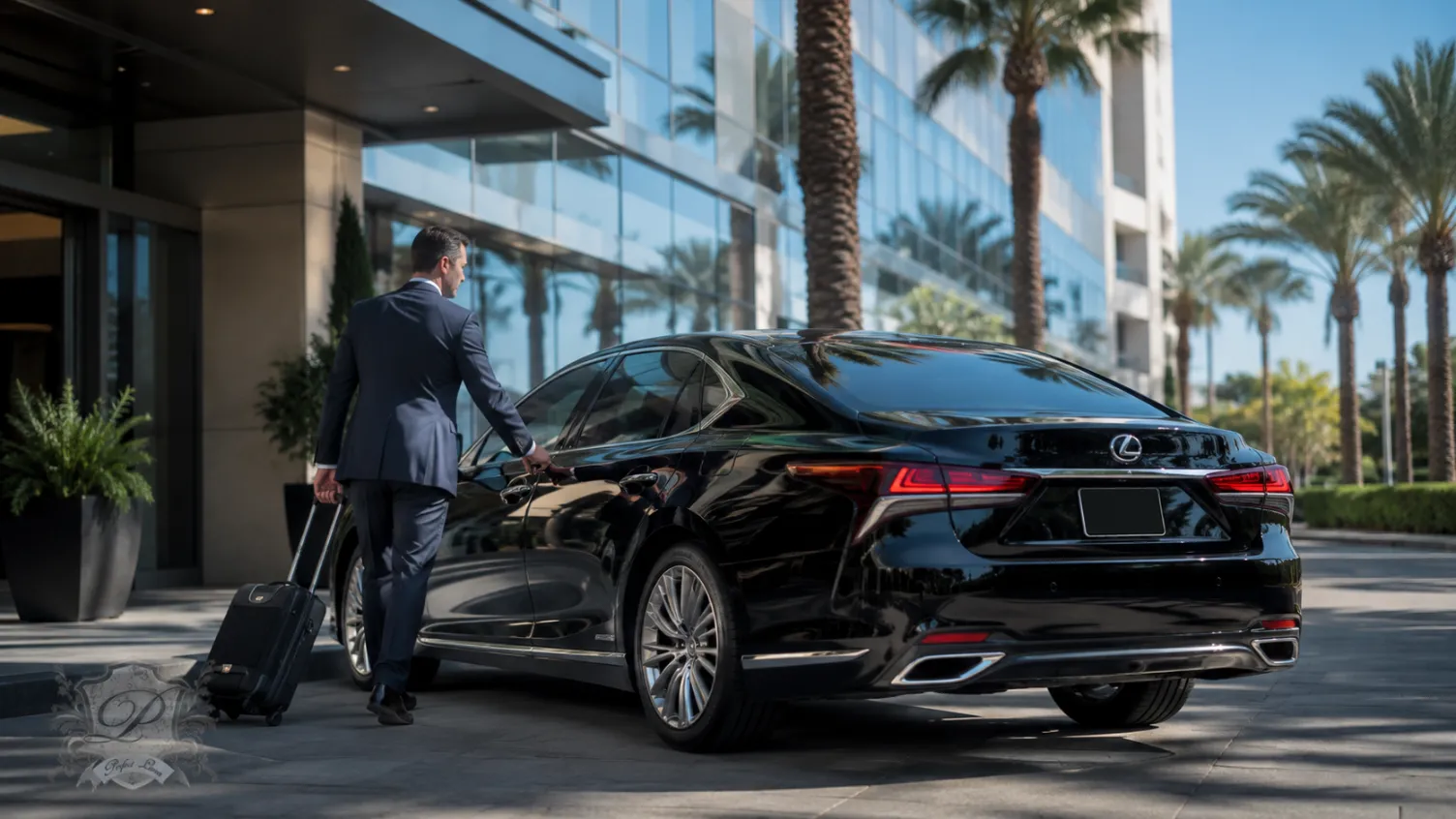
Black cadillac escalade executive suv for corporate transportation in southern california

3. Choose a Mercedes Sprinter When the Corporate Group Needs to Stay Together

The strongest argument for a Mercedes Sprinter is usually not luxury. It is coordination. Once a corporate group grows beyond what fits practically in one sedan or SUV, the company has to decide whether to divide travelers among several cars or use a larger vehicle.

Splitting a team among several vehicles can work when travelers have different destinations or schedules. It becomes less attractive when everyone needs to attend the same conference, arrive at the same client meeting, reach the same dinner reservation, or depart for the airport together.

In those situations, a Sprinter can reduce the number of separate vehicle assignments and help the group move as one unit. This can make communication, departure timing, hotel pickups, venue arrivals, and return transportation easier for the organizer to manage.

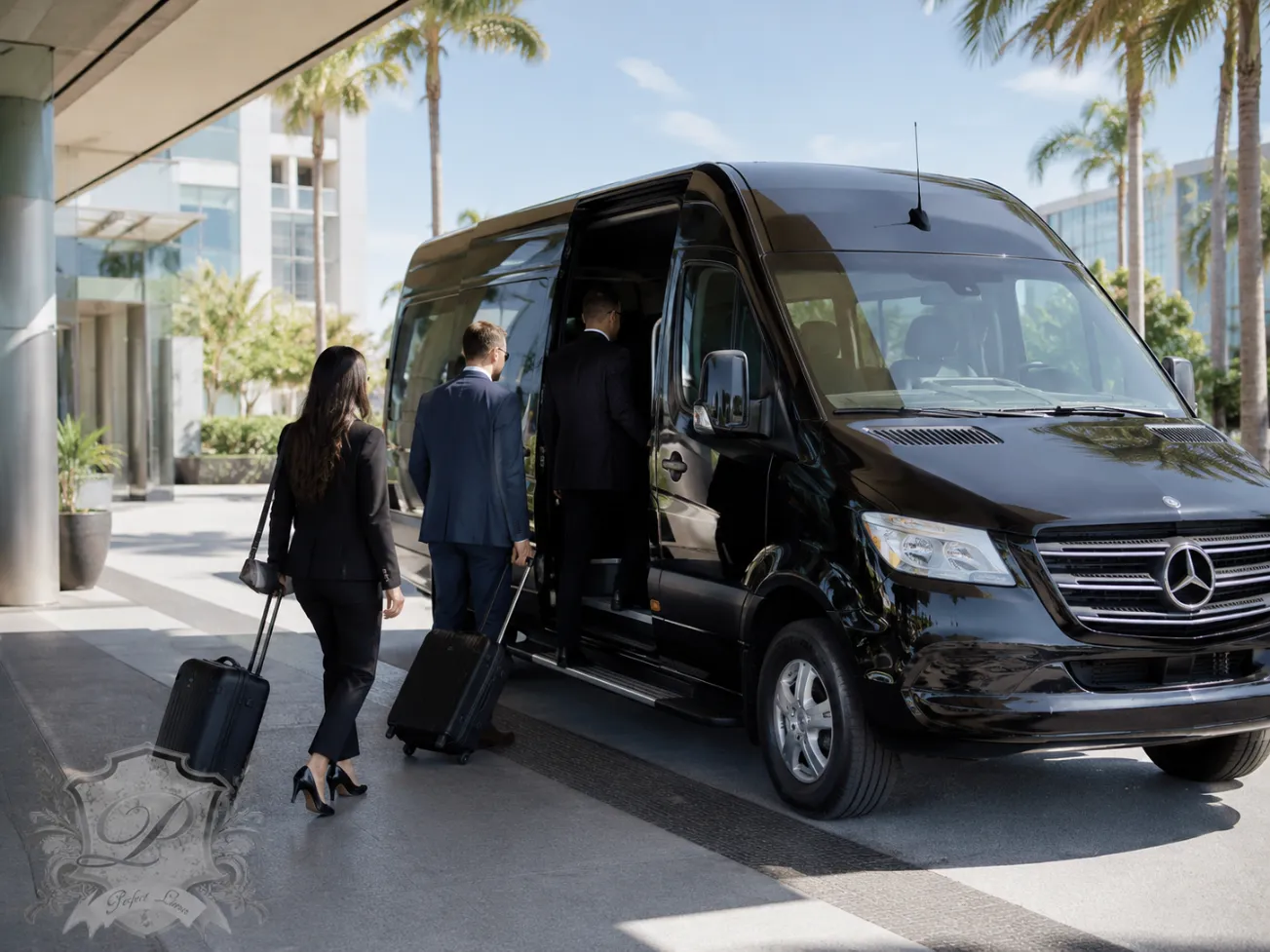
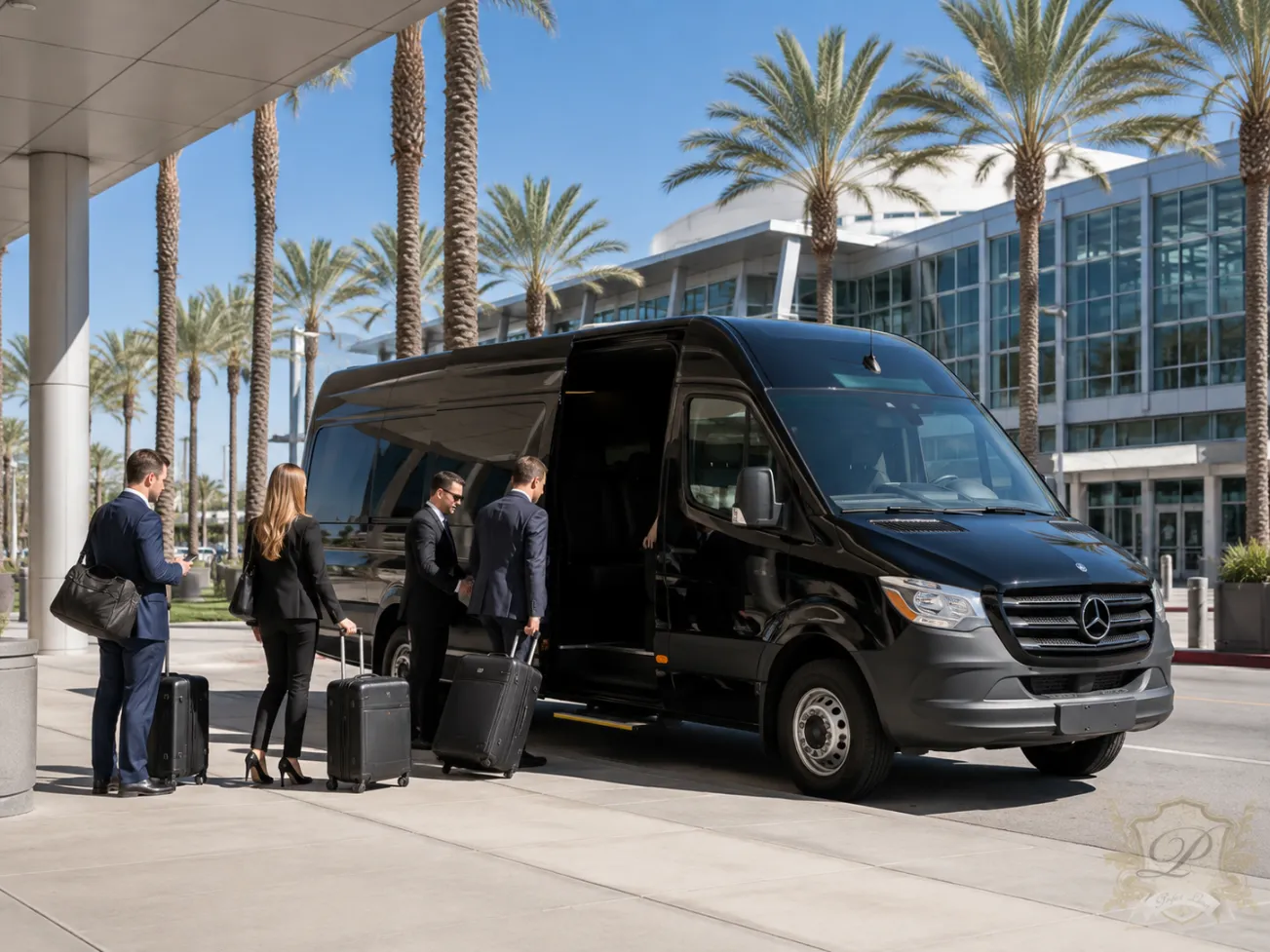
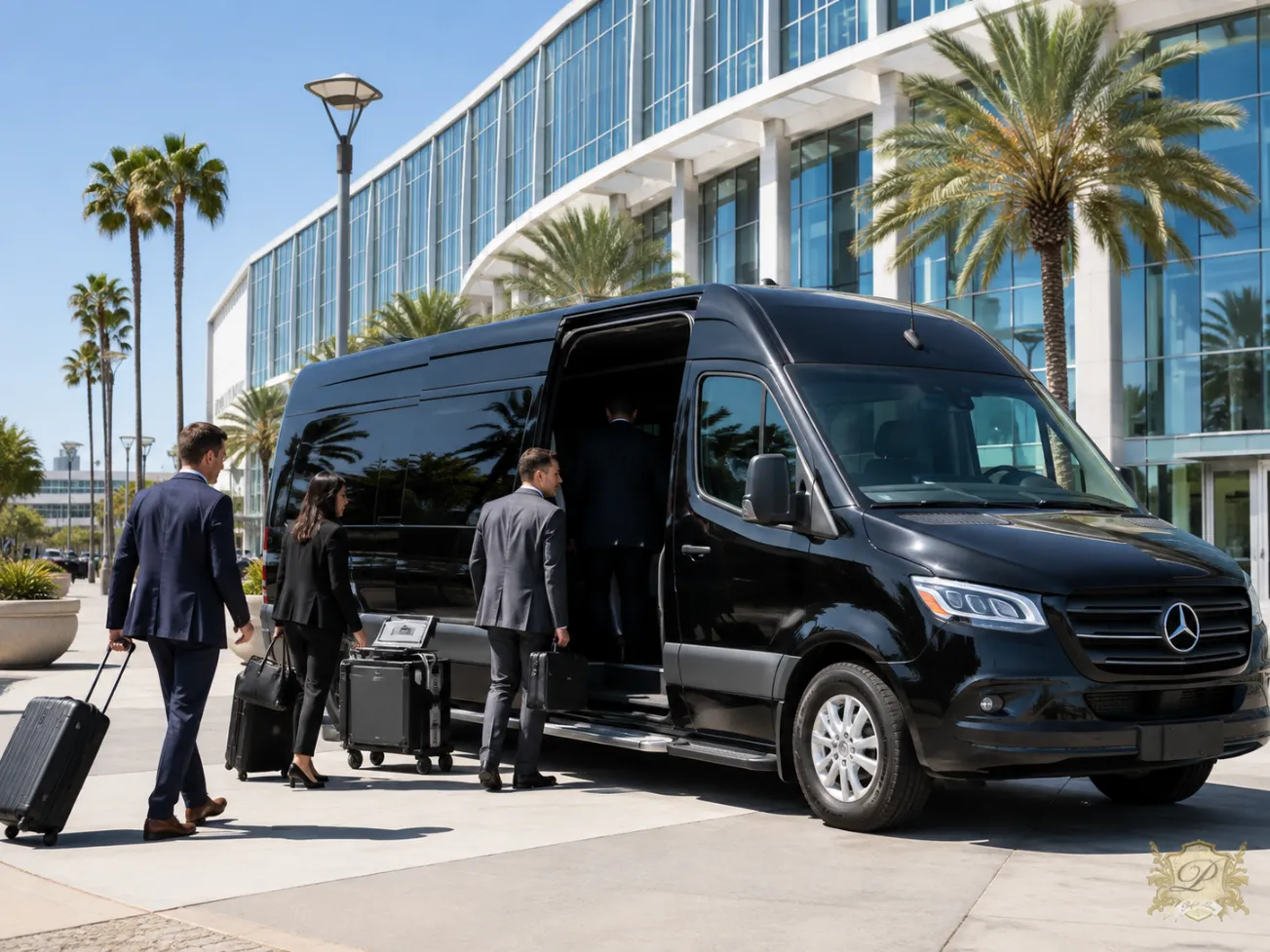
The Perfect Limo and Sedan offers several Sprinter configurations in its current fleet. Its Mercedes-Benz Sprinter Executive Limousine is currently listed for 10–12 passengers and supports point-to-point, dedicated chauffeur, and airport transportation.

Common Corporate Sprinter Uses

  • Management and leadership teams
  • Conference and convention groups
  • Airport transportation for several colleagues
  • Client delegations
  • Corporate retreats and off-site meetings
  • Hotel-to-venue transportation
  • Company dinners and hospitality events
  • Multi-stop group business itineraries
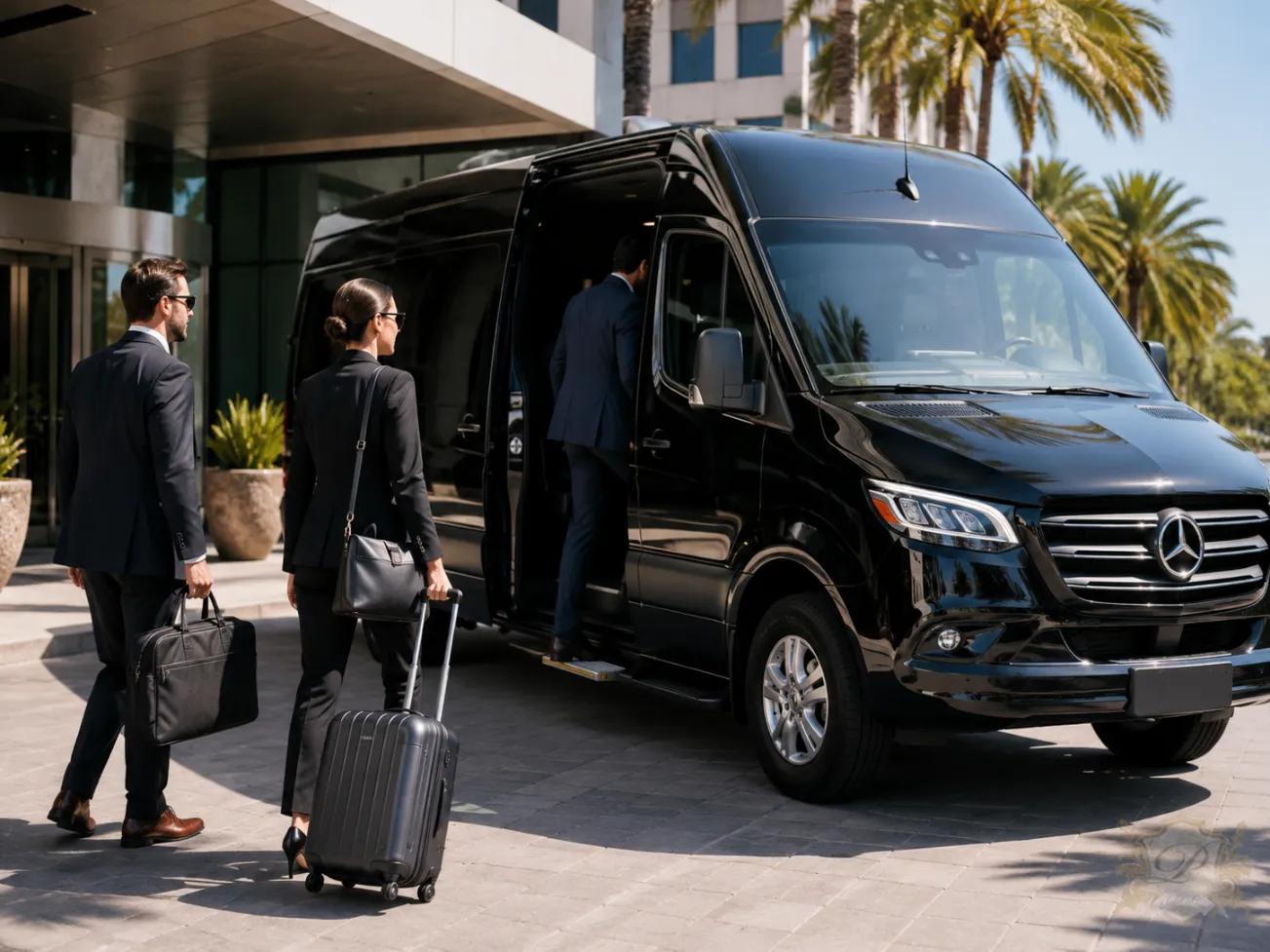
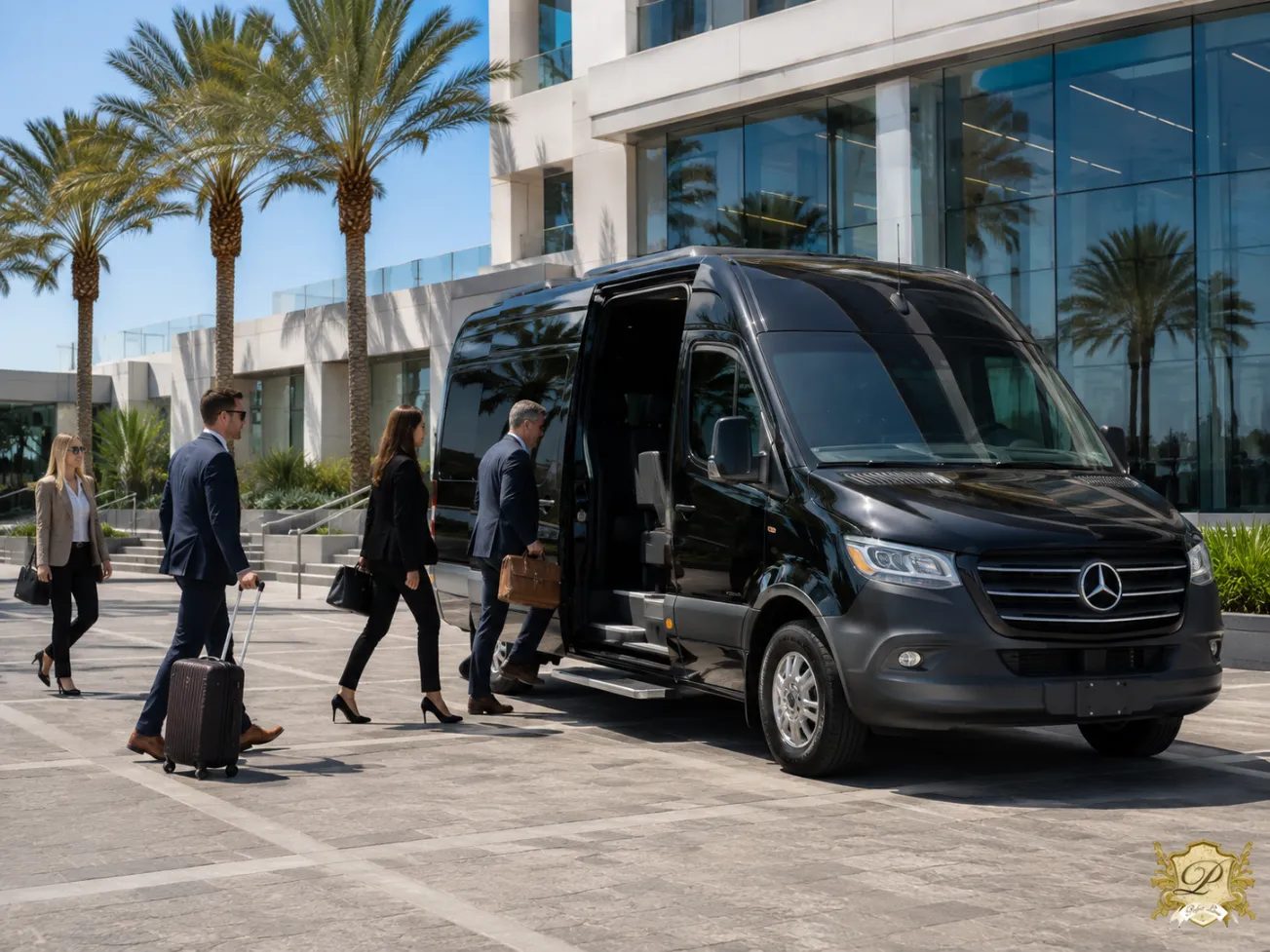
Black mercedes sprinter for corporate transportation and group business travel in southern california

4. Which Vehicle Is Best for Corporate Airport Transportation?

Airport transportation is where the executive sedan vs SUV vs Sprinter comparison becomes particularly practical because passenger count and luggage must be evaluated together.

A solo executive arriving at Ontario International Airport with a suitcase and carry-on may be well suited to a sedan. Two or more travelers with several large bags may benefit from an SUV. A larger team arriving for a conference or company event may be easier to coordinate in a Sprinter if the passenger and luggage requirements fit the selected configuration.

Southern California business travelers may use Ontario International Airport (ONT), Los Angeles International Airport (LAX), John Wayne Airport (SNA), Long Beach Airport (LGB), and private aviation facilities depending on the trip. Airport choice can also affect how much ground travel remains after the flight.

The vehicle should therefore be selected using the entire airport itinerary: flight, passenger count, luggage, destination, additional stops, and what the travelers are doing next. Review The Perfect Limo and Sedan’s airport limo and car service for additional airport transportation planning.

5. Passenger Capacity and Luggage Capacity Are Not the Same Thing

One of the most common mistakes in corporate transportation planning is choosing a vehicle based entirely on the number of available passenger seats.

A vehicle may accommodate the stated number of passengers but still be impractical once the travelers bring full-size suitcases, carry-ons, laptop bags, presentation equipment, trade show materials, garment bags, or other business items.

This is especially important for airport trips and conferences. A team flying into Southern California for several days will usually carry substantially more luggage than the same team traveling from a nearby office to a local dinner.

Booking Tip: Give Both Passenger and Luggage Counts

When requesting corporate transportation, provide the number of passengers, full-size suitcases, carry-on bags, and any oversized business equipment. This gives the reservation team more useful information than passenger count alone and reduces the risk of selecting a vehicle that technically has enough seats but insufficient practical cargo room.

6. Executive Meetings and Roadshows Often Favor Sedans or SUVs

A business itinerary involving one executive and several appointments is usually a different transportation problem from moving an employee group to a conference.

For a roadshow, client visit, investor schedule, or leadership meeting day, a sedan or SUV can be easier to use because the passenger party is relatively small. The same vehicle can remain associated with the executive’s schedule without introducing group capacity that is not needed.

Consider an executive traveling from a hotel in Anaheim to a meeting in Irvine, another appointment in Los Angeles, and then LAX for an evening departure. The vehicle decision should consider the number of passengers, luggage, total time on the road, and whether the executive is traveling alone or with colleagues.
For a deeper comparison of business transportation formats, see our guide to executive car service vs limo service for business travel. That article focuses on service format, while this guide focuses specifically on matching sedan, SUV, and Sprinter vehicles to the itinerary.

7. Conferences, Teams, and Corporate Events Often Favor Sprinters

Corporate events introduce a different operational priority: moving several people through the same schedule. Airport arrivals, hotel pickups, venue transfers, client dinners, networking events, and return transportation may all need to happen within specific windows.

If the travelers are divided among several sedans or SUVs, the organizer must manage several vehicles and potentially several different arrival times. That may be completely acceptable when the group has different schedules. When everyone needs to be in the same place at the same time, a larger group vehicle can make the transportation plan simpler.

A Sprinter can also allow colleagues to remain together between locations instead of repeatedly separating and regrouping. This can be useful for leadership teams, visiting clients, conference delegations, company retreats, and employees traveling together between an airport, hotel, office, and venue.

The California Public Utilities Commission’s Charter-Party Carrier information explains the regulatory framework for prearranged passenger transportation used exclusively by an individual or group. Businesses arranging professional group transportation should use properly authorized carriers and confirm the reservation details in advance.

8. Sometimes the Best Corporate Solution Is a Mixed Fleet

Not every company event should force every passenger into the same vehicle category. A mixed-fleet plan can be more practical when executives, employees, clients, and speakers have different schedules or responsibilities.

For example, a chief executive and visiting client may arrive separately and use individual sedans or SUVs. A ten-person employee group may arrive later and use a Sprinter. Everyone can then meet at the same conference venue before using different vehicles again for departures.

Another scenario might involve SUVs for senior leadership and a Sprinter for the broader management team. The goal is not uniformity. The goal is assigning the correct transportation resource to each passenger group.

This is one reason companies should provide the entire event or travel schedule rather than asking only for a vehicle price. A transportation provider can evaluate whether one vehicle, several vehicles, or a combination of vehicle types better supports the operation.

9. How Vehicle Choice Affects Corporate Transportation Cost

Vehicle type is one of several factors that can affect corporate transportation pricing. Larger or more specialized vehicles generally represent different service categories from executive sedans, but the individual vehicle price should not be evaluated in isolation.

If one sedan handles the entire trip, adding an SUV or Sprinter without a capacity need may increase cost unnecessarily. However, if a corporate team would otherwise require several separate sedans, one appropriately sized group vehicle may be operationally and financially worth comparing.

Businesses should therefore compare the cost of the complete transportation plan. Include vehicle count, service duration, number of stops, airport requirements, waiting time, luggage, and whether several passengers need to move together.

Our guide to corporate transportation cost in Southern California explains these pricing factors in more detail, including point-to-point service, extended reservations, airports, group travel, and multi-stop itineraries.

10. Vehicle Choice Also Depends on How Important the Trip Is

Business transportation decisions are not made in a vacuum. A company may use different transportation strategies for a senior executive, an important client, a large employee group, and a casual internal trip.

For a high-priority client arrival, the company may prefer to arrange a specific sedan or SUV before the guest lands. For a management retreat involving ten colleagues, the ability to keep everyone in one group vehicle may matter more. For a single low-complexity trip with a flexible schedule, a dedicated corporate vehicle may not be necessary at all.

If the broader question is whether the company should reserve professional transportation in the first place, our corporate transportation vs rideshare comparison covers that decision separately. Once professional transportation is selected, vehicle choice becomes the next step.

Executive Sedan vs SUV vs Sprinter: Business Travel Decision Table

Business ScenarioVehicle to ConsiderReason
Solo executive airport transferSedanEfficient private transportation without unnecessary capacity
Two or more executives with significant luggageSUVAdditional passenger and cargo room may be useful
One important client or VIPSedanProfessional, discreet individual transportation
Small client group with luggageSUVKeeps the party together while adding capacity
Management team traveling to one conferenceSprinterSimplifies group coordination and shared arrivals
Executive with multiple private meetingsSedan or SUVChoice depends on passengers, luggage, and desired space
Large corporate event with leadership and employee groupsMixed fleetSedans or SUVs can serve executives while Sprinters serve teams

11. What to Tell the Transportation Company Before Choosing a Vehicle

A reservation team can make a more useful vehicle recommendation when it receives the full transportation requirement instead of only a passenger number.

  • Passenger count: include everyone expected to travel in the vehicle.
  • Luggage: identify full-size suitcases, carry-ons, equipment, and unusual cargo.
  • Pickup location: provide the complete airport, hotel, office, residence, or venue information.
  • Every destination: include intermediate stops and the final destination.
  • Required arrival times: note fixed meetings, presentations, flights, or event start times.
  • Flight information: provide airline and flight details for airport trips.
  • Trip purpose: identify whether the passengers are executives, employees, clients, speakers, or event attendees.
  • Vehicle preference: mention a sedan, SUV, or Sprinter preference, but allow the final recommendation to account for practical capacity.

For company-wide transportation needs, review The Perfect Limo and Sedan’s corporate limo and sedan service and submit the complete itinerary when requesting availability.

Match the Corporate Vehicle to the Actual Trip

The Perfect Limo and Sedan provides executive sedans, luxury SUVs, Mercedes-Benz Sprinters, and other chauffeured vehicle options for airport transportation, executive meetings, corporate teams, client transportation, conferences, company events, and multi-stop business travel throughout Southern California.

Instead of choosing only by appearance, provide the passenger count, luggage, pickup and destination details, airport information, meeting schedule, and required stops so the reservation can be matched to an appropriate vehicle.

Planning corporate transportation? Explore the available vehicle fleet or call 800-951-3017 to discuss your itinerary, passenger requirements, and vehicle options.

Frequently Asked Questions About Executive Sedans, SUVs, and Sprinters

Is an executive sedan or SUV better for business travel?

An executive sedan is often sufficient for a solo executive or small party with limited luggage. An SUV may be a better fit when several passengers are traveling together, more luggage is involved, or additional cabin and cargo space would improve the trip.

When should a company book a Mercedes Sprinter instead of SUVs?

A Sprinter can be useful when a larger corporate group shares the same pickup, destination, and schedule and benefits from traveling together. Several SUVs may still make more sense when passengers have different destinations or departure times.

How many passengers can the Cadillac Escalade carry?

The Perfect Limo and Sedan currently lists its Cadillac Escalade Luxury SUV as a 4–6 passenger vehicle. Practical suitability can still depend on luggage and other items being carried, so passenger and luggage requirements should both be provided when booking.

How many passengers can a Mercedes Sprinter carry?

Capacity varies by Sprinter configuration. The Perfect Limo and Sedan currently lists its Mercedes-Benz Sprinter Executive Limousine for 10–12 passengers. Other Sprinter configurations may differ, so the exact vehicle and capacity should be confirmed for the reservation.

What is the best vehicle for a corporate airport transfer?

The best vehicle depends on passenger count and luggage. A sedan can work well for an individual executive, an SUV may suit several travelers or additional luggage, and a Sprinter can support a larger group when passenger and cargo requirements fit the selected vehicle.

Is a Sprinter cheaper than booking several sedans?

Not necessarily. Pricing depends on the specific vehicle, route, service duration, stops, date, and other reservation details. Businesses should compare the complete cost of one appropriate group vehicle with the combined cost and coordination requirements of several smaller vehicles.

Can a company use sedans, SUVs, and Sprinters for the same event?

Yes. A mixed fleet can be useful when executives, clients, employees, speakers, or other passenger groups have different schedules and transportation requirements. Sedans or SUVs may serve individual executives while Sprinters transport larger teams.

Final Takeaway

The decision between an executive sedan vs SUV vs Sprinter should come down to what the corporate trip actually requires. A sedan works well for discreet individual executive transportation. An SUV adds useful room for passengers and luggage. A Sprinter becomes particularly valuable when a larger group needs coordinated transportation.

Companies should resist choosing the largest available vehicle automatically. They should also avoid selecting a vehicle that technically fits the passengers but does not realistically accommodate their luggage, equipment, or group schedule.

For Southern California corporate transportation, the strongest vehicle decision is the one that fits the passengers, luggage, airport or meeting itinerary, required arrival times, and overall business objective. When those details change, the correct vehicle may change with them.

how-much-does-corporate-transportation-cost-southern-california-banner

Corporate Transportation Costs in Southern California: What Businesses Should Know

Southern California Corporate Transportation Guide

How Much Does Corporate Transportation Cost in Southern California?

Corporate transportation cost in Southern California does not have one standard price because a business may be booking anything from a single executive sedan transfer to a multi-vehicle corporate event. Vehicle type, distance, service duration, pickup location, airports, number of stops, passenger count, luggage, waiting time, and the structure of the itinerary can all affect the final quote.

A company arranging one executive pickup from Ontario International Airport has a very different transportation requirement from a company moving twelve employees between LAX, a hotel, a conference venue, and an evening dinner. Comparing those trips using one advertised hourly number would provide very little useful information.

The better way to estimate corporate transportation cost is to understand what the transportation company needs to price the trip accurately. This guide explains the major cost factors, where companies can control unnecessary expense, and how to compare transportation options without sacrificing the requirements of the business itinerary.

Quick Answer

Corporate transportation cost in Southern California depends primarily on the vehicle, service duration, mileage or route, number of stops, airport or venue requirements, passenger count, luggage, and whether the trip is a simple transfer or a longer reserved itinerary. A sedan for one executive will normally be priced differently from a Cadillac Escalade for several passengers or a Mercedes Sprinter for a corporate group. For an accurate comparison, request quotes using the same complete itinerary rather than comparing a single advertised rate.

Key Takeaways

  • There is no meaningful single price for corporate transportation because business itineraries vary significantly.
  • Vehicle type is one of the largest pricing variables. A luxury sedan, executive SUV, and Mercedes Sprinter serve different passenger and capacity requirements.
  • Point-to-point transfers and multi-hour or multi-stop transportation may be priced differently.
  • Airport fees, tolls, parking, waiting time, overtime, minimum service periods, and other trip-specific charges should be clarified before booking.
  • A larger vehicle can sometimes make better financial sense than several separate sedans when a corporate group needs to travel together.
  • The best quote is not automatically the lowest number. Businesses should compare exactly what transportation, vehicle, timing, and charges are included.

Why Corporate Transportation Prices Vary So Much

Corporate transportation is not one standardized product. Even two reservations involving the same vehicle can require different amounts of time, mileage, waiting, airport access, parking, route planning, or additional stops.

Consider two executives who both reserve a luxury sedan. The first traveler may need a straightforward transfer from an office in Corona to Ontario International Airport. The second may need transportation from a hotel to three meetings across Riverside and Orange counties, followed by dinner and a return to the hotel. Although the vehicle is identical, the service requirement is not.

The same principle applies to SUVs and group vehicles. A Cadillac Escalade transporting several passengers from an airport to one hotel should not automatically be expected to cost the same as an Escalade reserved through an entire afternoon of meetings.

This is why companies considering corporate limo and sedan service in Southern California should provide the complete itinerary when requesting pricing. The transportation provider can then evaluate the actual service instead of estimating from incomplete information.

What Factors Affect Corporate Transportation Cost?

The exact pricing structure depends on the company and reservation, but most corporate transportation quotes are influenced by several recurring factors.

Cost FactorWhy It Matters
Vehicle typeSedans, SUVs, limousines, and Sprinters have different operating costs and capacities.
Trip distanceLonger routes require more vehicle and chauffeur time.
Service durationA transfer is different from reserving a vehicle for several hours.
Number of stopsMultiple offices, hotels, venues, and restaurants create a more involved itinerary.
Passenger countMore passengers may require an SUV, Sprinter, or multiple vehicles.
LuggageAirport groups may need a larger vehicle even when the passenger count fits a smaller one.
Airport or venue accessAirport fees, parking, staging, terminal procedures, or venue access can affect the reservation.
Waiting or standby timeKeeping a vehicle and chauffeur available between meetings can affect total service time.
Date and scheduleAvailability and scheduling requirements can differ by date and time.

1. Vehicle Type Can Significantly Affect the Quote

Vehicle choice is one of the clearest factors affecting corporate transportation cost. A business should select a vehicle based on actual passenger and luggage requirements instead of automatically requesting the largest or most formal vehicle available.

A luxury sedan is often appropriate for a single executive or a small party. A Cadillac Escalade provides additional passenger and cargo space. A Mercedes Sprinter can accommodate a larger group and may reduce the need to reserve several individual vehicles.

The Perfect Limo and Sedan’s current chauffeured vehicle fleet includes luxury sedans, SUVs, limousines, and several Mercedes-Benz Sprinter configurations. The right vehicle depends on how many people are traveling, how much luggage they have, and how the vehicle will be used during the trip.

Do Not Pay for Capacity You Do Not Need

If one executive with a normal amount of luggage can travel comfortably in a sedan, reserving a much larger group vehicle may provide little financial or operational benefit. The opposite is also true: choosing vehicles that are too small and then requiring several of them can increase complexity and potentially increase the total transportation spend.

Black cadillac escalade illustrating corporate transportation cost and executive suv service in southern california

2. Point-to-Point Transportation vs Reserved Hourly Service

One of the most important questions is whether the business needs a simple transfer or wants the vehicle available through a longer portion of the day.

Point-to-Point Transportation

Point-to-point service generally describes transportation from one primary pickup location to one destination. Common corporate examples include an office-to-airport transfer, airport-to-hotel trip, hotel-to-office transfer, or transportation from a company headquarters to a dinner venue.

When the requirement is straightforward, this type of reservation can be simpler to quote because the basic movement is already defined.

Hourly or Extended Service

A business may instead need a chauffeur and vehicle available through several meetings, client visits, site inspections, lunches, or other scheduled stops. In that scenario, an extended or hourly reservation may better reflect the actual service requirement.

The important point is that companies should not compare the price of a basic transfer with a quote for several hours of dedicated transportation as if they are equivalent products. They solve different problems.

Companies that primarily need transportation for one or a few executives can also review our guide comparing executive car service vs limo service for business travel to determine whether a sedan, SUV, or larger chauffeured vehicle better fits the trip before requesting a quote.

Black lexus sedan for cost-efficient executive and corporate transportation in southern california

3. Airport Transportation Has Its Own Cost Variables

Corporate airport transportation can involve more than mileage between the terminal and destination. The reservation may also need to account for flight arrival information, airport pickup procedures, waiting time, parking or airport-related charges, luggage, and where the passenger needs to travel after leaving the airport.

Southern California companies commonly arrange travel through airports such as Ontario International Airport (ONT), Los Angeles International Airport (LAX), John Wayne Airport (SNA), and Long Beach Airport (LGB). Each airport and itinerary can create different transportation requirements.

For example, an ONT-to-Corona executive transfer is fundamentally different from an LAX arrival followed by travel deep into the Inland Empire. The second trip may involve substantially more road time even before any additional meetings or hotel stops are added.

This is why airport name, flight details, passenger count, luggage, pickup preference, and final destination should all be included when requesting a corporate transportation quote.

4. Corporate Group Transportation Should Be Priced as a System

Passenger count changes the economics of corporate transportation. When several employees need to travel to the same destination, the cheapest individual vehicle does not automatically create the lowest overall cost.

Suppose eight colleagues need transportation from an airport to a hotel and later to the same conference venue. One option may involve several sedans or SUVs. Another may involve one appropriately sized Mercedes Sprinter. The larger vehicle can have a higher individual reservation price, but the business should compare it with the combined cost and coordination requirements of several smaller vehicles.

Group transportation can also reduce the chance of employees reaching a meeting or venue at significantly different times because their separate vehicles took different routes or departed at different moments.

The Perfect Limo and Sedan currently offers multiple Mercedes-Benz Sprinter configurations, including executive and limousine models. One of its Mercedes-Benz Sprinter Executive Limousine options is listed for 10 to 12 passengers, making this type of vehicle relevant when companies want a larger business group to remain together.

Black mercedes sprinter van for corporate group transportation cost planning in southern california

5. Multiple Stops Can Change Corporate Transportation Cost

Corporate schedules are frequently more complicated than one pickup and one destination. Executives may move from an airport to a hotel, continue to a headquarters, visit a client, attend dinner, and then return to the hotel.

Every additional stop can affect routing, service duration, waiting requirements, and the chauffeur’s overall schedule. A business requesting pricing should therefore disclose the full itinerary rather than requesting a quote for the first segment and adding several unplanned stops later.

This is especially important in Southern California because appointments can be spread across Riverside County, San Bernardino County, Orange County, and Los Angeles County. The geographic distance between stops can have a major effect on how long the vehicle is required.

A structured itinerary also helps determine whether individual transfers or a dedicated vehicle arrangement is more practical. Businesses with complex executive schedules can review our broader Southern California executive transportation guide when planning multi-city business travel.

6. Ask What Is Included in the Corporate Transportation Quote

Two corporate transportation quotes can show similar base prices but produce different final totals if one excludes charges that the other already includes. Businesses should therefore ask for a clear written explanation of the quote before making a decision.

The California Public Utilities Commission’s passenger-carrier consumer information provides guidance for consumers using limousine and other regulated passenger transportation services. For corporate buyers, obtaining clear written reservation terms is particularly useful when several transportation companies are being compared.

Charges or Policies Worth Clarifying

  • Base transportation charge
  • Hourly minimums, when applicable
  • Additional or overtime hours
  • Waiting-time policy
  • Airport-related fees
  • Parking charges
  • Tolls
  • Gratuity or service charges
  • Additional-stop charges, if applicable
  • Cancellation or schedule-change policy
  • Any other trip-specific fees

Not every reservation will include every item above. The purpose of asking is to understand what the quoted amount represents so that competing proposals can be evaluated on the same basis.

7. Does Professional Corporate Transportation Cost More Than Rideshare?

A short rideshare trip can certainly cost less than reserving professional chauffeured transportation. They are also different transportation models, so a meaningful comparison requires looking at what the business actually needs.

If one employee needs a flexible trip from a hotel to a nearby restaurant, rideshare may be the more economical and practical choice. If a company is coordinating airport transportation for a visiting executive, a client presentation, several fixed meetings, or an entire team, the calculation changes.

Companies evaluating that broader decision can read our comparison of corporate transportation vs rideshare for business travel. The decision should account for coordination, vehicle requirements, schedule importance, group size, and passenger experience in addition to the first displayed fare.

8. How Businesses Can Control Corporate Transportation Cost

Cost control does not necessarily mean selecting the least expensive vehicle for every trip. It means designing the transportation plan so that the company is not paying for unnecessary capacity, unnecessary vehicles, or avoidable schedule complexity.

Match the Vehicle to the Passenger Count

Use a sedan when a sedan genuinely fits the passenger and luggage requirement. Move to an SUV or Sprinter when the additional capacity provides an operational benefit.

Consolidate Travelers When It Makes Sense

If several employees have the same origin, destination, and schedule, compare the cost of one appropriately sized group vehicle with several separate cars.

Finalize the Itinerary Before Requesting Quotes

A quote based on incomplete information is difficult to compare. Provide the stops, approximate timing, passenger count, airports, hotels, meetings, venues, luggage, and expected service window as early as possible.

Separate Critical Travel From Incidental Travel

A company does not need to use the same transportation method for every employee movement. It can reserve chauffeured transportation for executives, airports, clients, groups, and time-sensitive itineraries while using simpler transportation solutions for low-impact incidental trips.

Avoid Comparing Different Service Levels

If one proposal includes an SUV with standby time and another covers only a direct sedan transfer, the lower quote does not necessarily represent better value. Make sure the providers are pricing the same transportation requirement.

9. How to Compare Corporate Transportation Quotes

Once the itinerary is established, ask each provider to quote the same scope. This makes differences in vehicle recommendation, pricing structure, and included services much easier to identify.

What to CompareQuestion to Ask
VehicleWhat exact vehicle type or category is being quoted?
Passenger and luggage capacityWill this vehicle accommodate the entire party and luggage comfortably?
Service periodIs the quote point-to-point, hourly, or based on another service structure?
Included chargesWhat is included and what may be added later?
Extra timeWhat happens if a meeting runs longer than expected?
Schedule changesWhat is the policy if the itinerary changes?
Licensing and insuranceDoes the carrier hold the required operating authority and insurance?

California businesses can also review the California Public Utilities Commission’s Charter-Party Carrier information when learning about the regulatory framework governing prearranged passenger transportation.

For a more detailed event-specific comparison, our guide to comparing corporate event transportation quotes explains how planners can prepare one-day multi-stop event requirements, vehicle needs, service windows, and quote details before selecting a provider.

10. Example Corporate Transportation Scenarios

These examples do not represent fixed prices. They illustrate why different corporate trips need different quotes.

ScenarioLikely Cost Drivers
One executive from ONT to a Corona officeSedan, route distance, airport-related requirements, pickup details
Three clients from LAX to an Orange County hotelSUV capacity, luggage, airport procedures, distance and traffic time
Executive with four meetings across three citiesVehicle type, total service period, waiting time, number of stops and mileage
Ten employees traveling to a conferenceSprinter or group vehicle, luggage, service duration, hotel and venue stops
Corporate dinner with several pickup locationsNumber of vehicles, pickup sequence, service window, waiting and return transportation

The lesson is simple: there is no responsible way to estimate corporate transportation cost from the words “business trip” alone. The quote becomes meaningful only after the transportation requirement is defined.

Request Corporate Transportation Pricing for Your Actual Itinerary

The Perfect Limo and Sedan provides corporate and executive transportation throughout Southern California using luxury sedans, executive SUVs, limousines, Mercedes Sprinters, and other chauffeured vehicles for different business requirements.

For the most useful quote, provide your travel date, pickup locations, destinations, approximate schedule, passenger count, luggage requirements, airport or flight information, planned stops, and preferred vehicle type if known.

Need pricing for an upcoming business trip? Review our corporate limo and sedan service or call 800-951-3017 with your itinerary to discuss vehicle options, pricing, and availability.

Frequently Asked Questions About Corporate Transportation Cost

How much does corporate transportation cost in Southern California?

There is no single standard price. Corporate transportation cost depends on vehicle type, route, service duration, number of stops, passenger count, luggage, airport or venue requirements, waiting time, and other reservation details. A complete itinerary is normally needed for an accurate quote.

Is a corporate sedan cheaper than an SUV?

Vehicle pricing can vary, and a sedan will generally represent a different service category from a larger executive SUV. Businesses should choose according to passenger and luggage requirements rather than price alone. An undersized vehicle can create the need for an additional car.

Is a Mercedes Sprinter cheaper than booking several executive cars?

It can be more practical for some groups, but the answer depends on passenger count, luggage, service duration, route, and the number of smaller vehicles that would otherwise be required. Companies should compare the complete group transportation plan rather than the price of one vehicle.

Does airport transportation cost more?

Airport reservations can have additional factors such as airport-related fees, parking, waiting, flight timing, terminal procedures, distance, and luggage. Whether the total is higher depends on the specific airport and itinerary.

Is hourly corporate car service better than point-to-point transportation?

It depends on the itinerary. Point-to-point transportation can work well for straightforward transfers. An extended or hourly reservation may make more sense when an executive has several meetings, client visits, meals, or other stops during a defined service window.

What information do I need to get an accurate corporate transportation quote?

Provide the travel date, pickup location, destinations, approximate pickup and drop-off times, passenger count, luggage needs, flight information when relevant, planned stops, desired vehicle type, and how long the vehicle may be needed.

Should a business choose the lowest corporate transportation quote?

Not automatically. Confirm that each quote covers the same vehicle category, service period, itinerary, included charges, passenger requirements, waiting policies, and other terms. The lowest base number may not represent the lowest final cost if important charges or services are excluded.

Final Takeaway

There is no single number that accurately represents corporate transportation cost throughout Southern California. A solo airport transfer, full-day executive itinerary, client pickup, corporate conference, and group Sprinter reservation all require different resources.

The most useful approach is to define the trip first. Determine who is traveling, where they need to go, how much luggage they have, how long transportation is required, whether the schedule contains multiple stops, and which vehicle size is appropriate.

Once those details are established, companies can compare written quotes on equivalent requirements and make a transportation decision based on total cost, vehicle suitability, schedule support, and the needs of the business trip rather than an isolated advertised rate.

executive-car-service-vs-limo-service-business-travel-banner

Limo Service vs. Executive Car Service for Corporate Travelers

Southern California Executive Transportation Guide

Executive Car Service vs Limo Service: Which Is Better for Business Travel?

Choosing between executive car service vs limo service for business travel is less about choosing between ordinary and luxury transportation and more about matching the vehicle, passenger count, itinerary, and level of presentation to the trip. A discreet executive sedan may be ideal for one traveler heading to a meeting, while an SUV, limousine, or Mercedes Sprinter can make more sense when clients, luggage, multiple passengers, or a corporate event are involved.

The terminology can also be confusing. Travelers sometimes use “limo service” to mean only a traditional stretch limousine, while professional transportation companies often use the term more broadly for prearranged chauffeured transportation that can include sedans, SUVs, limousines, and group vehicles. Understanding the practical differences helps businesses choose transportation based on the actual itinerary rather than the label alone.

For companies arranging executive transportation in Southern California, the right choice may change from trip to trip. An airport transfer for one executive, a client pickup for four people, and transportation for a twelve-person management team should not automatically use the same vehicle or service format.

Quick Answer

Executive car service is usually the better fit for one or a few business travelers who want discreet, professional transportation in a luxury sedan or SUV. Limo service becomes especially useful when the itinerary requires a larger or more specialized vehicle, group transportation, formal client presentation, an event, or additional passenger capacity. In practice, the two categories often overlap because professional limousine companies may also provide executive sedans and SUVs. The best choice is therefore the vehicle and reservation format that fits the business trip.

Key Takeaways

  • Executive car service usually emphasizes discreet sedan or SUV transportation for executives, clients, airport travelers, and small business parties.
  • Limo service is a broader category than many travelers assume. Depending on the provider, it can include sedans, SUVs, traditional limousines, Sprinters, and other chauffeured vehicles.
  • For a solo executive or one to three travelers, a luxury sedan often provides the right combination of professionalism, privacy, and efficiency.
  • SUVs become useful when passengers have more luggage, need additional interior space, or are traveling in a small group.
  • Mercedes Sprinter vehicles can be more practical than several separate cars when a corporate group needs to remain together.
  • The most effective choice is based on passenger count, luggage, itinerary, airport requirements, presentation, and trip complexity rather than the word “car” or “limo.”

Executive Car Service vs Limo Service: What Is the Difference?

In everyday travel language, an executive car service usually refers to professional chauffeured transportation using a luxury sedan or SUV. The service is typically associated with airport transfers, corporate meetings, roadshows, client transportation, private chauffeur service, and point-to-point business travel.

“Limo service” is often interpreted by consumers as a stretch limousine, but that is not always how the professional transportation industry uses the term. The California Public Utilities Commission’s charter-party carrier information describes regulated charter transportation covering passenger services provided for the exclusive use of an individual or group.

California regulations also use a broader definition of limousine than many passengers expect. Depending on the regulatory context, the term can include certain sedans and sport utility vehicles used for prearranged passenger transportation. For the traveler, this means that “executive car service” and “limo service” should not always be treated as completely separate industries.

A better way to compare them is to ask what type of vehicle and service structure the business trip requires. A Lexus sedan can function as executive transportation. A Cadillac Escalade may serve an executive, several colleagues, or a traveler with substantial luggage. A Mercedes Sprinter can move a larger corporate party together. Each may be provided within the same professional chauffeured transportation company.

Executive Car Service vs Limo Service for Business Travel

FactorExecutive Car ServiceLimo Service
Typical business useExecutives, airport transfers, meetings, client pickupsExecutive travel, groups, events, client hosting, specialized vehicle needs
Common vehicleLuxury sedan or executive SUVSedan, SUV, stretch limousine, Sprinter, van, or group vehicle depending on provider
PresentationDiscreet and business-focusedCan range from discreet executive transportation to more formal or group-focused transportation
Passenger countBest suited to individuals and smaller partiesMore vehicle choices for small through larger parties
Airport travelExcellent for executives and small partiesUseful when more passengers, luggage, or group coordination are involved
Business groupsMay require multiple cars as group size increasesSprinters and other larger vehicles can keep the group together
Best decision factorPrivacy, efficiency, discreet presentationCapacity, vehicle flexibility, group or event requirements

The comparison illustrates why there is no universal winner. An executive sedan may be the most professional option for one passenger, while sending that same sedan for eight colleagues would make little operational sense. Likewise, booking a large group vehicle for one traveler may provide capacity that the itinerary does not require.

1. When Executive Car Service Is the Better Choice

Executive car service works particularly well when the traveler wants professional transportation without drawing unnecessary attention to the vehicle. This is why luxury sedans remain useful for senior executives, consultants, attorneys, sales professionals, visiting clients, speakers, and other business travelers.

A sedan provides a relatively compact vehicle for point-to-point business transportation while still creating separation between the passenger and the driving responsibilities of the trip. The traveler does not need to navigate, locate parking, manage the vehicle, or shift attention away from the business schedule.

This is especially relevant in Southern California, where business appointments may require movement between cities rather than within a single downtown district. A day can begin in Corona or Riverside, continue to Irvine or Anaheim, and end in Los Angeles or another regional business center.

Executive Car Service Is Often a Strong Fit For:

  • One executive traveling between meetings
  • Airport pickup for a visiting business traveler
  • Transportation arranged for a client or consultant
  • Point-to-point transportation between an office and hotel
  • Private transportation for an executive roadshow
  • Small business parties where a larger vehicle is unnecessary

The Perfect Limo and Sedan’s private car service can also support business travelers who need point-to-point or scheduled chauffeur transportation for meetings, airport transfers, and other professional travel.

Black lexus sedan used for executive car service and business travel in southern california

2. When Limo Service Is the Better Choice for Business Travel

Limo service becomes particularly useful when the trip needs something beyond a standard sedan. That does not necessarily mean booking a traditional stretch limousine. The advantage is often access to a broader chauffeured transportation fleet that allows the vehicle to be matched to the actual business requirement.

For example, an SUV may be more appropriate when two or three business travelers arrive with large suitcases, presentation materials, or additional equipment. A Sprinter can be more practical when a management team needs to travel from an airport to a hotel and then continue together to a conference venue.

A more formal limousine may also make sense for certain company celebrations, awards events, executive dinners, or occasions where the transportation itself is intended to contribute to the event experience. The appropriate vehicle depends on why the company is booking transportation.

This is an important distinction in the executive car service vs limo service comparison. Executive car service typically describes one style of business transportation. A full limousine company may offer that style plus several additional vehicle categories.

3. Executive Car or Limo Service for Airport Business Travel?

Airport transportation is one of the most common executive travel scenarios, and passenger count should be one of the first considerations. One executive traveling with a normal amount of luggage may be comfortable in a luxury sedan. Add several colleagues, larger bags, presentation equipment, or an extended itinerary and an SUV or Sprinter may become more practical.

Southern California business travelers may use Ontario International Airport (ONT), Los Angeles International Airport (LAX), John Wayne Airport (SNA), Long Beach Airport (LGB), or a private aviation facility depending on the destination and schedule. Transportation planning should account for both the airport and what happens immediately after the flight.

An executive landing at ONT and heading directly to one meeting may need nothing more than a sedan. A group landing at LAX with luggage before traveling to a conference in Orange County may benefit from a larger vehicle that keeps the party together. The Perfect Limo and Sedan provides scheduled airport transportation in Southern California for these different trip configurations.

Airport Vehicle Decision

Do not choose an airport vehicle using passenger count alone. Consider luggage as part of the capacity decision. A vehicle that technically accommodates the passengers may not be the most practical choice once several full-size suitcases, carry-ons, equipment cases, or presentation materials are added.

4. Client and VIP Transportation: Sedan or SUV?

When a company books transportation for a client rather than an employee, the decision involves both logistics and presentation. The business is effectively hosting the traveler, which means the vehicle should fit the guest, luggage, itinerary, and tone of the visit.

A luxury sedan is often appropriate for one client or executive because it provides a professional appearance without being excessive. A luxury SUV may be a stronger choice for several guests, additional luggage, or passengers who prefer more cabin space.

The Cadillac Escalade luxury SUV, for example, is one vehicle option available in The Perfect Limo and Sedan’s fleet for chauffeured transportation. The company’s current fleet also includes luxury sedans and multiple Mercedes-Benz Sprinter configurations.

What matters is avoiding the assumption that a more expensive-looking or larger vehicle is automatically better. A vehicle should make sense for the guest and the itinerary. Professional presentation is often strongest when the transportation feels intentional rather than oversized or improvised.

Black cadillac escalade for executive limo service and business travel in southern california

5. Privacy and Professional Presentation

Business travelers often value transportation that feels professional without becoming the focus of the trip. This is one reason executive sedans and SUVs remain common for corporate travel. They can provide a polished arrival while maintaining a relatively discreet appearance at hotels, offices, conference centers, restaurants, and private aviation terminals.

The passenger also avoids the responsibilities associated with driving through unfamiliar areas, navigating traffic, searching for parking, retrieving a vehicle after a meeting, or coordinating each segment independently.

This matters when the time inside the vehicle is part of a working day. An executive may need to review presentation notes, respond to messages, make a call, or simply transition between demanding appointments. Transportation does not become a substitute for the office, but removing the responsibility of driving can make the travel portion of the schedule easier to manage.

6. Business Groups: When a Sprinter Makes More Sense Than Multiple Cars

The executive car service vs limo service decision changes significantly when the passenger count increases. A sedan that works perfectly for one executive may require several vehicles when used for a management team, sales group, conference delegation, or visiting client party.

Several cars are not automatically a bad solution. They can be useful when travelers need different departure times or separate destinations. However, if everyone is attending the same meeting, conference, dinner, retreat, or airport transfer, keeping the group together can simplify communication and arrival timing.

A Mercedes Sprinter can be particularly useful for these situations. Instead of coordinating several vehicle assignments, the company can arrange one appropriately sized group vehicle when passenger and luggage requirements allow.

Corporate Uses for a Sprinter or Executive Van

  • Airport transfers for business teams
  • Convention and conference transportation
  • Corporate retreats and off-site meetings
  • Hotel-to-event transportation
  • Client entertainment and group dinners
  • Multi-stop company itineraries
  • Transportation for visiting management teams
Black mercedes sprinter van for limo service and corporate business group travel in southern california

7. One Vehicle Type Does Not Have to Handle the Entire Corporate Trip

Larger corporate programs sometimes benefit from a mixed-fleet approach rather than forcing every traveler into the same transportation arrangement. Senior executives may arrive individually and use sedans or SUVs, while the wider team uses a Sprinter for the main conference or retreat schedule.

The same strategy can work for client events. A guest speaker might receive an individual airport pickup while employees use group transportation from the office or hotel. This approach allows the transportation plan to reflect different schedules, responsibilities, passenger counts, and presentation requirements.

It also demonstrates why choosing between executive car service and limo service should not always result in a single vehicle category. A professional corporate transportation plan can use several vehicle types when the itinerary calls for them.

8. Which Costs More: Executive Car Service or Limo Service?

There is no reliable universal answer because pricing depends on more than the service label. Vehicle type, trip distance, service duration, pickup location, number of stops, date, requested schedule, waiting requirements, and other reservation details can all affect a quote.

A sedan will often involve a different pricing structure than a larger SUV, stretch limousine, or Sprinter. However, businesses should avoid comparing only the price of one vehicle without considering how many vehicles the itinerary actually requires.

For example, a larger vehicle may have a higher individual quote than a sedan but could be operationally more sensible if the alternative requires multiple cars. Conversely, one executive should not book unnecessary capacity simply because a larger vehicle is available.

The California Public Utilities Commission’s consumer guidance for limousine transportation recommends obtaining a written agreement covering matters such as cost, pickup and drop-off details, the requested vehicle type, and expected services. This is a useful practice for business transportation because it helps the organizer compare quotes on equivalent trip requirements.

9. What Businesses Should Compare Before Booking

Before deciding between an executive sedan, SUV, limousine, or Sprinter, build the transportation requirement first. This prevents the vehicle choice from being based only on appearance.

QuestionWhy It Matters
How many passengers are traveling?Determines the practical vehicle categories.
How much luggage or equipment is involved?Passenger capacity does not automatically equal adequate luggage capacity.
Is this an airport transfer?Flight and terminal logistics may affect pickup planning.
Is a client or VIP traveling?Presentation and guest experience may carry more weight.
Are there several stops?A more structured reservation may be appropriate for the full itinerary.
Does the group need to arrive together?A larger vehicle may reduce the need for multiple cars.
How formal is the occasion?A standard executive sedan may be enough, while some events call for a different presentation.

10. Executive Car Service vs Rideshare Is a Different Decision

Businesses should also distinguish this comparison from the decision between professional transportation and rideshare. Executive car service and limo service are both forms of planned chauffeured transportation, while rideshare uses a different service model.

If your company is still deciding whether a scheduled corporate vehicle or app-based transportation better fits the trip, read our guide to corporate transportation vs rideshare for business travel. That comparison focuses on planning, airport coordination, multi-stop travel, group transportation, and when rideshare remains a practical option.

Once a company decides that prearranged chauffeured transportation is appropriate, the next question becomes the focus of this guide: which vehicle and service format best fits the trip?

Executive Car Service vs Limo Service: Which Should You Choose?

For most business trips, start with the passenger count and purpose of the transportation. A luxury sedan is often the simplest choice for an individual executive. An SUV can provide additional passenger and luggage space while retaining a professional executive appearance. A Sprinter or other larger chauffeured vehicle becomes useful when a business group needs coordinated transportation.

Business ScenarioVehicle Direction to Consider
Solo executive airport transferExecutive sedan
Executive plus several large bagsSedan or SUV depending on luggage requirements
Client pickup for several passengersExecutive SUV
Management team traveling togetherMercedes Sprinter or appropriate group vehicle
Executive moving between several meetingsExecutive sedan or SUV
Corporate celebration or formal eventVehicle selected according to event tone and passenger count

If the itinerary is more complex, the transportation provider should be given the full schedule rather than only the first pickup and destination. That makes it easier to determine whether a sedan, SUV, Sprinter, mixed fleet, or another arrangement better supports the trip.

Choose the Vehicle Around the Business Trip

The Perfect Limo and Sedan provides executive and corporate transportation throughout Southern California using luxury sedans, executive SUVs, Mercedes Sprinters, limousines, and other vehicles for different passenger and itinerary requirements.

Whether the reservation is for an airport transfer, executive meeting, visiting client, conference, company dinner, or corporate group, the transportation plan can be matched to the passenger count, luggage, schedule, and type of trip.

Planning business transportation? Explore our corporate limo and sedan service or call 800-951-3017 to discuss the itinerary and appropriate vehicle options.

Frequently Asked Questions About Executive Car Service vs Limo Service

What is the difference between executive car service and limo service?

Executive car service typically emphasizes discreet chauffeured transportation using luxury sedans or SUVs for executives, airports, meetings, and clients. Limo service can be a broader category that includes sedans and SUVs as well as stretch limousines, Sprinters, and other group transportation vehicles.

Is an executive car considered a limousine?

In everyday language, travelers often distinguish executive sedans from limousines. Regulatory terminology can be broader, however, and certain prearranged sedans and SUVs may fall within limousine or charter-party transportation classifications. For passengers, vehicle type and service details are more useful booking criteria than terminology alone.

Is a sedan or SUV better for an executive airport transfer?

A sedan is often appropriate for one executive with ordinary luggage. An SUV may be preferable for several passengers, additional luggage, equipment, or travelers who need more interior and cargo space. The complete passenger and luggage requirement should be provided when booking.

Is a limo too formal for business transportation?

Not necessarily. Professional limo companies often provide discreet luxury sedans and SUVs in addition to traditional limousines. Businesses can choose a vehicle that matches the tone of the trip rather than automatically booking a stretch limousine.

What is the best vehicle for corporate group transportation?

The best vehicle depends on passenger count, luggage, route, and itinerary. A Mercedes Sprinter or other appropriately sized group vehicle may be more efficient than several separate executive sedans when a team needs to travel and arrive together.

Which is better for transporting an important client?

A luxury sedan is often ideal for one client, while an executive SUV may be better for several guests or additional luggage. The best option is the vehicle that provides sufficient capacity while fitting the professional tone of the visit.

What information should a company provide when reserving executive transportation?

Provide the pickup location, destination, schedule, passenger count, luggage needs, flight information when applicable, planned stops, preferred vehicle type, and any special itinerary requirements. Providing the complete trip makes it easier to select an appropriate vehicle.

Final Takeaway

The most useful way to evaluate executive car service vs limo service is not to ask which category sounds more luxurious. Ask which transportation arrangement best supports the passenger and itinerary.

A luxury sedan can be the right choice for a solo executive. An SUV can provide additional room for clients, colleagues, and luggage. A Mercedes Sprinter can keep a corporate group together. Certain events may call for a more formal limousine or another specialized vehicle.

For Southern California business travel, choosing the correct vehicle around the passenger count, airport, destinations, meeting schedule, luggage, and level of presentation creates a more useful transportation plan than choosing by service label alone.

corporate-transportation-vs-rideshare-southern-california-banner

Why Choose Corporate Transportation Over Rideshare for Business Travel?

Southern California Business Travel Guide

Corporate Transportation vs Rideshare for Business Travel in Southern California

Choosing between corporate transportation vs rideshare is not simply a question of which vehicle can get a traveler from one address to another. For business travel, the better option depends on how important scheduling, airport coordination, vehicle selection, group movement, client presentation, itinerary complexity, and advance planning are to the trip.

A rideshare can be practical for an uncomplicated trip where flexibility and quick app-based access matter most. Professional executive transportation in Southern California, however, is designed around a prearranged itinerary. That distinction can become important when an executive is landing at an airport, a company is receiving a client, several meetings must happen on the same day, or an entire team needs to move together.

Quick Answer

Corporate transportation is generally the stronger choice when the trip is business-critical, scheduled in advance, involves an airport or multiple stops, requires a specific vehicle, includes clients or executives, or needs coordinated group transportation. Rideshare can still make sense for casual, short, flexible trips where the consequences of a change in vehicle, pickup timing, or driver assignment are relatively small. The right choice depends less on luxury and more on how much control the traveler or company needs over the transportation plan.

Key Takeaways

  • Rideshare is useful for flexible, lower-complexity trips where immediate app access is the main priority.
  • Corporate transportation is prearranged around the itinerary, making it well suited to executive meetings, airport transfers, client transportation, events, and group travel.
  • Businesses should compare more than the initial fare. Timing risk, group coordination, luggage, vehicle requirements, and schedule changes can affect the real transportation decision.
  • Southern California’s long travel distances and multi-county business activity make itinerary planning particularly important.
  • For important business travel, the strongest option is usually the one that gives the company the appropriate level of control and predictability.

Corporate Transportation vs Rideshare: What Is the Basic Difference?

Both options provide prearranged transportation, but the operating models are different. The California Public Utilities Commission explains Transportation Network Companies as companies using an online-enabled platform to connect passengers with drivers using their personal vehicles. This is the model commonly associated with app-based rideshare transportation.

The CPUC separately describes Charter-Party Carriers as passenger carriers providing prearranged transportation for the exclusive use of an individual or group. Professional limousine, sedan, SUV, van, and similar chauffeured services can operate within this prearranged transportation model.

For a business traveler, the practical distinction is straightforward. A rideshare transaction is typically centered on obtaining a ride through an app. Corporate transportation is centered on arranging transportation around a business itinerary. The vehicle is only one part of that service.

That difference may not matter very much for a spontaneous trip from a restaurant back to a hotel. It can matter considerably when an executive assistant is coordinating an airport arrival, hotel transfer, investor meeting, client dinner, conference, and return transportation within a fixed schedule.

Corporate Transportation vs Rideshare: Side-by-Side Comparison

FactorCorporate TransportationRideshare
Best useBusiness-critical and preplanned travelCasual or flexible point-to-point trips
PlanningBuilt around a reservation and itineraryUsually requested or managed through an app
Vehicle selectionVehicle type can be selected for the planned tripDepends on platform category and local availability
Airport planningCan incorporate flight details and scheduled pickup coordinationConvenient for travelers comfortable managing the pickup through an app
Multiple stopsWell suited to planned meetings, site visits, and hourly itinerariesWorks well when each trip can be handled independently
Group coordinationCan match the reservation to an SUV, van, Sprinter, or other appropriate vehicleMay require several separate vehicles for larger groups
Client presentationConsistent chauffeured experience can be planned in advanceExperience varies by driver, vehicle, and platform selection
Spontaneous tripBest when transportation is arranged in advanceOften the more convenient choice

Neither column automatically wins every situation. The value of corporate transportation vs rideshare depends on the consequences if transportation does not match the business plan. The more important the schedule, passenger experience, vehicle configuration, or coordination requirement becomes, the more useful a dedicated transportation plan can be.

1. Scheduling and Predictability Matter More on Business-Critical Trips

Many business trips contain fixed events that cannot simply be moved because transportation took longer than expected. A board meeting may begin at 9:00 a.m. A convention registration window may close at a specific time. A visiting executive may have a flight shortly after the final meeting of the day.

Rideshare is useful because transportation can often be requested when it is needed. For casual trips, that flexibility is one of its greatest strengths. The tradeoff is that the traveler is more dependent on what is available through the platform at that specific location and time.

A scheduled corporate limo and sedan service takes a different approach. Pickup times, passenger details, destinations, vehicle requirements, and other itinerary information can be addressed when the reservation is created. That makes corporate transportation especially useful when transportation is part of the business plan rather than a decision made between appointments.

Black cadillac escalade for corporate transportation in southern california

2. Airport Travel Is Where the Difference Becomes More Important

Airport ground transportation combines several variables: flight schedules, luggage, terminal rules, pickup locations, traffic, destination timing, and sometimes a passenger who has never visited Southern California before. That makes airport travel one of the clearest situations for comparing corporate transportation vs rideshare.

A frequent traveler who knows the airport and has no immediate appointment may be perfectly comfortable arranging a rideshare after landing. A company bringing in a senior executive, prospective customer, speaker, consultant, or investor may want more of the transportation organized before that passenger arrives.

The Perfect Limo and Sedan’s airport limo service is built around scheduled transportation and flight information. This is particularly relevant for corporate travel involving Ontario International Airport (ONT), Los Angeles International Airport (LAX), John Wayne Airport (SNA), Long Beach Airport (LGB), and other Southern California airports.

Questions a Business Should Ask Before an Airport Pickup

  • Does the traveler have an important meeting immediately after arrival?
  • Is the traveler familiar with the airport’s pickup process?
  • Will the passenger have substantial luggage or equipment?
  • Does the company need a particular type of vehicle?
  • Is someone else, such as an executive assistant or travel coordinator, managing the itinerary?
  • Is the airport transfer one part of a longer day containing additional destinations?

If several of those answers are yes, prearranged corporate transportation can simplify the ground portion of the trip before the aircraft even lands.

3. Group Transportation Changes the Equation

One passenger traveling from a hotel to dinner is very different from eight colleagues traveling from an airport to a conference. Group size introduces questions about vehicle capacity, luggage, pickup coordination, arrival timing, and whether everyone needs to reach the destination together.

Multiple rideshare vehicles can move a group, but splitting the travelers creates multiple driver assignments and potentially multiple arrival times. For some events this does not matter. For a conference, executive retreat, client presentation, site inspection, or company dinner, keeping the group together can make the schedule easier to manage.

Corporate transportation also allows the organizer to consider the vehicle before the day of travel. A sedan may work for an individual executive, an SUV may better accommodate several passengers with luggage, while an executive van or Mercedes-Benz Sprinter may make more sense when a team needs to travel together.

Black mercedes sprinter for corporate group transportation in southern california

4. Client and Executive Transportation Is Also About the Experience

When an employee books transportation for himself, he may be comfortable making decisions as the trip unfolds. When a company is arranging transportation for someone else, expectations are different.

Consider a company inviting a prospective client to Southern California. The guest lands at ONT, travels to a hotel, attends meetings in Corona or Riverside the following morning, continues to a dinner in Orange County, then returns to the hotel. The transportation is now part of the hospitality experience.

In this scenario, the comparison between corporate transportation vs rideshare is less about whether either option is physically capable of completing the trips. The real question is whether the business wants each ride handled as a separate transaction or wants the transportation planned as part of the guest’s itinerary.

A planned sedan or SUV can also create a more consistent experience for a visiting executive. The traveler knows that transportation has already been addressed and can direct attention to the reason for the trip rather than making a new ground transportation decision at every stop.

Black lexus sedan for executive business transportation in southern california

5. Multi-Stop Business Days Favor Transportation Planning

Southern California business travel frequently crosses city and county boundaries. A professional may begin in Riverside County, attend an appointment in Orange County, continue to Los Angeles County, and return to the Inland Empire later that day.

Requesting individual rides can work when every segment is independent and the schedule has room for adjustment. A more complex itinerary benefits from looking at transportation as one continuous plan.

For example, an executive roadshow might require an airport pickup, hotel stop, two office visits, a lunch meeting, an evening event, and transportation back to the hotel. The important metric is not simply the time spent inside a vehicle. It is whether all of those movements support the day’s business objectives.

Companies evaluating transportation for a demanding schedule should therefore consider the wider principles of business travel efficiency, including how ground transportation affects the time available between flights, meetings, hotels, events, and other commitments.

6. Is Rideshare Cheaper Than Corporate Transportation?

Sometimes it can be. A short, uncomplicated rideshare trip may have a lower direct transportation cost than reserving a chauffeured vehicle. Businesses should not pretend otherwise.

The important distinction is between price and business value. The lowest individual fare is not necessarily the lowest-cost transportation strategy when a trip involves several employees, multiple vehicles, significant luggage, waiting between appointments, strict deadlines, or an important client experience.

A useful comparison should consider the complete itinerary. If four executives need two separate rideshare vehicles for several movements during a day, the company should compare that scenario against an appropriately sized vehicle and a planned transportation schedule. If only one employee needs an uncomplicated five-minute ride, the calculation may point in the other direction.

Compare the Whole Trip, Not Just One Fare

Evaluate the number of passengers, number of stops, luggage, required vehicle size, airport logistics, waiting time, schedule importance, client expectations, and whether several separate vehicles would otherwise be needed. That produces a more meaningful comparison than looking only at the first quoted trip price.

7. Why Southern California Makes Transportation Planning Different

Southern California is not one compact business district. Commercial activity is distributed across Los Angeles County, Orange County, Riverside County, San Bernardino County, and surrounding markets. Business travelers may also use several different airports depending on where meetings are located.

A trip involving Corona, Riverside, Ontario, Anaheim, Irvine, Los Angeles, or another regional business center can require substantial ground travel. Even when the map distance looks reasonable, the itinerary must account for when and where each movement occurs.

This regional layout is one reason why corporate transportation vs rideshare should be evaluated at the itinerary level. An app-based ride may be completely suitable for one isolated segment, while a scheduled chauffeured vehicle may make more operational sense for a day involving several cities or counties.

8. When Rideshare Is the Practical Choice

A fair comparison needs to recognize where rideshare performs well. Not every business trip requires a dedicated chauffeured vehicle.

Rideshare may be a practical option when one traveler needs a short trip, timing is flexible, there is no specific vehicle requirement, the passenger is comfortable managing the ride directly through an app, and the trip does not carry significant consequences if transportation plans change slightly.

Examples might include an employee traveling from a hotel to a nearby restaurant, an unscheduled personal errand between meetings, or an evening trip where no client, group, airport, or time-critical itinerary is involved.

Recognizing these situations makes the corporate transportation vs rideshare decision more useful. The goal is not to make professional transportation the answer to every trip. The goal is to use the appropriate transportation model for the importance and complexity of each trip.

9. When Corporate Transportation Is the Better Fit

Professional corporate transportation becomes increasingly valuable as the trip becomes more structured. This is particularly true when the company wants to arrange transportation before the traveler needs it rather than leaving each ground movement to be solved during the trip.

  • Executive airport transfers connected to meetings or events
  • VIP and client pickups where the company is responsible for the guest experience
  • Multi-stop itineraries involving several business locations
  • Corporate conferences and events with coordinated arrival requirements
  • Team transportation where passengers need to remain together
  • Luggage-heavy airport trips where selecting the correct vehicle matters
  • Travel arranged by assistants or companies on behalf of another passenger

The more of these factors a trip includes, the stronger the case becomes for planning transportation as part of the business itinerary.

Corporate Transportation vs Rideshare: Which Should Your Company Choose?

Start with the importance of the trip. If the traveler simply needs convenient transportation and has flexibility, rideshare can be an efficient solution. If the transportation supports an important meeting, airport connection, executive schedule, client visit, corporate event, or group itinerary, professional corporate transportation provides a structure that is better aligned with those requirements.

Business ScenarioLikely Better Fit
Quick trip from hotel to nearby restaurantRideshare
Executive landing at LAX with a scheduled meetingCorporate transportation
Client pickup arranged by the hosting companyCorporate transportation
Flexible personal trip with no fixed arrival timeRideshare
Six or more colleagues with luggageCorporate group transportation
Multiple meetings across Southern CaliforniaCorporate transportation

The best corporate travel programs can even use both. A company might reserve professional transportation for airports, executives, clients, groups, and complex itineraries while allowing employees to use rideshare for simple incidental travel. What matters is matching the transportation method to the business requirement.

Plan Business Transportation Before the Schedule Gets Complicated

The Perfect Limo and Sedan provides corporate and executive transportation throughout Southern California for airport transfers, business meetings, visiting clients, corporate groups, events, and multi-stop itineraries. Established in 2005, the company serves business travelers across the Inland Empire, Orange County, Los Angeles County, and surrounding Southern California destinations.

Planning an upcoming corporate trip? Review our corporate transportation options or call 800-951-3017 to discuss your itinerary and vehicle requirements.

Frequently Asked Questions About Corporate Transportation vs Rideshare

Is corporate transportation better than rideshare for business travel?

Corporate transportation is generally better suited to business-critical trips involving fixed schedules, executives, clients, airports, groups, multiple stops, or specific vehicle requirements. Rideshare can be more practical for simple and flexible trips where less advance coordination is needed.

Is rideshare always cheaper than corporate car service?

No. A short rideshare trip may cost less, but the total business transportation cost depends on factors such as group size, number of vehicles, number of stops, luggage, waiting requirements, and itinerary complexity. Companies should compare the complete trip rather than one individual fare.

Which is better for executive airport transportation?

Prearranged corporate transportation is often the stronger choice when an airport transfer connects to a meeting, hotel, event, client visit, or another time-sensitive commitment. It allows the transportation details and vehicle requirements to be addressed before the travel day.

Should companies use corporate transportation for clients?

It can be an effective choice when the company wants to coordinate the guest’s transportation as part of the overall visit. This is particularly useful for airport arrivals, hotel transfers, meetings, dinners, conferences, and multi-stop client itineraries.

Is corporate transportation better for groups?

It can be. A company can plan a vehicle around the number of passengers, luggage, itinerary, and destination instead of splitting a group among several unrelated rides. SUVs, executive vans, and Sprinters can be useful for larger business groups depending on the reservation requirements.

Can a business use both rideshare and corporate transportation?

Yes. Many transportation decisions are situational. Businesses can use scheduled corporate transportation for important airport transfers, executives, clients, groups, and complex itineraries while using rideshare for lower-complexity incidental trips.

What should I provide when booking corporate transportation in Southern California?

Provide the passenger count, pickup and destination details, schedule, flight information when applicable, luggage requirements, desired vehicle type, and any planned stops. Complex business itineraries should be discussed as a complete schedule so the transportation can be matched appropriately.

Final Takeaway

The decision between corporate transportation vs rideshare should reflect the importance of the trip. Rideshare provides valuable convenience for simple, flexible transportation. Corporate transportation adds a level of advance planning that becomes more useful as a business itinerary grows more important, more complex, or more dependent on coordinated timing.

For Southern California companies, executives, assistants, travel coordinators, and visiting professionals, the most effective approach is to identify which trips are merely transportation and which trips are part of the business operation itself. When the schedule, passenger, or outcome matters, planning the ground transportation in advance can be the smarter business decision.