How Multi-Stop Executive Transportation Simplifies Business Travel
Southern California Executive Travel Planning Guide
How to Plan Multi-Stop Executive Transportation for Business Meetings
Multi-stop executive transportation requires more planning than reserving a vehicle from one address to another. When an executive has an airport arrival, hotel stop, several meetings, a client lunch, an evening event, and a return trip all in the same day, every segment of the itinerary can affect the next one.
Southern California adds another layer of complexity because business travel may cross Riverside County, San Bernardino County, Orange County, and Los Angeles County within one schedule. A meeting in Corona followed by an appointment in Irvine and another commitment in Los Angeles is not simply three destinations. Travel time, pickup access, parking, road conditions, meeting overruns, passenger changes, luggage, and airport deadlines all need to be considered together.
The most effective approach is to treat executive transportation in Southern California as part of the business itinerary itself. Instead of scheduling each ride independently, build one transportation plan around the executive’s actual appointments, priorities, passenger requirements, and final deadline.
Quick Answer
To plan multi-stop executive transportation, start with the fixed appointments and work backward. Provide every pickup and destination, realistic meeting windows, airport or flight details, passenger changes, luggage requirements, and the final must-arrive-by time. Add reasonable buffers between appointments, choose a vehicle based on the entire day’s passenger and cargo needs, and decide whether individual transfers or a dedicated vehicle for the broader service window makes more sense. The more complicated the itinerary, the more important it is to arrange the transportation as one coordinated schedule.
Key Takeaways
- Build the transportation schedule around fixed business commitments, not ideal driving times.
- Include every known meeting, airport, hotel, restaurant, office, venue, and return destination when requesting transportation.
- Leave practical buffers for building exits, passenger loading, traffic variability, security procedures, venue access, and meetings that run longer than planned.
- A sedan often fits a solo executive, while an SUV can support additional passengers or luggage and a Sprinter can simplify travel for larger teams.
- For a complex meeting day, keeping the same vehicle available may be more practical than arranging each trip separately.
- The final transportation deadline, especially an airport departure, should influence how the entire day’s schedule is constructed.
Why Multi-Stop Executive Transportation Requires More Planning
A basic point-to-point reservation has one primary objective: move the passenger from the pickup location to the destination. A multi-stop business itinerary creates several connected objectives, and a delay during one segment can affect every appointment that follows.
Imagine an executive who begins at a hotel in Riverside, attends a morning meeting in Corona, continues to a client lunch in Irvine, has an afternoon presentation in Anaheim, and then needs to reach LAX for an evening flight. Each trip may look manageable when examined individually. The challenge appears when those trips are placed on one timeline.
If the Corona meeting ends later than expected, the lunch arrival changes. If lunch runs long, the Anaheim meeting is affected. If the afternoon presentation finishes late, the executive may lose part of the buffer intended for the airport. Multi-stop planning therefore needs to identify which appointments have flexibility and which deadlines cannot move.
This is why an executive assistant, office manager, corporate travel coordinator, or traveler should provide the transportation company with the complete schedule rather than booking isolated segments without context.
1. Start With the Fixed Business Commitments
The first step in planning multi-stop executive transportation is identifying the events that cannot easily move. These are the anchors around which the rest of the travel day should be organized.
A flight departure, board presentation, scheduled client meeting, conference session, court appearance, speaking engagement, or investor presentation may have a firm start time. A hotel departure, informal lunch, office drop-in, or internal meeting may provide more flexibility.
Build the Day in This Order
- List every destination. Include airports, hotels, offices, client locations, restaurants, conference centers, and the final destination.
- Mark fixed arrival times. Identify meetings or transportation deadlines where arriving late would create a serious problem.
- Estimate realistic meeting end times. Do not assume every meeting ends at the exact scheduled minute.
- Place travel windows between the appointments. Allow for loading, traffic, building exits, and destination access.
- Identify passenger changes. Note when colleagues or clients join or leave the vehicle.
- Finish with the final hard deadline. If the day ends at an airport, work backward from the required airport arrival target.
This approach helps transform an informal list of appointments into a transportation itinerary that can actually be evaluated.
2. Do Not Schedule Meetings Using Perfect Driving Times
One of the biggest planning mistakes is treating an estimated driving time as if it were a guaranteed door-to-door travel window.
An executive does not instantly appear in the vehicle when a meeting ends. The passenger may need to leave a conference room, speak briefly with a client, walk through a large office complex, retrieve materials, use an elevator, reach a designated pickup point, and enter the vehicle before the next trip even begins.
The destination can introduce similar delays. A corporate campus may have security procedures. A convention center may require a specific drop-off area. A hotel entrance may be congested during a large event. An airport has its own terminal and access considerations.
Traffic conditions can also change during the day. California travelers can consult Caltrans QuickMap for real-time information such as traffic speeds, lane closures, full closures, highway information, CHP incidents, and cameras before important travel periods.
Build Buffers Around Consequences
A buffer does not need to be identical before every appointment. Leave more protection before a flight, board presentation, major client meeting, conference speech, or another commitment where lateness has serious consequences. Lower-priority stops may tolerate a tighter window.
3. Choose the Vehicle for the Entire Business Day
The correct vehicle at 8:00 a.m. should still make sense at 4:00 p.m. if the same reservation continues throughout the day. This is why vehicle selection should consider the maximum passenger and luggage requirement across the itinerary rather than only the first pickup.
A solo executive may begin the day alone but pick up two colleagues before an afternoon client meeting. A client may join for lunch. Presentation materials may need to remain in the vehicle. Luggage may stay with the passenger because the final stop is an airport.
In those situations, the organizer should consider the busiest portion of the itinerary when selecting the vehicle.
Executive Sedan
A sedan can be an excellent choice when one executive remains the primary passenger throughout the day and luggage or equipment requirements are modest. It is especially well suited to private meeting schedules, individual airport transfers, and point-to-point business travel.
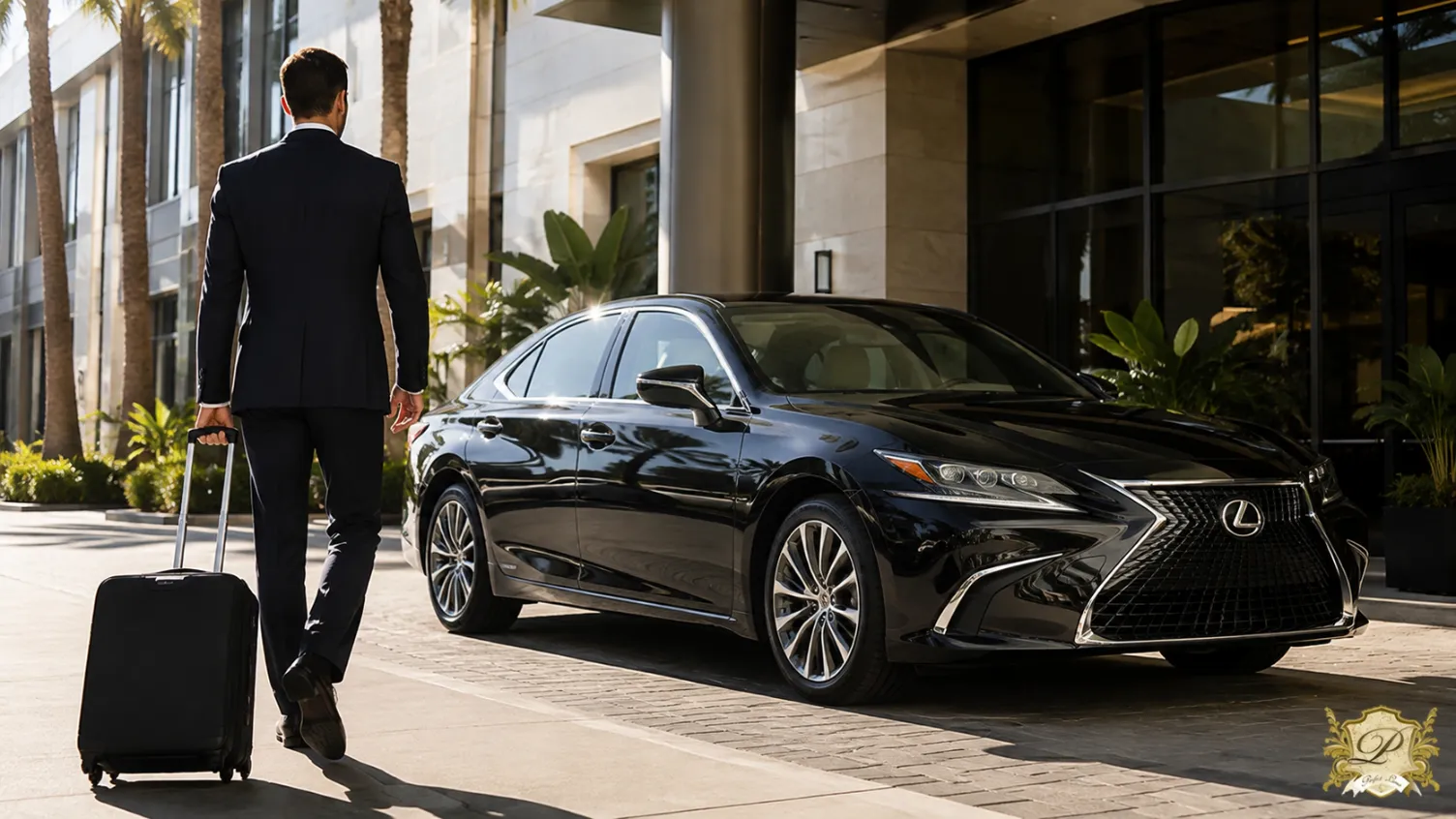
The Perfect Limo and Sedan’s Luxury Lexus Sedan is one option in the current chauffeured fleet for executive transportation.

4. Airport-to-Meeting Itineraries Need Extra Structure
A same-day flight and business meeting can create one of the highest-risk executive transportation schedules because the first part of the itinerary depends on an airline arrival rather than a normal office departure.
If an executive lands at Ontario International Airport, LAX, John Wayne Airport, or Long Beach Airport and immediately continues to a business appointment, the planner needs to account for more than the scheduled landing time. Deplaning, baggage retrieval when applicable, terminal movement, pickup procedures, and travel to the meeting destination all occur after the aircraft reaches the airport.
The same principle applies in reverse. If the final appointment of the day is followed by a flight, that departure becomes the hard deadline around which the previous meeting and transportation window should be structured.
Businesses arranging these trips can use The Perfect Limo and Sedan’s airport limo and car service as part of the broader executive itinerary rather than treating the airport segment as an unrelated reservation.
For an Airport-to-Meeting Day, Provide:
- Airport and flight information
- Expected luggage
- First meeting address
- Required meeting arrival time
- Hotel stop if one is needed
- All meetings that follow
- Final hotel, residence, event, or airport destination
5. Group Business Meetings Require a Different Transportation Plan
Multi-stop transportation becomes more complicated when the itinerary includes an entire business team instead of one executive. The organizer must now consider whether the passengers will remain together all day or separate for different appointments.
If everyone attends the same meetings, one appropriately sized group vehicle can simplify the schedule. The passengers can leave each location together and arrive at the next stop as one party rather than waiting for several independently traveling vehicles.
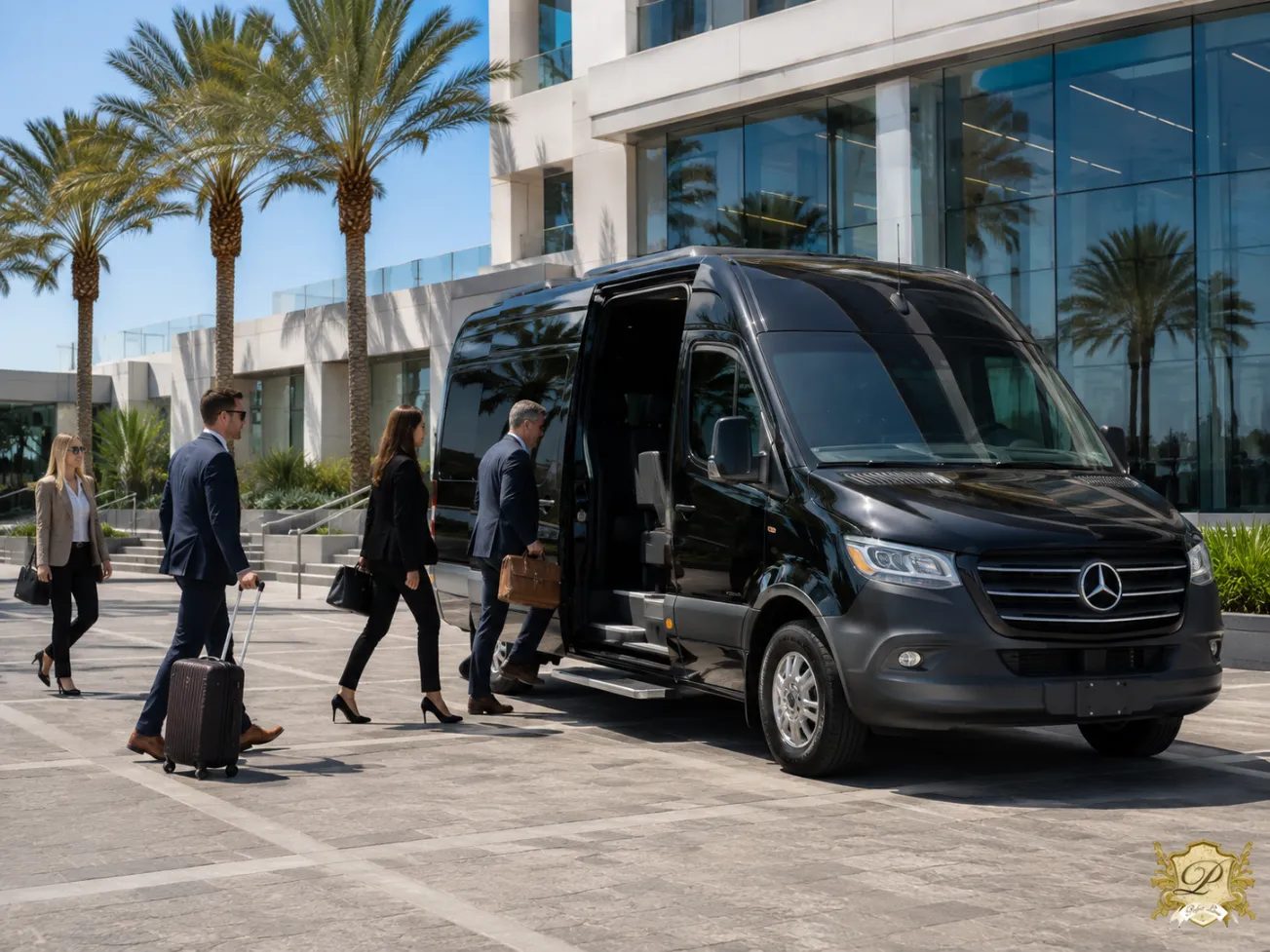
A Mercedes-Benz Sprinter can be useful for leadership teams, client delegations, conference groups, site visits, company retreats, and other business itineraries where several people share the same schedule.
If the group divides during the day, however, a mixed fleet may make more sense. One executive may continue to a separate meeting in a sedan or SUV while the larger team travels in a Sprinter to another destination.
Our comparison of an executive sedan vs SUV vs Sprinter for corporate transportation explains how passenger count, luggage, airports, and group coordination affect vehicle choice.
6. Dedicated Vehicle or Separate Point-to-Point Transfers?
Once several meetings are involved, the company should decide whether to arrange each trip separately or keep a vehicle and chauffeur associated with the executive’s broader schedule.
Separate transfers can make sense when appointments are many hours apart, the traveler will not need transportation between them, or the first vehicle would otherwise spend a long period unused.
A dedicated arrangement may be more practical when the meetings are relatively close together, the executive has several stops, timing may change during the day, luggage or materials need to remain with the traveler, or the final departure depends on staying on schedule.
| Situation | Transportation Approach to Consider |
|---|---|
| One meeting followed by several hours at the same location | Separate point-to-point transfers may be practical |
| Four meetings across several cities | Dedicated or extended transportation may be easier to manage |
| Executive needs luggage throughout the day before airport departure | Keeping the same suitable vehicle may be useful |
| Long conference with no transportation needed until evening | Separate reservations may deserve comparison |
| Client roadshow with unpredictable meeting end times | A coordinated extended reservation may provide more flexibility |
Cost can also influence this decision. Our guide to corporate transportation cost in Southern California explains why point-to-point transfers, service duration, waiting time, vehicles, airports, and multiple stops can produce different quote structures.
7. Use an SUV When the Executive’s Day Changes Passenger or Cargo Requirements
An SUV can be particularly useful for a multi-stop executive day because the transportation requirement may change between the first and last appointments.
An executive might begin alone, pick up a colleague before a presentation, collect a client for lunch, carry luggage throughout the afternoon, and finish at an airport. In that scenario, the vehicle needs to support more than the morning passenger count.
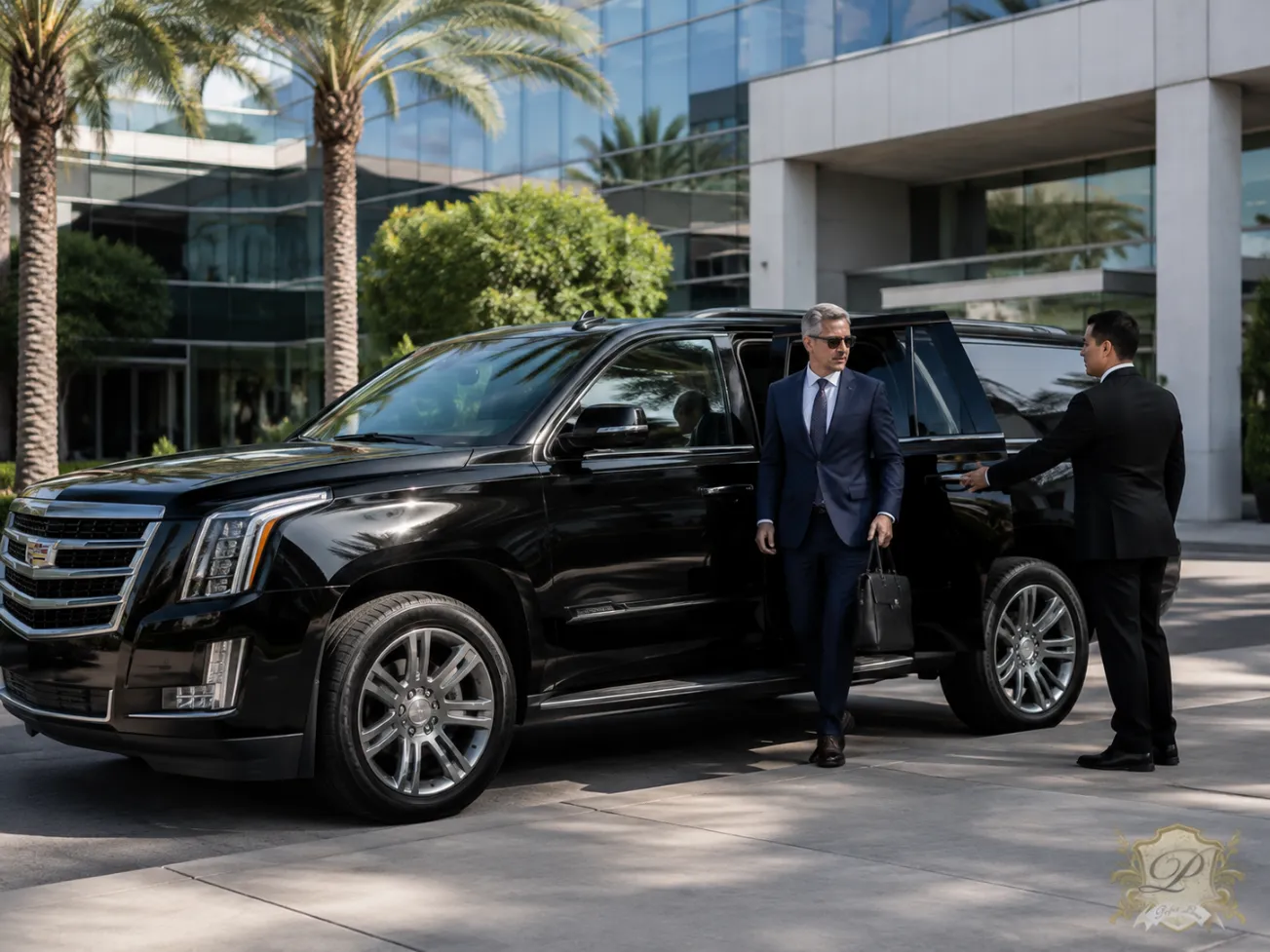
The Perfect Limo and Sedan’s Cadillac Escalade Luxury SUV is one of the current executive SUV options available for chauffeured transportation.
As with every vehicle selection, the reservation should account for actual luggage and passenger requirements rather than assuming the stated seating capacity alone determines suitability.
8. Plan for Business Meetings That Run Long
Business schedules change. A client asks additional questions. A presentation starts late. Lunch runs longer than expected. A senior executive adds another stop. These situations are common enough that a multi-stop itinerary should not be built with every segment dependent on perfect timing.
Before the transportation day, identify which parts of the itinerary can absorb change. If the first two meetings run late, can lunch move? Can an internal office stop be shortened? Is the final client meeting fixed? Does the airport departure require protecting a larger buffer later in the day?
The transportation company should also receive itinerary changes as early as possible. A new stop, different passenger count, altered destination, or significantly changed service window can affect the vehicle schedule and the feasibility of the original plan.
Protect the Last Important Deadline
When the day’s final commitment is a flight, major event, presentation, or another fixed deadline, avoid using all available schedule flexibility earlier in the day. A small delay at 10:00 a.m. can become a larger problem at 5:00 p.m. if every later segment is scheduled without recovery time.
9. Southern California Business Geography Matters
Multi-stop executive travel in Southern California often covers a much larger geographic area than the phrase “local business transportation” suggests.
The Inland Empire, Orange County, and Los Angeles County contain separate business centers, airports, hotels, industrial districts, convention areas, and corporate campuses. A meeting itinerary may involve Interstate 10, Interstate 15, State Route 91, Interstate 5, Interstate 405, or other heavily traveled corridors depending on the destinations.
This means two meetings that appear geographically close on a regional map may still require meaningful travel time once the specific locations and time of day are considered. Conversely, an itinerary can sometimes be improved simply by changing the sequence of flexible appointments to reduce unnecessary backtracking.
The Perfect Limo and Sedan’s existing guide to business travel efficiency discusses how corporate and executive transportation can support Southern California travel between airports, meetings, events, and other business commitments.
10. Decide Who Controls the Transportation Itinerary
A multi-stop day works better when there is one clear source of itinerary information. Depending on the company, that may be the executive, an executive assistant, travel coordinator, event planner, office manager, or another authorized contact.
When several people independently send schedule changes, confusion becomes more likely. One person may change a restaurant while another still expects the original location. A client may be added as a passenger without the vehicle requirement being reviewed. The airport destination may change while an old itinerary remains in circulation.
Establish one primary itinerary owner and make sure the transportation provider has the correct contact information. If another person is authorized to change the reservation, identify that person in advance when possible.
11. Use Prearranged Transportation for the Itinerary You Actually Planned
California Charter-Party Carrier transportation operates on a prearranged basis. CPUC materials state that covered charter-party transportation is arranged in advance and that required trip documentation includes information such as the arranging party, number of persons, and points of origin and destination.
Businesses can review the California Public Utilities Commission’s Charter-Party Carrier information for additional information about the state’s regulatory framework for prearranged passenger transportation.
From a practical planning perspective, this reinforces an important principle: the more accurately the company describes the trip before service begins, the easier it is to build the reservation around the actual transportation requirement.
Multi-Stop Executive Transportation Booking Checklist
Before requesting a quote or confirming the reservation, collect the information below. A complete itinerary helps the transportation provider evaluate the vehicle, service period, route, and scheduling requirements more accurately.
| Information | What to Provide |
|---|---|
| Travel date | Exact date of transportation |
| First pickup | Airport, hotel, office, residence, or other complete location |
| All stops | Every meeting, lunch, hotel, office, event, and client destination |
| Required arrival times | Identify hard deadlines separately from flexible stops |
| Passenger count | Maximum passengers at any point in the itinerary |
| Passenger changes | Where clients or colleagues join or leave the vehicle |
| Luggage and equipment | Suitcases, carry-ons, presentation cases, trade show materials, or other cargo |
| Flight information | Airline, flight number, airport, and relevant arrival or departure details |
| Vehicle preference | Sedan, SUV, Sprinter, or request a recommendation based on the itinerary |
| Primary contact | Person authorized to coordinate itinerary details and updates |
Example: A Multi-Stop Southern California Executive Day
Consider an executive arriving in Southern California for one business day. The following example is not a recommended universal timetable. It simply illustrates the information that should be considered.
| Stage | Planning Considerations |
|---|---|
| Airport arrival | Flight timing, luggage, pickup process, first meeting deadline |
| Meeting #1 | Building access, realistic end time, next destination |
| Client lunch | Whether the client joins the vehicle and how long lunch may realistically last |
| Meeting #2 | Arrival deadline, parking/drop-off access, presentation materials |
| Meeting #3 | Potential overrun and remaining airport buffer |
| Airport departure | Final hard deadline that protects the flight schedule |
The value of this exercise is not predicting every minute perfectly. It is identifying where the itinerary has flexibility and where it does not.
When Multi-Stop Corporate Transportation Makes the Most Sense
Not every business traveler needs a dedicated multi-stop transportation plan. One simple trip may be handled perfectly well as a normal point-to-point reservation.
Coordinated multi-stop transportation becomes more useful when the trip includes several factors at the same time:
- Several meetings on the same day
- Travel across multiple Southern California cities or counties
- Airport arrival or departure connected to the meeting schedule
- Executives or clients whose time is difficult to reschedule
- Passengers joining or leaving the itinerary during the day
- Luggage or materials that need to remain with the traveler
- A group that needs coordinated arrivals
- An itinerary that may need controlled adjustments as the day progresses
Companies deciding whether scheduled professional transportation or app-based rides are appropriate for these business-critical trips can also review our corporate transportation vs rideshare comparison.
Build the Transportation Around the Business Schedule
The Perfect Limo and Sedan provides corporate and executive transportation throughout Southern California for airport transfers, client visits, executive meetings, company events, business groups, and multi-stop itineraries using luxury sedans, executive SUVs, Mercedes-Benz Sprinters, and other chauffeured vehicles.
For a multi-stop reservation, provide the complete itinerary rather than only the first pickup. Include every known destination, required arrival time, passenger change, luggage requirement, airport or flight detail, and the final time-sensitive commitment.
Planning an executive meeting day? Review our corporate limo and sedan service or call 800-951-3017 to discuss the schedule, passenger requirements, and vehicle options.
Frequently Asked Questions About Multi-Stop Executive Transportation
What is multi-stop executive transportation?
Multi-stop executive transportation is a prearranged business travel itinerary involving more than one destination, such as an airport, hotel, several meetings, client lunch, corporate event, and return trip. The transportation is planned around the overall schedule instead of treating every segment as an unrelated trip.
How much time should I leave between business meetings in Southern California?
There is no universal buffer because the locations, time of day, road conditions, building access, meeting importance, and next deadline vary. Avoid relying only on an ideal driving estimate. Include time for leaving the building, passenger loading, traffic variability, destination access, and recovery if an earlier meeting runs long.
Is hourly transportation better for several business meetings?
It can be useful when meetings are relatively close together, the passenger needs several stops, schedule changes are possible, or luggage and materials need to remain with the traveler. Separate point-to-point reservations may make more sense when there are long periods during which no transportation is required.
What vehicle is best for a multi-stop executive itinerary?
A sedan often works well for a solo executive, an SUV can support additional passengers or luggage, and a Sprinter can be useful when a larger business group follows the same itinerary. Select the vehicle based on the maximum passenger, luggage, and equipment requirements during the entire service period.
Can the itinerary include airport transportation and business meetings?
Yes. An airport arrival or departure can be incorporated into a broader executive itinerary. Provide the airport and flight information along with the hotel, meeting locations, passenger count, luggage, required arrival times, and other planned stops.
What happens if a business meeting runs late?
The effect depends on the reservation and remaining itinerary. Build reasonable buffers into important travel days and communicate material schedule changes as early as possible. If later commitments include a flight or another fixed deadline, protect enough time so an earlier delay does not automatically compromise the final trip.
What details should I provide when booking multi-stop corporate transportation?
Provide the travel date, first pickup, every destination, required arrival times, estimated meeting windows, passenger count, passenger changes, luggage and equipment, flight information when applicable, preferred vehicle, final destination, and a primary contact authorized to coordinate the itinerary.
Final Takeaway
Successful multi-stop executive transportation begins before the first passenger enters the vehicle. The company should know where the executive needs to go, which appointments are fixed, which stops are flexible, who will travel during each segment, what luggage or equipment must be accommodated, and which deadline matters most at the end of the day.
The vehicle should then be selected around the complete itinerary. A sedan may be ideal for one executive, an SUV can support changing passenger or luggage requirements, and a Sprinter may simplify a shared schedule for a larger team.
In Southern California, where a single business day can involve several cities, counties, airports, and heavily traveled corridors, the most useful transportation plan is not the one built around the shortest theoretical drive time. It is the one that gives the executive a realistic path from the first commitment to the final deadline.
Business Meetings, Business Travel, corporate transportation, executive car service, executive transportation, Multi-Stop Executive Transportation, southern california