Executive Airport Pickup for Clients & VIP Guests: A Complete Planning Guide
Southern California Executive Airport Transportation Guide
Executive Airport Pickup for Clients and VIP Guests: Planning Guide
Arranging an executive airport pickup for a client or VIP guest requires more than reserving a vehicle and entering an airport name. The person making the reservation may be responsible for coordinating a flight arrival, passenger contact, luggage, airport pickup procedure, hotel, business meeting, additional guests, and the type of vehicle that represents the company appropriately.
This becomes especially important when the passenger is someone your organization is hosting. A visiting executive, investor, board member, job candidate, consultant, keynote speaker, customer, or business partner may be unfamiliar with Southern California and may not know which airport pickup procedures, highways, hotels, or business districts are involved.
A well-planned pickup gives the transportation company enough information to coordinate the arrival around the actual trip. That includes the correct passenger, flight, airport, luggage requirement, destination, contact information, and any meeting or event that follows the airport transfer.
Quick Answer
For an executive airport pickup, provide the passenger’s full name, mobile contact, airport, airline, flight number, travel date, luggage estimate, destination, required arrival time, and any additional stops. Decide whether standard curbside pickup or requested Meet & Greet service better suits the guest. Choose a sedan for an individual executive with moderate luggage, consider an SUV for additional passengers or luggage, and use a larger vehicle when several guests are traveling together. If the VIP is going directly to a meeting, plan the airport transfer as part of the business itinerary rather than as an isolated ride.
Key Takeaways
- Book an executive airport pickup using the actual flight information, not only a scheduled pickup time.
- Give the transportation company a reliable passenger contact number even when an executive assistant or company representative makes the reservation.
- Decide whether curbside pickup or Meet & Greet better fits the client, airport, arrival, and level of assistance desired.
- Select the vehicle using both passenger count and luggage requirements.
- If the guest is going directly to a meeting, provide the required business arrival time so the airport transfer can be planned accordingly.
- Confirm who is authorized to communicate itinerary changes when the person booking is not the passenger.
- Check current airport-specific pickup procedures because LAX, ONT, SNA, and other airports may not handle commercial passenger pickup in exactly the same way.
Why Executive Airport Pickup Requires More Planning Than an Ordinary Ride
When employees arrange their own airport transportation, they can usually adapt personally if something changes. They know where they are going, can communicate directly, and can make decisions on the spot.
A company-arranged VIP pickup works differently. The person booking may be miles away from the airport. The passenger may not know the transportation provider. The chauffeur may not know the passenger personally. The guest may have a meeting shortly after arrival, while the executive assistant is trying to keep several people informed at once.
The reservation therefore needs a clear chain of information from the company to the transportation provider and from the transportation provider to the traveler.
This is why The Perfect Limo and Sedan’s broader executive transportation service in Southern California is relevant to more than airport mileage. Business travelers may require airport pickup followed by hotels, offices, meetings, events, dinners, or additional destinations.
1. Give the Transportation Company the Complete Arrival Information
The foundation of a successful executive airport pickup is accurate information. A pickup scheduled only as “3:00 p.m. at LAX” leaves out several details that can matter to the actual arrival.
The transportation company should know which flight the passenger is taking, who the passenger is, how to contact that person, where the traveler needs to go, and whether there is an important commitment after the airport.
Information to Prepare Before Booking
- Passenger’s full name
- Passenger’s mobile number
- Airport, such as ONT, LAX, SNA, LGB, or another airport
- Airline and flight number
- Travel date
- Domestic or international arrival when relevant to the pickup plan
- Number of passengers
- Luggage estimate, including large or unusual items
- Destination, including complete hotel, office, residence, or venue information
- Additional stops
- Next required appointment or event time
- Booking contact if someone other than the passenger is managing the reservation
The Perfect Limo and Sedan’s current airport reservation instructions specifically ask users entering ONT, LAX, or SNA to use the airport code so the booking system can request airline and flight information.
2. Choose the Vehicle for the Guest, Luggage, and Business Itinerary
Vehicle selection should be intentional, but it should not be based solely on which vehicle appears most luxurious.
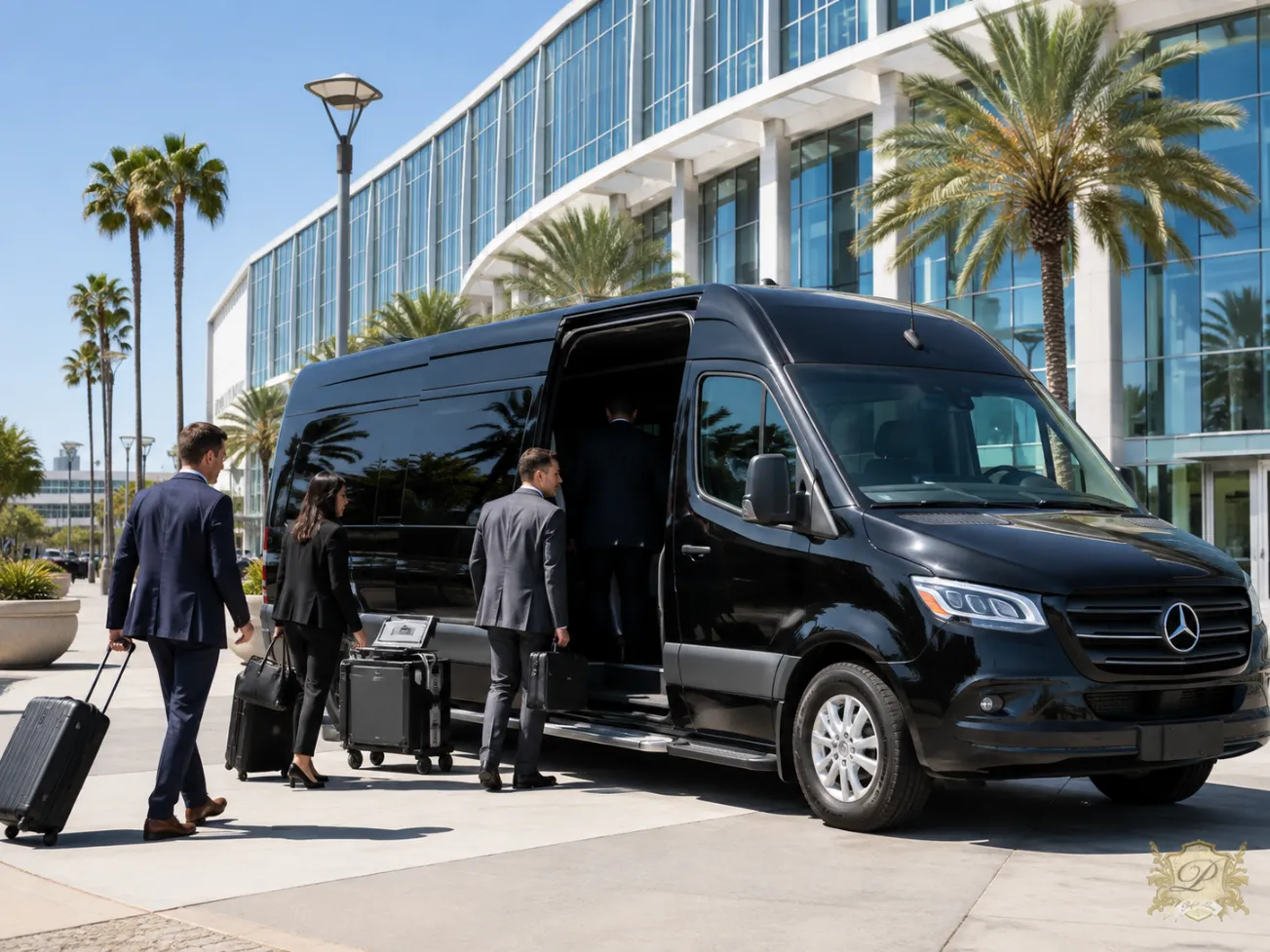
An individual executive traveling with normal business luggage may be well served by a luxury sedan. Several clients arriving together may need an executive SUV. A larger corporate delegation may require a Sprinter or another group vehicle.
Airport transportation makes luggage especially important. One passenger returning from a two-week international trip may have more cargo than three people attending a one-day local meeting. Tell the reservation team what the traveler is actually carrying instead of relying only on the number of seats.
Executive Sedan for an Individual Client or VIP
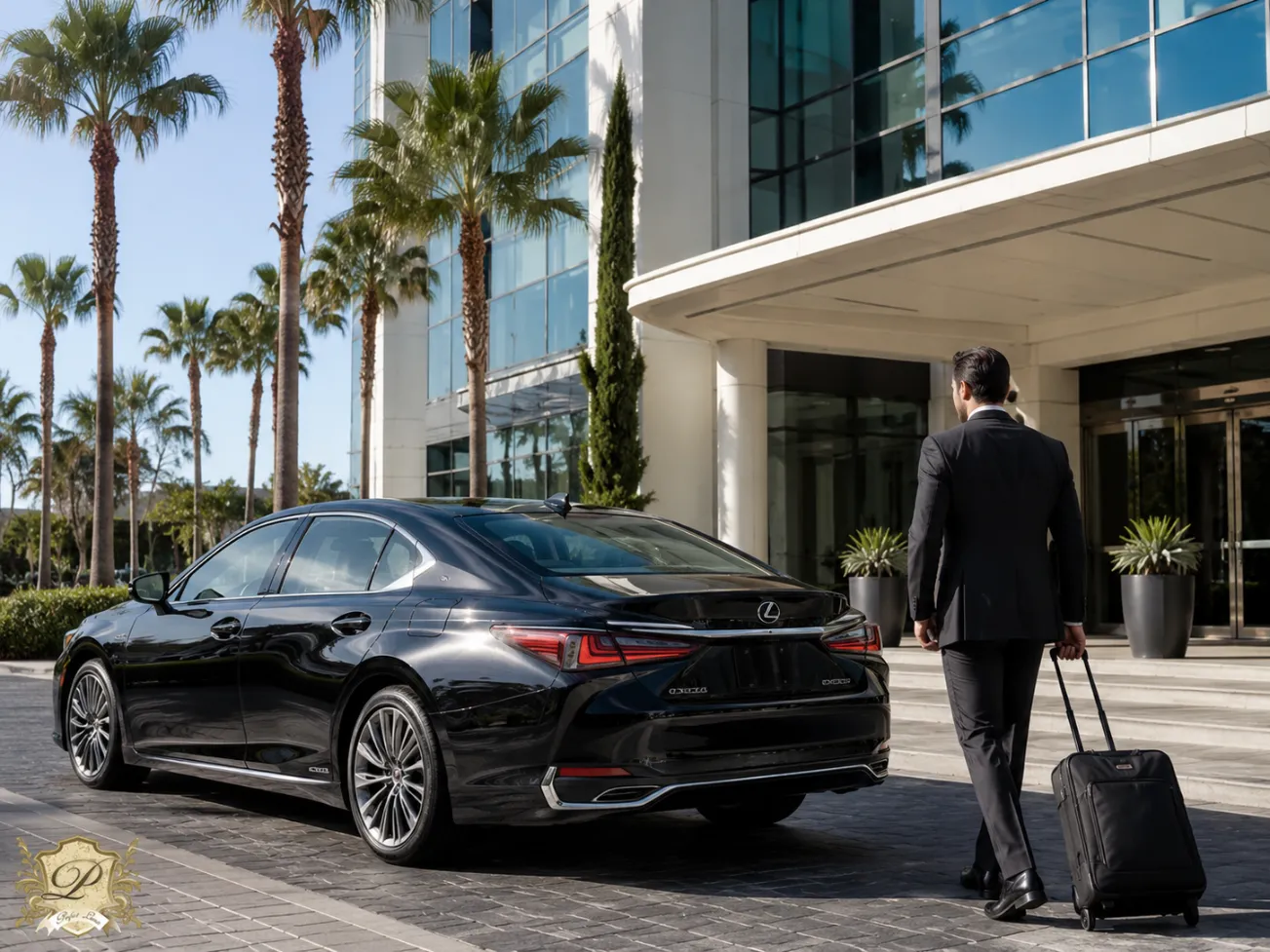
A sedan is often a strong fit when a company is hosting one executive, consultant, candidate, investor, speaker, or client. It provides a professional private vehicle without adding unnecessary capacity.
The Perfect Limo and Sedan’s current fleet includes the Luxury Lexus Sedan for executive and airport transportation.

3. Curbside Pickup vs Meet & Greet for a VIP Guest
One of the most important decisions for a company-arranged airport pickup is whether the passenger should use normal curbside coordination or request Meet & Greet service.
The Perfect Limo and Sedan currently states that its airport pickups are curbside by default. The company’s booking instructions say travelers who want Meet & Greet should request it in the reservation notes and that additional fees apply.
Curbside Pickup
Curbside pickup can work well for an experienced business traveler who is comfortable communicating by mobile phone and following airport pickup instructions after retrieving baggage.
Under The Perfect Limo and Sedan’s current airport terms, passengers using curbside pickup contact the chauffeur or company dispatch once they are ready with their baggage and provide relevant location information for pickup.
Meet & Greet
Meet & Greet can make sense when the company wants a more guided arrival, particularly for a first-time visitor, important client, international traveler, senior executive, speaker, or other guest who may appreciate having a chauffeur waiting in the designated terminal area with identifying signage.
The company’s current terms describe Meet & Greet as a requested airport service where the chauffeur is positioned near the main exit or baggage area with a sign displaying the passenger’s last name and/or company name. Because airport access rules and service terms can change, confirm the current procedure and any applicable fee when the reservation is made.
Which Should a Company Choose?
Choose based on the guest, not status alone. A frequent executive traveler may prefer efficient curbside coordination. A first-time visitor or important guest unfamiliar with the airport may benefit from a requested Meet & Greet. Ask the passenger or executive assistant about the preferred arrival experience before booking.

4. Airport Pickup Procedures Are Not Identical Everywhere
An executive assistant should not assume that an ONT pickup, LAX pickup, and SNA pickup will use identical passenger-loading procedures.
Airport authorities control access to terminal roadways and commercial passenger pickup areas. Locations and rules can change due to construction, terminal operations, traffic-management programs, or other airport requirements.
LAX Executive Car Pickup
Current official Los Angeles International Airport transportation guidance states that limousines, town cars, and executive car services continue to pick up in the Central Terminal Area, with pickup on the outer curb of the lower arrivals level outside baggage claim.
This distinction matters because travelers familiar with standard ride-app procedures may assume their executive car follows the same pickup process. Confirm the instructions for the specific reservation rather than directing the guest based on another transportation category.
Ontario International Airport
Companies arranging transportation at ONT can review the official Ontario International Airport ground transportation information before an important arrival.
The Perfect Limo and Sedan also publishes a dedicated guide explaining where passengers meet their chauffeur at ONT.
The broader lesson applies to SNA, LGB, and other airports as well: verify current instructions with the transportation provider and airport rather than assuming the passenger will be collected anywhere along the terminal curb.
5. If the Guest Has a Meeting After Landing, Tell the Transportation Company
An airport-to-hotel transfer and an airport-to-board-meeting transfer may use the same roads, but they carry very different scheduling consequences.
If the guest is simply checking into a hotel after arrival, the schedule may have significant flexibility. If the passenger is expected to walk into a client presentation, investor meeting, conference session, or executive dinner shortly after landing, the company needs to protect that arrival time.
Do not calculate the schedule using only the aircraft’s published arrival time plus a perfect driving estimate. After landing, the passenger may still need to reach the gate, deplane, move through the terminal, retrieve checked baggage, communicate with the chauffeur, reach the pickup point, and then travel to the business destination.
International arrivals can require additional processing before the traveler is ready to leave the airport. The exact time varies, which is another reason to avoid an unnecessarily tight first meeting.
If several appointments follow the airport, review our guide to multi-stop executive transportation for business meetings and build the airport arrival into the full itinerary.
6. The Best VIP Vehicle Is the One That Fits the Guest
VIP transportation is sometimes treated as though the largest or most expensive-looking vehicle is automatically the correct answer. That can lead to poor vehicle matching.
One visiting executive with a suitcase may prefer a discreet sedan. Two or three clients traveling with several bags may need an SUV. A larger delegation attending the same conference may benefit from group transportation.
Presentation still matters. A company hosting an important customer may want a polished executive vehicle that reflects the professional nature of the visit. But capacity, luggage, airport logistics, and itinerary should remain the practical foundation of the decision.
When an Executive SUV May Be the Better Choice
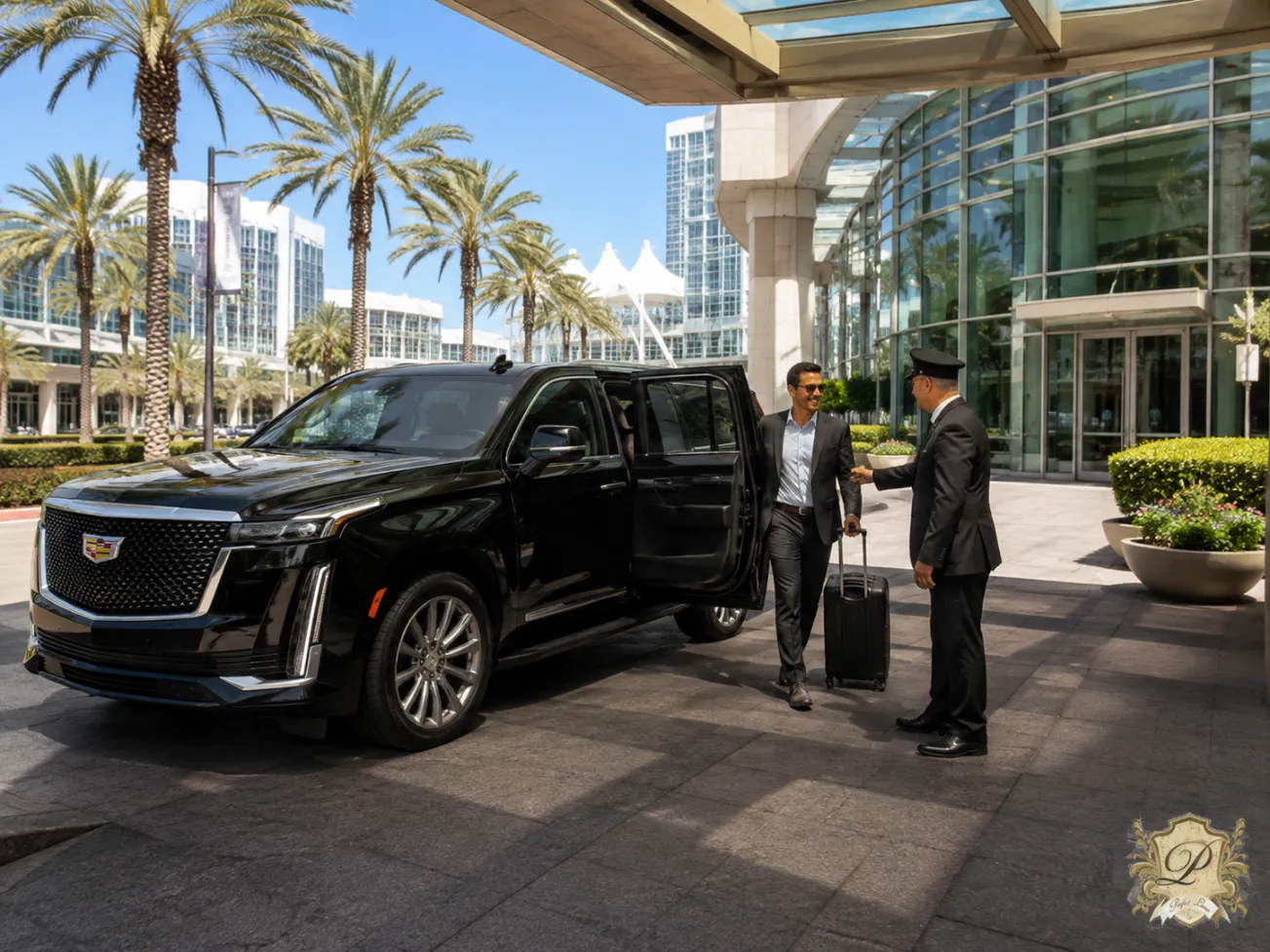
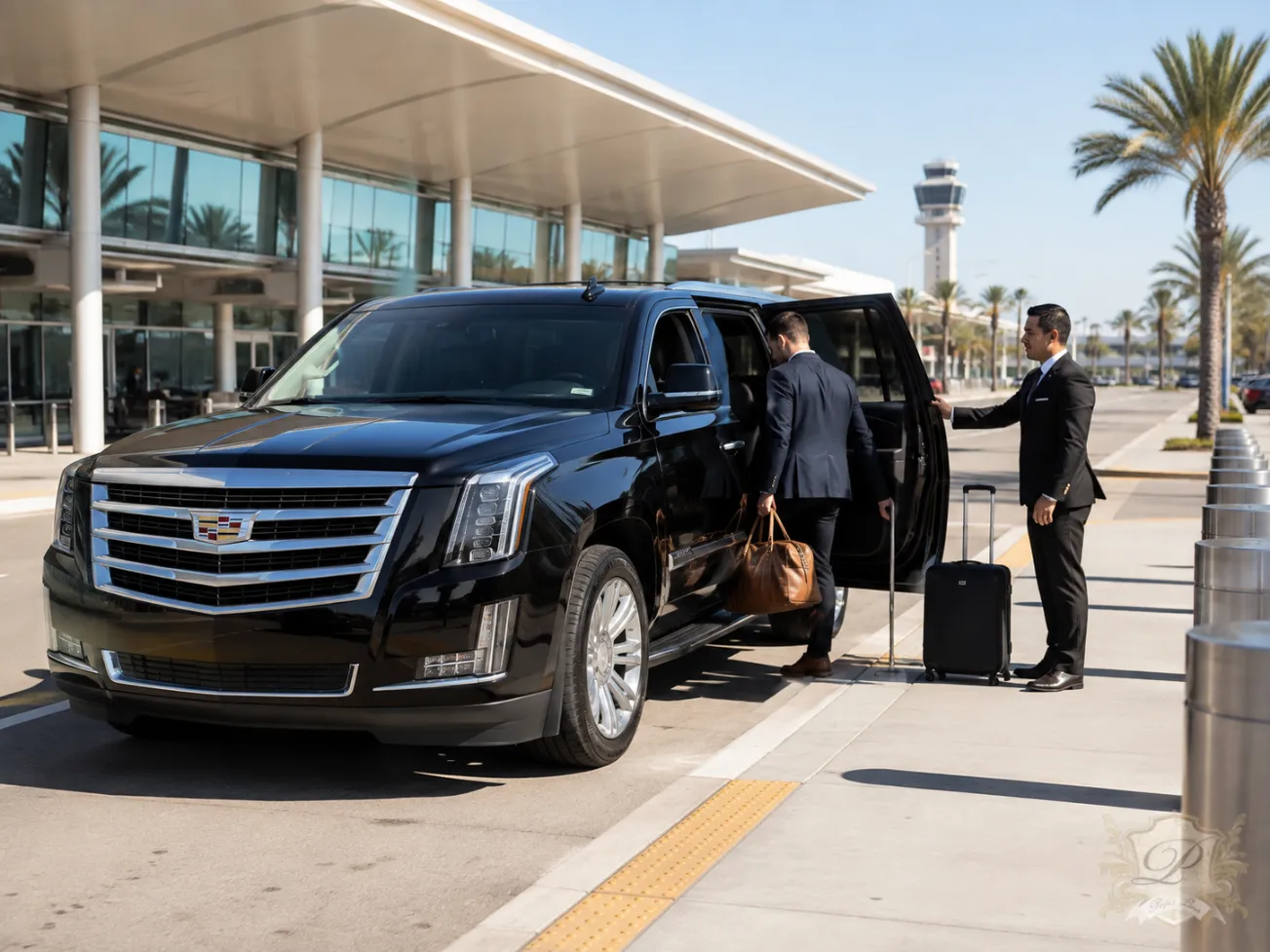
An executive SUV can be useful when several guests arrive together, the client has significant luggage, additional company representatives are joining the passenger, or the itinerary requires more cabin and cargo room than a sedan provides.
The Perfect Limo and Sedan’s Cadillac Escalade Luxury SUV is one of the executive SUV options in its current fleet.
7. Create a Communication Plan Before the Flight Lands
Communication is one of the most important parts of arranging transportation for another person.
At minimum, the transportation company should have a reliable way to reach the passenger. The executive assistant or host company should also know how to reach the transportation company if the flight, passenger, destination, or meeting schedule changes.
The Perfect Limo and Sedan’s current airport terms require the client to have a direct method of contact, such as a mobile phone or another provided communication method, so the company or chauffeur can contact the passenger if necessary.
Decide Who Receives Which Information
| Person | Information They Should Have |
|---|---|
| Passenger | Transportation company contact, pickup instructions, destination confirmation, and any chauffeur/vehicle information supplied for the trip |
| Executive assistant or host | Reservation details, transportation company contact, passenger itinerary, and authority to communicate changes |
| Transportation provider | Passenger name and number, flight, airport, luggage, destinations, required times, and booking contact |
This communication triangle is especially useful when the executive assistant is not traveling with the guest. Everyone knows who the passenger is, who controls the itinerary, and who should be contacted when something changes.
8. Multiple VIP Guests May Need a Different Airport Pickup Plan
When several clients or executives are arriving for the same company event, the planner needs to determine whether they should share transportation or receive separate vehicles.
Passengers on the same flight who are going to the same hotel may be good candidates for one appropriately sized vehicle. Guests arriving on different flights several hours apart may be easier to handle through separate reservations.
The same applies when travelers have different destinations. One executive may go directly to a client meeting while two other guests first need to check into a hotel. Combining them simply because they are attending the same event could make the itinerary less efficient.
If a larger corporate group arrives together and shares the same schedule, a Sprinter or other group vehicle may deserve consideration. If individual VIPs have separate responsibilities, sedans and SUVs may provide a cleaner transportation plan.
Our executive sedan vs SUV vs Sprinter comparison explains how to select vehicles based on passengers, luggage, airports, and business-group requirements.
9. Do Not Forget the Hotel-to-Meeting and Return Transportation
An executive airport pickup may be only the first segment of a guest’s visit.
If the company is already coordinating transportation from the airport, it may be useful to map the rest of the business itinerary before the reservation is finalized.
Does the guest need hotel-to-office transportation the next morning? Is there a client dinner that evening? Will the executive attend a conference? Does the traveler depart from the same airport? Is another colleague joining during the trip?
These movements do not necessarily need to be one continuous reservation. The purpose of identifying them early is to avoid discovering on the travel day that the client still needs transportation for the next important commitment.
Companies with recurring executive and client travel can review The Perfect Limo and Sedan’s corporate limo and sedan service for broader business transportation needs.
10. Common Executive Airport Pickup Planning Mistakes
Small omissions can create unnecessary confusion when one person books transportation for another. These are some of the most avoidable problems.
Booking Only by Scheduled Arrival Time
Give the flight information, not simply the published landing time. Airport arrivals depend on the actual flight and how long the passenger needs before being ready for ground transportation.
Forgetting the Passenger’s Mobile Number
The executive assistant’s number is useful, but the transportation company may also need to communicate directly with the traveler at the airport.
Choosing a Vehicle Only by Passenger Count
Airport passengers bring luggage. Include full-size suitcases, carry-ons, presentation cases, golf bags, or other large items when relevant.
Assuming Meet & Greet Is Automatically Included
Confirm the selected pickup type. The Perfect Limo and Sedan currently handles airport pickups curbside by default and asks customers to request Meet & Greet separately.
Scheduling a Client Meeting Too Close to Landing
Allow for the complete arrival process and ground transportation rather than treating the published flight arrival as the moment the passenger leaves the airport.
Failing to Tell the Guest What to Expect
Send the traveler the transportation company’s name, pickup method, appropriate contact details, and destination information before departure. The passenger should not discover after landing that someone else arranged transportation but never explained how to find it.
11. Choosing the Right Company for an Executive Airport Pickup
When your organization is putting an important client or executive into someone else’s vehicle, the transportation provider itself deserves review.
A corporate transportation company should be able to explain its airport process, collect the correct flight and passenger information, recommend an appropriate vehicle, document the itinerary, and provide clear communication about the reservation.
The company should also understand when the airport transfer is connected to an important business meeting rather than treating the reservation as merely an airport-to-address ride.
For a broader provider-selection framework, see our guide on how to choose a corporate transportation company for executive travel.
Executive Airport Pickup Checklist for Assistants and Travel Coordinators
| Checklist Item | What to Confirm |
|---|---|
| Passenger | Correct full name and mobile contact |
| Flight | Airport, airline, flight number and travel date |
| Pickup method | Curbside or requested Meet & Greet |
| Vehicle | Sedan, SUV, Sprinter, or other appropriate vehicle |
| Luggage | Number and approximate size of bags and unusual items |
| Destination | Complete hotel, office, residence, restaurant, venue, or meeting address |
| Next commitment | Required meeting or event arrival time |
| Additional stops | Hotel, office, client, restaurant, or other planned stops |
| Guest instructions | Passenger has the pickup process and contact information |
| Booking contact | Transportation company knows who can approve itinerary changes |
| Final confirmation | Review date, flight, passenger, pickup type, destination, vehicle and schedule before travel |
Example: Hosting an Executive Visiting Southern California
Consider a company hosting a visiting executive for an important two-day business trip.
| Stage | Transportation Planning |
|---|---|
| Before travel | Executive assistant confirms flight, mobile number, luggage, hotel and preferred pickup method |
| Airport arrival | Passenger follows confirmed curbside or Meet & Greet procedure |
| First destination | Vehicle proceeds to hotel or directly to meeting according to itinerary |
| Business dinner | Separate scheduled transportation if the airport vehicle is not being retained |
| Day 2 meetings | Multi-stop sedan or SUV itinerary based on meetings and passenger changes |
| Airport departure | Pickup scheduled around the departing flight and final business commitment |
The value of this approach is continuity. The host company knows how the guest gets from the airport to the first destination, how the traveler moves between important business commitments, and how the final airport departure fits into the visit.
Arrange the Airport Pickup Before Your Guest Lands
The Perfect Limo and Sedan provides scheduled airport transportation throughout Southern California for executives, corporate travelers, visiting clients, VIP guests, speakers, business groups, and other passengers.
Current fleet options include executive sedans, luxury SUVs, Mercedes-Benz Sprinters, limousines, and other chauffeured vehicles for different passenger and luggage requirements.
When making the reservation, have the passenger name, mobile contact, airport, airline, flight number, luggage, destination, required meeting times, additional stops, and preferred pickup method ready.
Planning an executive or VIP airport pickup? Review our Southern California airport transportation service or call 800-951-3017 to discuss the flight, passenger, vehicle, pickup method, and business itinerary.
Frequently Asked Questions About Executive Airport Pickup
What information do I need to arrange an executive airport pickup?
Provide the passenger’s name, mobile number, airport, airline, flight number, date, passenger count, luggage, destination, additional stops, preferred pickup method, and any important meeting or event time that follows the airport transfer.
Can an executive assistant book airport transportation for someone else?
Yes. When booking for another person, provide both the traveler’s correct contact information and the booking contact responsible for coordinating the itinerary. Make sure the passenger also receives the transportation and pickup instructions before travel.
Is curbside pickup or Meet & Greet better for a VIP?
It depends on the guest. Curbside pickup can work well for an experienced traveler comfortable with mobile coordination. Meet & Greet may be more appropriate for a first-time visitor, international guest, senior executive, or client who would benefit from a more guided arrival. Confirm current procedures and fees when booking.
What is the best vehicle for an executive airport pickup?
A luxury sedan often fits one executive with moderate luggage. An executive SUV can provide additional passenger and cargo room, while a Sprinter or other larger vehicle can support a corporate group. Provide both passenger and luggage information when requesting a vehicle.
Can a chauffeur pick up an executive directly at LAX?
Current LAX guidance allows limousines, town cars, and executive car services to pick up within the Central Terminal Area at designated outer-curb locations on the lower arrivals level outside baggage claim. Confirm current instructions with the transportation provider before the passenger travels because airport procedures can change.
Can a VIP go directly from the airport to a business meeting?
Yes, but the schedule should include enough time for deplaning, baggage when applicable, airport pickup coordination, ground transportation, and arrival at the meeting location. Give the transportation provider the required meeting time so the airport transfer can be considered within the full itinerary.
Should several visiting executives share one airport vehicle?
They can when flight timing, destination, passenger count, luggage, and business schedules align. Separate vehicles may be more practical when guests arrive on different flights, go to different hotels, or have different meetings after landing.
Should I tell the transportation company about the rest of the executive’s schedule?
Yes when the airport pickup connects to a meeting, hotel stop, client dinner, conference, additional passenger pickup, or another time-sensitive commitment. Providing the full relevant itinerary helps the transportation company understand what the airport transfer needs to support.
Final Takeaway
A successful executive airport pickup begins with accurate information and a clear plan for what happens after the aircraft lands.
Provide the passenger name, mobile number, airport, airline, flight number, luggage, destination, and business schedule. Decide whether curbside pickup or requested Meet & Greet better fits the guest. Select a vehicle based on actual passenger and cargo requirements rather than prestige alone.
When the passenger is a client or VIP, make sure the guest knows who is providing the transportation and how the pickup will work before departure. If a meeting follows the arrival, give the transportation provider the required meeting time and protect the schedule against the realities of airport processing and Southern California ground travel.
The goal is not simply to have a luxury vehicle waiting somewhere near the airport. It is to create a professional, clearly communicated transition from the passenger’s flight to the next part of the business itinerary.