Sedan, SUV, or Sprinter? Choosing the Right Corporate Transportation
Southern California Corporate Vehicle Guide
Executive Sedan vs SUV vs Sprinter for Corporate Transportation
Choosing an executive sedan vs SUV vs Sprinter for corporate transportation should begin with the business itinerary, not with which vehicle looks most impressive. Passenger count, luggage, airport travel, group coordination, meeting schedules, client presentation, and the amount of time spent on the road can all influence which vehicle makes the most sense.
A luxury sedan can be an efficient choice for a solo executive moving between an airport, hotel, and meetings. A Cadillac Escalade can provide additional passenger and luggage room for executives or clients. A Mercedes-Benz Sprinter can be more practical when a management team, conference group, or client delegation needs to travel together rather than split among several vehicles.
The Perfect Limo and Sedan provides executive transportation throughout Southern California using several vehicle categories for different business requirements. This guide explains where each option fits and how to choose according to the actual trip.
Quick Answer
Choose an executive sedan for a solo executive or small business party with limited luggage, an SUV when passengers need more cabin or cargo room, and a Mercedes Sprinter when a larger corporate group benefits from traveling together. There is no universally best corporate vehicle. The correct choice depends on passenger count, luggage, itinerary, airport requirements, meeting schedule, trip duration, and whether keeping the group together is more important than using several smaller vehicles.
Key Takeaways
- Executive sedan: often best for solo executives, individual client pickups, airport transfers, and discreet point-to-point business travel.
- Executive SUV: useful when a small group needs more passenger room, more luggage capacity, or a larger executive vehicle.
- Mercedes Sprinter: particularly useful for corporate teams, conferences, client delegations, events, and airport groups that need to remain together.
- Seating capacity alone should never determine the vehicle. Luggage, presentation equipment, trade show materials, and other cargo also need to fit.
- Larger is not automatically better. Unnecessary vehicle capacity can increase transportation cost without improving the trip.
- Complex corporate itineraries may benefit from a mixed fleet, such as sedans or SUVs for executives and Sprinters for the broader team.
Executive Sedan vs SUV vs Sprinter: Quick Comparison
The easiest way to compare these vehicles is to look at the business problem each one solves. A sedan prioritizes efficient private transportation. An SUV adds room without moving into a full group-transportation format. A Sprinter is designed for situations where moving several travelers together becomes more important.
| Factor | Executive Sedan | Executive SUV | Mercedes Sprinter |
|---|---|---|---|
| Best use | Solo executive or small business party | Executives, clients, small groups, additional luggage | Corporate teams and larger groups |
| Airport travel | Strong fit for one traveler with moderate luggage | Useful for several passengers or more luggage | Useful for coordinated group arrivals and departures |
| Presentation | Discreet executive appearance | Larger executive presence | Professional group transportation |
| Group coordination | Several cars may be needed as group size increases | Can reduce the number of vehicles for smaller groups | Designed to keep a larger group together |
| Typical corporate scenario | Executive airport transfer or meeting day | Client pickup, leadership team, airport luggage | Conference, company event, delegation, group airport transfer |
These categories should be treated as planning directions rather than rigid rules. The final vehicle decision should always be confirmed using the actual passenger count, luggage requirements, route, schedule, and available fleet.
1. Choose an Executive Sedan for Discreet Individual Business Travel
An executive sedan is often the starting point for private corporate transportation because it fits the needs of many individual business travelers without adding unnecessary vehicle size.
A solo executive traveling between Ontario International Airport and a business meeting may not need the capacity of an SUV or Sprinter. The same is true for a consultant traveling between a hotel and client office, a speaker going to a conference venue, or a visiting executive moving through a series of individual appointments.
Sedans also tend to fit naturally into professional environments. They can arrive at corporate offices, private aviation terminals, hotels, restaurants, conference centers, and meeting venues without making the vehicle itself the focus of the arrival.
Good Executive Sedan Use Cases
- Solo executive airport transfers
- Individual client or VIP pickups
- Hotel-to-office transportation
- Business dinners and professional events
- Executive roadshows involving one principal traveler
- Point-to-point trips with limited luggage or equipment
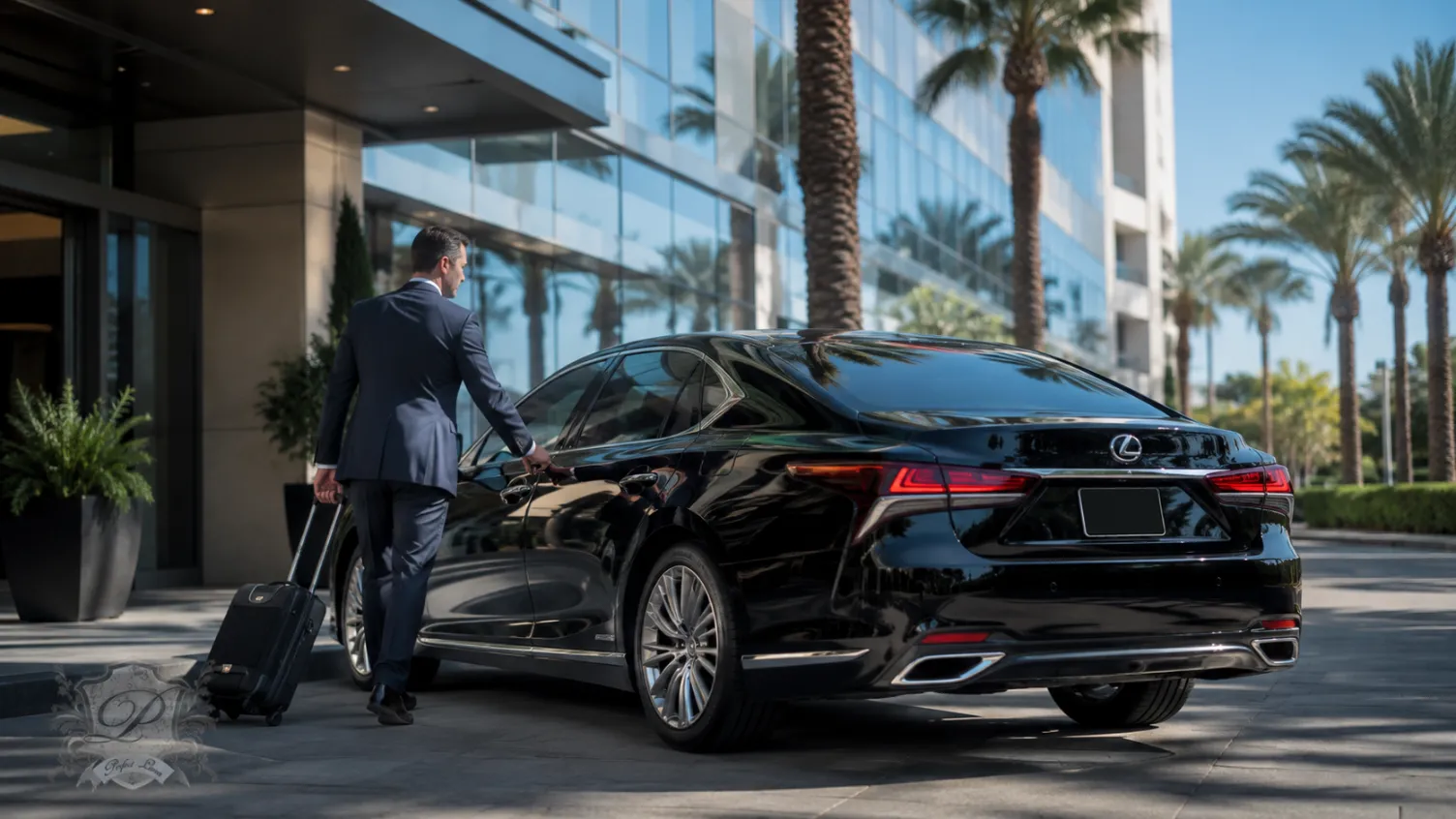
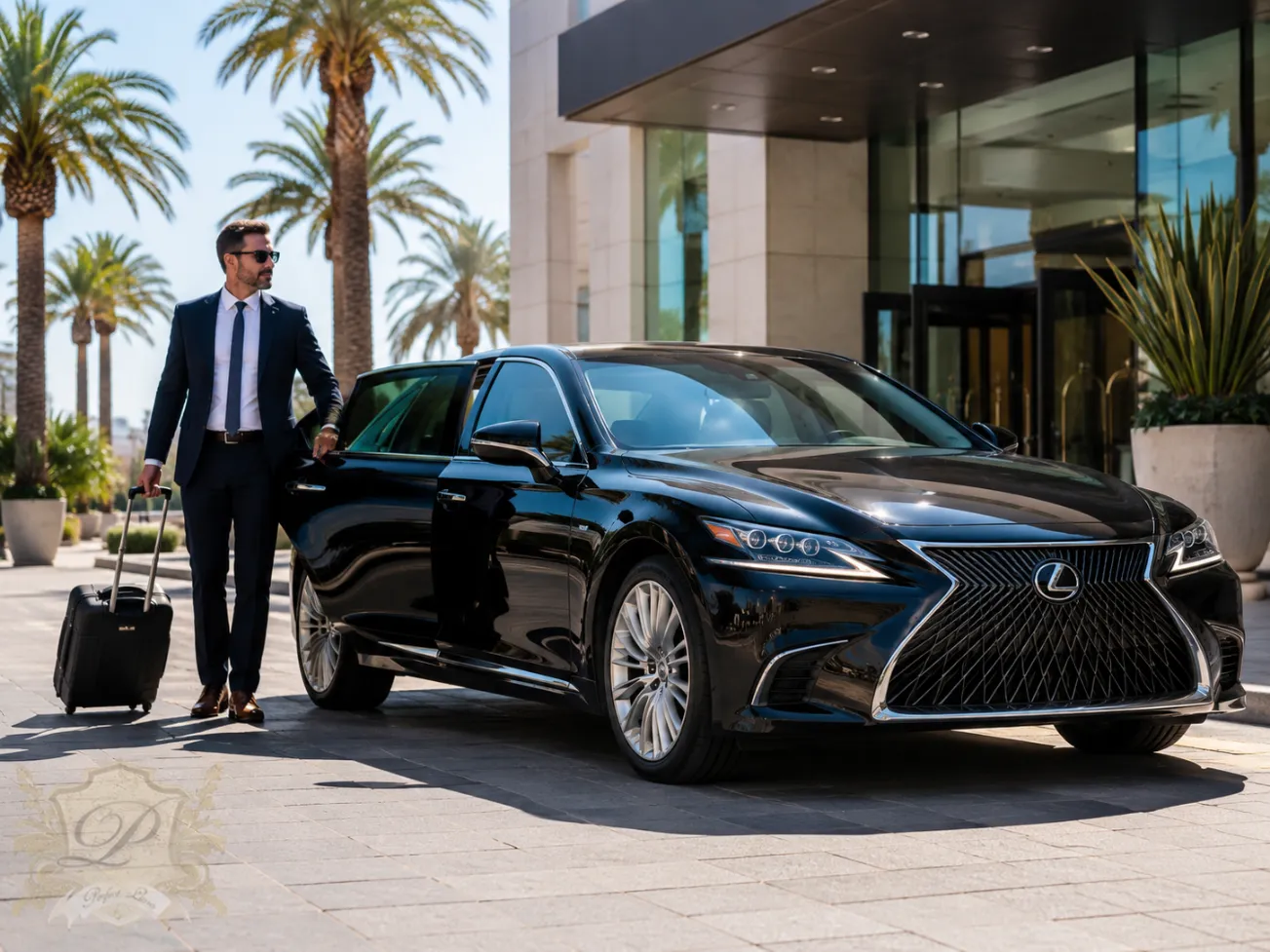
The Perfect Limo and Sedan’s Luxury Lexus Sedan is one of the sedan choices shown in the company’s current fleet.
2. Choose an Executive SUV When You Need More Passenger or Luggage Room
An executive SUV occupies the middle ground between a private sedan and a larger group vehicle. It can preserve the polished appearance expected for executive transportation while providing additional room for passengers, bags, and business equipment.
This can be particularly useful for airport travel. Two or more executives arriving with full-size luggage, carry-ons, laptop bags, or presentation cases may discover that passenger seating is only half of the capacity question. The luggage still has to fit safely and practically.
An SUV can also be appropriate when a company is hosting several clients. Instead of assigning separate sedans, the group may be able to travel in one vehicle when passenger and luggage requirements allow.
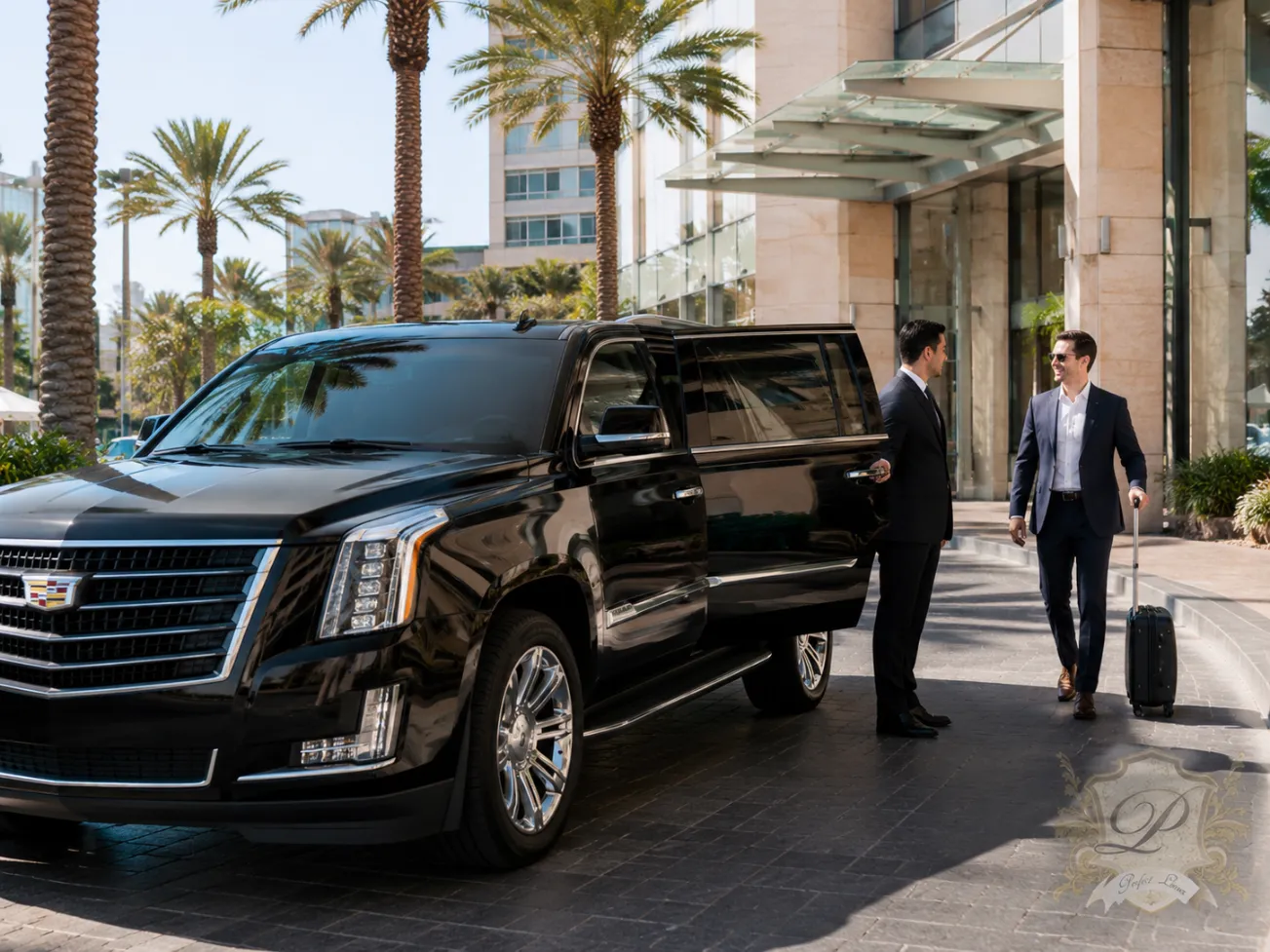
The Perfect Limo and Sedan lists its Cadillac Escalade Luxury SUV for chauffeured point-to-point service, dedicated chauffeur service, and airport transfers. The vehicle page currently identifies it as a 4–6 passenger option.
An Executive SUV May Be Better When:
- Several executives are traveling together
- Passengers are arriving with substantial luggage
- A company is transporting a small client or VIP party
- The itinerary includes airport, hotel, and meeting transportation
- Additional cabin or cargo space is useful
- The company wants one executive vehicle instead of several smaller cars
3. Choose a Mercedes Sprinter When the Corporate Group Needs to Stay Together
The strongest argument for a Mercedes Sprinter is usually not luxury. It is coordination. Once a corporate group grows beyond what fits practically in one sedan or SUV, the company has to decide whether to divide travelers among several cars or use a larger vehicle.
Splitting a team among several vehicles can work when travelers have different destinations or schedules. It becomes less attractive when everyone needs to attend the same conference, arrive at the same client meeting, reach the same dinner reservation, or depart for the airport together.
In those situations, a Sprinter can reduce the number of separate vehicle assignments and help the group move as one unit. This can make communication, departure timing, hotel pickups, venue arrivals, and return transportation easier for the organizer to manage.
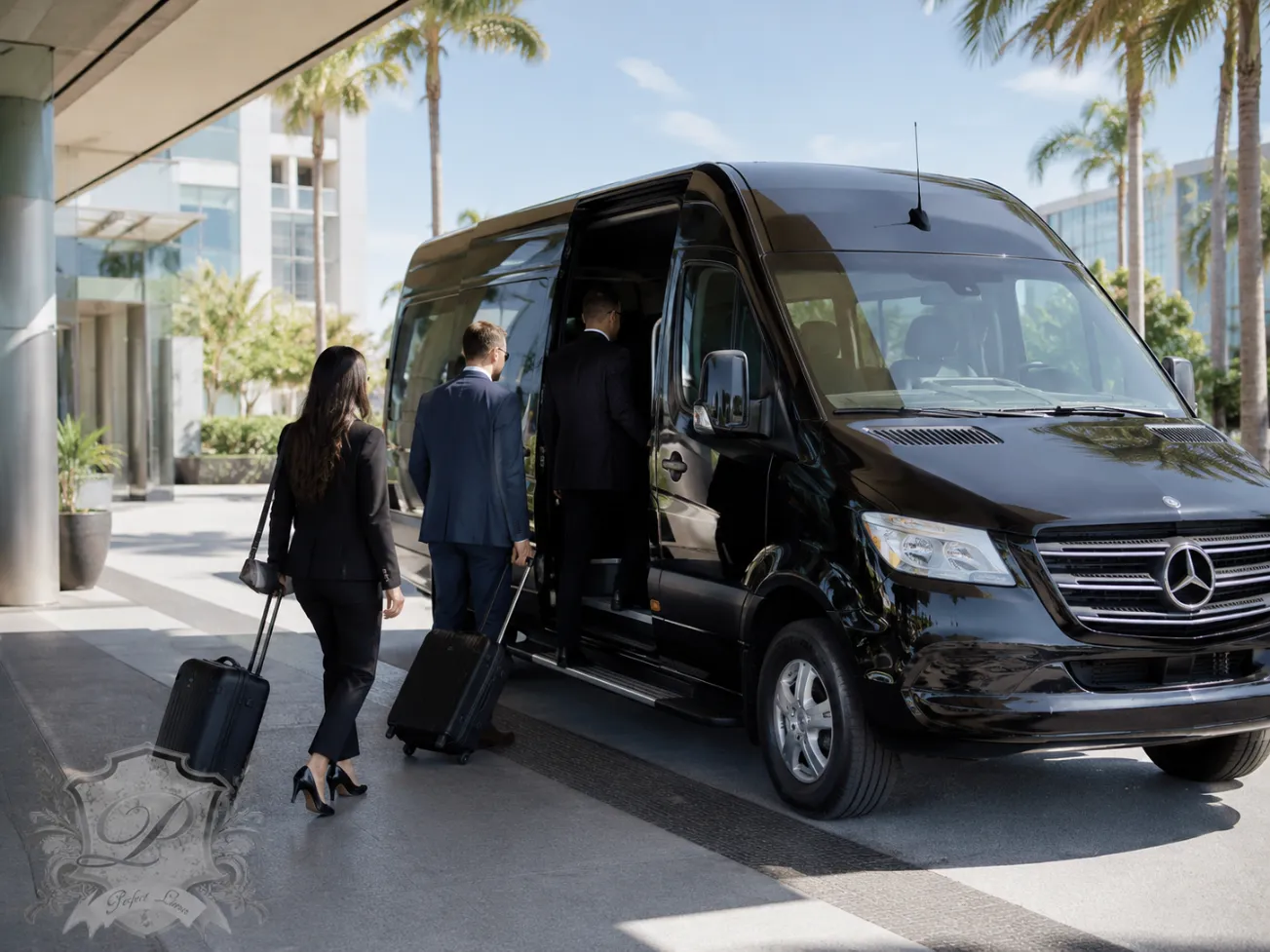
The Perfect Limo and Sedan offers several Sprinter configurations in its current fleet. Its Mercedes-Benz Sprinter Executive Limousine is currently listed for 10–12 passengers and supports point-to-point, dedicated chauffeur, and airport transportation.
Common Corporate Sprinter Uses
- Management and leadership teams
- Conference and convention groups
- Airport transportation for several colleagues
- Client delegations
- Corporate retreats and off-site meetings
- Hotel-to-venue transportation
- Company dinners and hospitality events
- Multi-stop group business itineraries
4. Which Vehicle Is Best for Corporate Airport Transportation?
Airport transportation is where the executive sedan vs SUV vs Sprinter comparison becomes particularly practical because passenger count and luggage must be evaluated together.
A solo executive arriving at Ontario International Airport with a suitcase and carry-on may be well suited to a sedan. Two or more travelers with several large bags may benefit from an SUV. A larger team arriving for a conference or company event may be easier to coordinate in a Sprinter if the passenger and luggage requirements fit the selected configuration.
Southern California business travelers may use Ontario International Airport (ONT), Los Angeles International Airport (LAX), John Wayne Airport (SNA), Long Beach Airport (LGB), and private aviation facilities depending on the trip. Airport choice can also affect how much ground travel remains after the flight.
The vehicle should therefore be selected using the entire airport itinerary: flight, passenger count, luggage, destination, additional stops, and what the travelers are doing next. Review The Perfect Limo and Sedan’s airport limo and car service for additional airport transportation planning.
5. Passenger Capacity and Luggage Capacity Are Not the Same Thing
One of the most common mistakes in corporate transportation planning is choosing a vehicle based entirely on the number of available passenger seats.
A vehicle may accommodate the stated number of passengers but still be impractical once the travelers bring full-size suitcases, carry-ons, laptop bags, presentation equipment, trade show materials, garment bags, or other business items.
This is especially important for airport trips and conferences. A team flying into Southern California for several days will usually carry substantially more luggage than the same team traveling from a nearby office to a local dinner.
Booking Tip: Give Both Passenger and Luggage Counts
When requesting corporate transportation, provide the number of passengers, full-size suitcases, carry-on bags, and any oversized business equipment. This gives the reservation team more useful information than passenger count alone and reduces the risk of selecting a vehicle that technically has enough seats but insufficient practical cargo room.
6. Executive Meetings and Roadshows Often Favor Sedans or SUVs
A business itinerary involving one executive and several appointments is usually a different transportation problem from moving an employee group to a conference.
For a roadshow, client visit, investor schedule, or leadership meeting day, a sedan or SUV can be easier to use because the passenger party is relatively small. The same vehicle can remain associated with the executive’s schedule without introducing group capacity that is not needed.
Consider an executive traveling from a hotel in Anaheim to a meeting in Irvine, another appointment in Los Angeles, and then LAX for an evening departure. The vehicle decision should consider the number of passengers, luggage, total time on the road, and whether the executive is traveling alone or with colleagues.
For a deeper comparison of business transportation formats, see our guide to executive car service vs limo service for business travel. That article focuses on service format, while this guide focuses specifically on matching sedan, SUV, and Sprinter vehicles to the itinerary.
7. Conferences, Teams, and Corporate Events Often Favor Sprinters
Corporate events introduce a different operational priority: moving several people through the same schedule. Airport arrivals, hotel pickups, venue transfers, client dinners, networking events, and return transportation may all need to happen within specific windows.
If the travelers are divided among several sedans or SUVs, the organizer must manage several vehicles and potentially several different arrival times. That may be completely acceptable when the group has different schedules. When everyone needs to be in the same place at the same time, a larger group vehicle can make the transportation plan simpler.
A Sprinter can also allow colleagues to remain together between locations instead of repeatedly separating and regrouping. This can be useful for leadership teams, visiting clients, conference delegations, company retreats, and employees traveling together between an airport, hotel, office, and venue.
The California Public Utilities Commission’s Charter-Party Carrier information explains the regulatory framework for prearranged passenger transportation used exclusively by an individual or group. Businesses arranging professional group transportation should use properly authorized carriers and confirm the reservation details in advance.
8. Sometimes the Best Corporate Solution Is a Mixed Fleet
Not every company event should force every passenger into the same vehicle category. A mixed-fleet plan can be more practical when executives, employees, clients, and speakers have different schedules or responsibilities.
For example, a chief executive and visiting client may arrive separately and use individual sedans or SUVs. A ten-person employee group may arrive later and use a Sprinter. Everyone can then meet at the same conference venue before using different vehicles again for departures.
Another scenario might involve SUVs for senior leadership and a Sprinter for the broader management team. The goal is not uniformity. The goal is assigning the correct transportation resource to each passenger group.
This is one reason companies should provide the entire event or travel schedule rather than asking only for a vehicle price. A transportation provider can evaluate whether one vehicle, several vehicles, or a combination of vehicle types better supports the operation.
9. How Vehicle Choice Affects Corporate Transportation Cost
Vehicle type is one of several factors that can affect corporate transportation pricing. Larger or more specialized vehicles generally represent different service categories from executive sedans, but the individual vehicle price should not be evaluated in isolation.
If one sedan handles the entire trip, adding an SUV or Sprinter without a capacity need may increase cost unnecessarily. However, if a corporate team would otherwise require several separate sedans, one appropriately sized group vehicle may be operationally and financially worth comparing.
Businesses should therefore compare the cost of the complete transportation plan. Include vehicle count, service duration, number of stops, airport requirements, waiting time, luggage, and whether several passengers need to move together.
Our guide to corporate transportation cost in Southern California explains these pricing factors in more detail, including point-to-point service, extended reservations, airports, group travel, and multi-stop itineraries.
10. Vehicle Choice Also Depends on How Important the Trip Is
Business transportation decisions are not made in a vacuum. A company may use different transportation strategies for a senior executive, an important client, a large employee group, and a casual internal trip.
For a high-priority client arrival, the company may prefer to arrange a specific sedan or SUV before the guest lands. For a management retreat involving ten colleagues, the ability to keep everyone in one group vehicle may matter more. For a single low-complexity trip with a flexible schedule, a dedicated corporate vehicle may not be necessary at all.
If the broader question is whether the company should reserve professional transportation in the first place, our corporate transportation vs rideshare comparison covers that decision separately. Once professional transportation is selected, vehicle choice becomes the next step.
Executive Sedan vs SUV vs Sprinter: Business Travel Decision Table
| Business Scenario | Vehicle to Consider | Reason |
|---|---|---|
| Solo executive airport transfer | Sedan | Efficient private transportation without unnecessary capacity |
| Two or more executives with significant luggage | SUV | Additional passenger and cargo room may be useful |
| One important client or VIP | Sedan | Professional, discreet individual transportation |
| Small client group with luggage | SUV | Keeps the party together while adding capacity |
| Management team traveling to one conference | Sprinter | Simplifies group coordination and shared arrivals |
| Executive with multiple private meetings | Sedan or SUV | Choice depends on passengers, luggage, and desired space |
| Large corporate event with leadership and employee groups | Mixed fleet | Sedans or SUVs can serve executives while Sprinters serve teams |
11. What to Tell the Transportation Company Before Choosing a Vehicle
A reservation team can make a more useful vehicle recommendation when it receives the full transportation requirement instead of only a passenger number.
- Passenger count: include everyone expected to travel in the vehicle.
- Luggage: identify full-size suitcases, carry-ons, equipment, and unusual cargo.
- Pickup location: provide the complete airport, hotel, office, residence, or venue information.
- Every destination: include intermediate stops and the final destination.
- Required arrival times: note fixed meetings, presentations, flights, or event start times.
- Flight information: provide airline and flight details for airport trips.
- Trip purpose: identify whether the passengers are executives, employees, clients, speakers, or event attendees.
- Vehicle preference: mention a sedan, SUV, or Sprinter preference, but allow the final recommendation to account for practical capacity.
For company-wide transportation needs, review The Perfect Limo and Sedan’s corporate limo and sedan service and submit the complete itinerary when requesting availability.
Match the Corporate Vehicle to the Actual Trip
The Perfect Limo and Sedan provides executive sedans, luxury SUVs, Mercedes-Benz Sprinters, and other chauffeured vehicle options for airport transportation, executive meetings, corporate teams, client transportation, conferences, company events, and multi-stop business travel throughout Southern California.
Instead of choosing only by appearance, provide the passenger count, luggage, pickup and destination details, airport information, meeting schedule, and required stops so the reservation can be matched to an appropriate vehicle.
Planning corporate transportation? Explore the available vehicle fleet or call 800-951-3017 to discuss your itinerary, passenger requirements, and vehicle options.
Frequently Asked Questions About Executive Sedans, SUVs, and Sprinters
Is an executive sedan or SUV better for business travel?
An executive sedan is often sufficient for a solo executive or small party with limited luggage. An SUV may be a better fit when several passengers are traveling together, more luggage is involved, or additional cabin and cargo space would improve the trip.
When should a company book a Mercedes Sprinter instead of SUVs?
A Sprinter can be useful when a larger corporate group shares the same pickup, destination, and schedule and benefits from traveling together. Several SUVs may still make more sense when passengers have different destinations or departure times.
How many passengers can the Cadillac Escalade carry?
The Perfect Limo and Sedan currently lists its Cadillac Escalade Luxury SUV as a 4–6 passenger vehicle. Practical suitability can still depend on luggage and other items being carried, so passenger and luggage requirements should both be provided when booking.
How many passengers can a Mercedes Sprinter carry?
Capacity varies by Sprinter configuration. The Perfect Limo and Sedan currently lists its Mercedes-Benz Sprinter Executive Limousine for 10–12 passengers. Other Sprinter configurations may differ, so the exact vehicle and capacity should be confirmed for the reservation.
What is the best vehicle for a corporate airport transfer?
The best vehicle depends on passenger count and luggage. A sedan can work well for an individual executive, an SUV may suit several travelers or additional luggage, and a Sprinter can support a larger group when passenger and cargo requirements fit the selected vehicle.
Is a Sprinter cheaper than booking several sedans?
Not necessarily. Pricing depends on the specific vehicle, route, service duration, stops, date, and other reservation details. Businesses should compare the complete cost of one appropriate group vehicle with the combined cost and coordination requirements of several smaller vehicles.
Can a company use sedans, SUVs, and Sprinters for the same event?
Yes. A mixed fleet can be useful when executives, clients, employees, speakers, or other passenger groups have different schedules and transportation requirements. Sedans or SUVs may serve individual executives while Sprinters transport larger teams.
Final Takeaway
The decision between an executive sedan vs SUV vs Sprinter should come down to what the corporate trip actually requires. A sedan works well for discreet individual executive transportation. An SUV adds useful room for passengers and luggage. A Sprinter becomes particularly valuable when a larger group needs coordinated transportation.
Companies should resist choosing the largest available vehicle automatically. They should also avoid selecting a vehicle that technically fits the passengers but does not realistically accommodate their luggage, equipment, or group schedule.
For Southern California corporate transportation, the strongest vehicle decision is the one that fits the passengers, luggage, airport or meeting itinerary, required arrival times, and overall business objective. When those details change, the correct vehicle may change with them.
Business Travel, corporate transportation, Executive Sedan, Executive Suv, executive transportation, group transportation, Mercedes Sprinter